PuniCodex

Extended Lore

Eachuisge

Etymology · Orthography · Cult · Iconography · Reception · Sources

Tier 2 Eachuisge
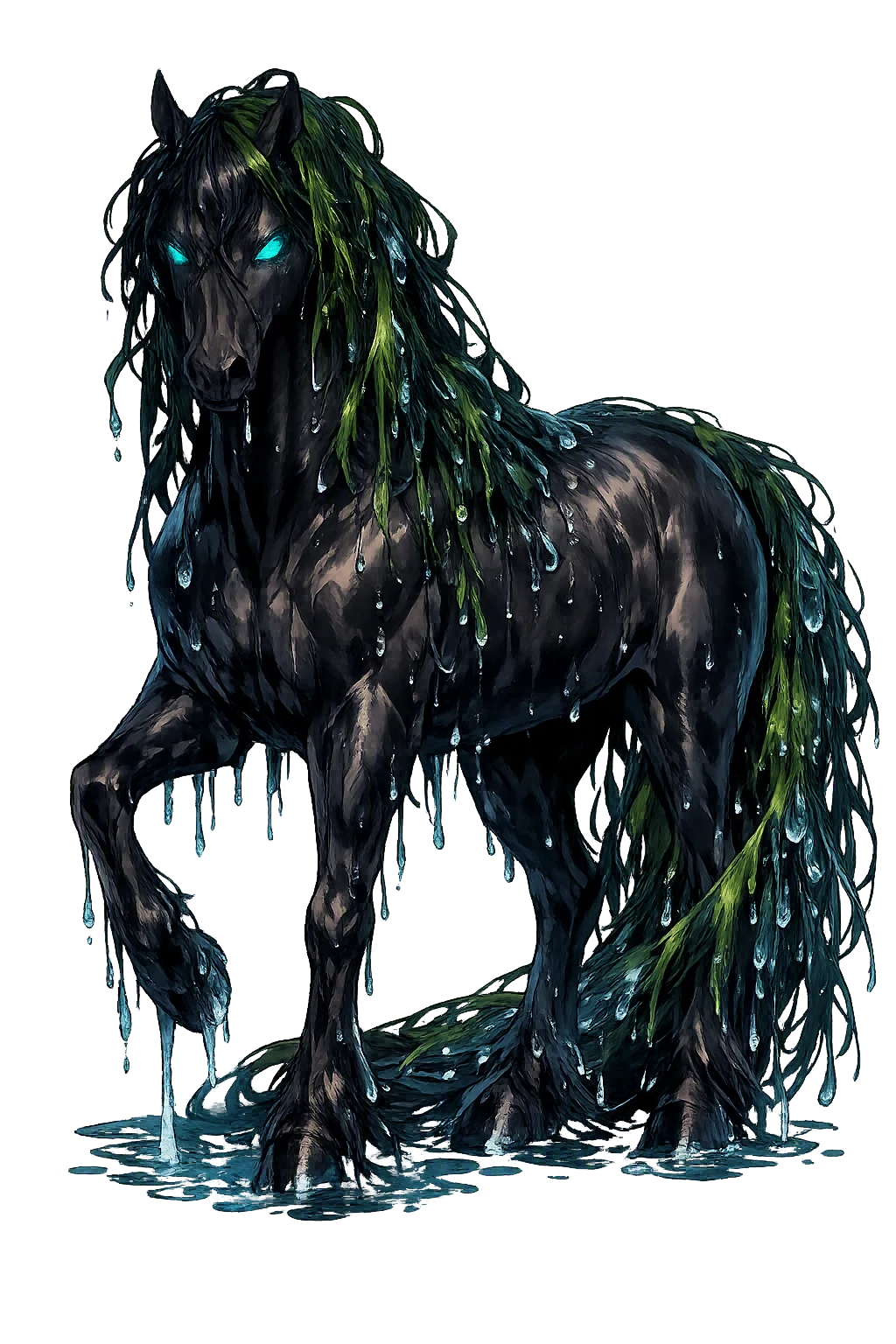
Eachuisge — Water Horse, Drowner
01

Quick Facts

Essential information about Eachuisge, Water Horse, Drowner

Scholarly TransliterationEachuisge
Unicode RestorationEachuisge
Reconstructed Pronunciation/ˈex.ɯʃɡʲə/
PantheonCeltic
DomainWater Horse, Drowner
MeaningWater horse
ClassificationTier 2
Primary DomainEachuisge
Sacred SymbolsThe flawless stallion, The adhesive hide, The liver on the shore, The weed in the stranger's hair
02

Etymology & Word Family

From original script to Unicode restoration

Scholarly Transliteration Eachuisge Eachuisge — "Water horse"
Unicode Restoration Eachuisge Canonical scholarly spelling — ASCII-identical
Modern ASCII eachuisge Plain-ASCII fallback

The name Eachuisge reaches the modern world through scholarly transliteration of the celtic tradition. Because the conventional spelling uses only Latin letters, its Unicode and ASCII forms coincide — the tradition it carries is in the name itself, not in diacritics.

03

Unicode Character Breakdown

Character-by-character philological analysis

CharacterUnicodeNameBlockPhonetic Role
EU+0045Latin Capital Letter EBasic LatinSame, capitalized
aU+0061Latin Small Letter ABasic LatinSame
cU+0063Latin Small Letter CBasic LatinSame
hU+0068Latin Small Letter HBasic LatinSame
uU+0075Latin Small Letter UBasic LatinSame
iU+0069Latin Small Letter IBasic LatinSame
sU+0073Latin Small Letter SBasic LatinSame
gU+0067Latin Small Letter GBasic LatinSame
eU+0065Latin Small Letter EBasic LatinSame

The Tier 2 classification here reflects fidelity to the attested tradition, not recovered diacritics: every character of Eachuisge already survives in ASCII. What the restoration preserves is the canonical spelling itself — the form scholarship standardised.

04

Cult & Worship

How the sacred was kept — rites, sanctuaries, remains

The Cult

The each-uisge was never worshipped: he receives no offering, shrine, priest, or festival in any Highland record, and he should not be given one retrospectively. He is an object of avoidance, not veneration — the fine horse by the loch that must not be mounted — and the only 'practice' the tradition preserves is negative: the cautionary tale itself, told so the listener would know the water's beautiful face for what it is. John Gregorson Campbell, the Tiree minister who assembled the fullest dossier in 1900, treats him squarely as a superstition to be recorded, not a god to be served. What was genuinely kept alive around him was speech: warnings, tale-telling, and the Gaelic compound that still names him today.

In the Earth

The each-uisge has no material witness, and the record must be exact about what that means: no inscription names him, no manuscript illuminates him, and no medieval codex preserves his tales, because he belongs to oral tradition rather than to the literary cycles. His primary evidence is the nineteenth-century field collection — Campbell of Islay's Popular Tales of the West Highlands (1860–62), gathered from Gaelic-speaking informants across the western Highlands and Islands, and John Gregorson Campbell's Superstitions of the Highlands and Islands of Scotland (1900), the fullest single dossier of the water horse's habits. Carmichael's Carmina Gadelica records the same Highland world in its charms and invocations. The landscape itself is the rest of the evidence: the deep freshwater lochs and sea-lochs of the west are the named settings of the tales, and the water-horse complex they belong to is one of the most widely attested figure-types in northern European folklore — a fact the comparatists established from the collections, not from the ground.

05

Iconography

How Eachuisge was imaged across the ages

The Image

No image of the each-uisge survives from before the printed collections, and none was needed: he is the horse that is already a perfect picture. The texts give him his attributes — a splendid grey by the water's edge; sometimes a handsome young stranger; a hide that, once gripped, cannot be released, so that in one recorded tale a boy escaped only by cutting off his own finger. Later retellings hang backward-turned hooves on the water-horse, but that mark belongs to other members of the northern complex and sits uneasily on him. The Victorian collections fixed his visual type in their engravings — a horse rising from the loch — and the image has proved unkillable since. His codex is the storyteller's memory, written down a century and a half ago; no medieval illuminator ever knew him.

06

Reception & Transformation

The name after its own age — transmission, translation, survival

Afterlives

The each-uisge's journey begins late and runs fast, because it is bound up with the birth of folklore science itself. He lived in Gaelic speech on the western seaboard until J. F. Campbell of Islay carried him into print from the mouths of named informants, and the comparative folklorists took him up at once: set beside the kelpie, Shetland's nuggle, the Welsh ceffyl dŵr, and the Scandinavian bäckahäst, he became a standard exhibit in the Victorian debate over how tale-material travels — one of the clearest cases of a figure-type crossing language-frontiers without any text to carry it. The twentieth century professionalized his study in the fairy dictionaries and the Celtic reference shelf, while Gaelic fieldwork in the Highlands and in Nova Scotia went on recording the tales as living speech. From first printing to comparative landmark to reference-book entry in barely a century — a short journey, but every stage walked by named collectors with named informants, which is more than many older figures can say.

Identifications Across Traditions

The each-uisge is the Highland head of a family that runs the length of the Celtic coasts and beyond. His closest cousin is the Lowland Scots kelpie, which haunts rivers rather than lochs and is generally the milder power — drowning without devouring; the two are kindred, not cognate, for the words are unrelated. The Northern Isles keep their own: Shetland's nuggle or njogel, and Orkney's nuckelavee, a far worse thing — a skinless fusion of man and horse that must be distinguished from the shape-shifting water horse proper. The Isle of Man has the cabbyl-ushtey, Wales the ceffyl dŵr, and Ireland the each-uisce and the shape-shifting [[pooka|Púca]], which takes horse-shape among its many forms. The tradition is older than the collections: [[manannan|Manannán mac Lir]]'s horse Aonbharr, which runs over land and sea alike, shows the medieval Irish imagination already at work on the horse that owns both elements. Beyond the Celtic world the type recurs — the Scandinavian bäckahäst and the nøkk among them — and the handbooks treat the whole complex as one of the most widespread figure-types of northern European water-lore: the horse as the beautiful face of drowning.

Modern Legacy

The each-uisge entered print through the great Victorian field collections — Campbell of Islay's Popular Tales of the West Highlands (1860–62) and John Gregorson Campbell's Superstitions of the Highlands and Islands of Scotland (1900) — and it never left. Katharine Briggs's Encyclopedia of Fairies fixed its modern profile as the fiercest of the British water-horses, and MacKillop's Dictionary of Celtic Mythology carried it into the standard Celtic reference shelf. Burns had already put the Lowland cousin into verse — the 'water-kelpie' of the Address to the Deil — and the whole water-horse tradition stands behind the Highlands' most famous modern legend: commentators have long read the loch-monster lore of the twentieth century against this older record of horses in the water. Andy Scott's Kelpies at Falkirk (2013), the thirty-meter horse-head sculptures on the Forth and Clyde Canal, are the tradition's monumental afterlife — kelpies by name, but the image they make permanent is the each-uisge's own: the horse rising out of Scottish water. In Gaelic itself the compound never went anywhere: each-uisge still means the water horse, and the warning it carries is older than any collection that preserves it.

07

The Meditation

What Eachuisge means — beyond the dictionary

The each-uisge is the most honest monster in the Celtic record, because its method is consent. It does not chase, does not strike, does not break down any door. It stands at the water's edge in the shape of the one thing a tired traveler most wants — a beautiful horse, unclaimed, waiting — and it lets the victim do the approaching. Everything that follows follows from a single step: the moment of mounting. After that there is no further decision to make, and that is the horror the Highland tellers kept sharpening — the adhesive hide, the back that lengthens to take one more, the hands that will not come free.

The tradition is not superstition in the cheap sense; it is risk assessment in story form. Water in the Highlands is deep, cold, and patient, and the loch that will drown you looks exactly like the loch that will carry your boat. The each-uisge personifies that double face: the surface that offers itself and the depth that keeps what it takes. And its one consistent weakness is the oldest rule of the shore — touch with a finger first, and be ready to lose the finger rather than the rest.

08

Frequently Asked Questions

Common questions about Eachuisge, Water Horse, Drowner, and Unicode restoration

01How do you pronounce Eachuisge?

In reconstructed pronunciation, Eachuisge is /ˈex.ɯʃɡʲə/ — approximately EKH-ooshkya — stress the first syllable, let the ch rasp as in 'loch', and run the second word tight: the whole compound is one breath, horse and water together.

02What does Eachuisge mean?

Eachuisge means Water horse in the celtic tradition.

03What are the symbols of Eachuisge?

Eachuisge is associated with The flawless stallion (The too-perfect gift at the water's edge — beauty as bait, offered where the ground runs out), The adhesive hide (The choice that cannot be unmade: once mounted, the mount decides), The liver on the shore (The one thing the loch gives back — the Highland record's grimmest detail, and its proof that this horse devours), The weed in the stranger's hair (The tell the shape cannot shed: water keeps its mark on whatever walks out of it).

04Why restore Eachuisge in Unicode?

Eachuisge is written entirely in ASCII letters, so its restoration is about canonical fidelity rather than recovered diacritics: the temple fixes the name in its scholarly standard spelling, attested in the source tradition, instead of leaving it to drift.

05What is the most important myth about Eachuisge?

“The Rider Taken” — the Highland oral tradition story that anchors the mythology of Eachuisge, told in full on the lore page.

09

Scholarly Sources

The philological foundations of this restoration

Every claim on this page is grounded in established scholarship. The orthographic restorations follow disciplinary convention. The etymological chain follows the best available reference works. This is not invention — it is resurrection through scholarship.

◈

Lexicography & Philology

  • Folklore
  • MacKillop
◎

Primary Texts

  • The Immram Brain (Voyage of Bran); Tochmarc Étaíne; Cóir Anmann; medieval Irish saga literature.
◉

Archaeology & Art History

  • Material evidence — iconography, inscriptions, and temple archaeology — for Eachuisge and related cults.
✦

Religious Studies

  • Campbell, John Gregorson, Superstitions of the Highlands and Islands of Scotland (1900) — the primary Highland field record of the each-uisge: the adhesive back, the liver ashore, the handsome stranger, the red-hot iron
  • Campbell of Islay, J. F., Popular Tales of the West Highlands, 4 vols. (1860–62) — the great foundational collection of Gaelic oral narrative
  • Carmichael, Alexander, Carmina Gadelica (1900–71) — Gaelic charms, hymns, and invocations from the same Highland world
  • Briggs, Katharine, An Encyclopedia of Fairies (1976), s.v. each-uisge, kelpie — the standard modern classification of the British water-horses
  • MacKillop, James, Dictionary of Celtic Mythology (1998), s.v. each-uisge — the Celtic reference-shelf profile
  • Koch, John T., ed., Celtic Culture: A Historical Encyclopedia (2006), s.v. water horse — the comparative Celtic frame
Return

The Surface Awaits

You have traced the name from its earliest attestation to its Unicode restoration. Now return to the myth. The story is where the name lives.

Back to Lore
Eachuisge mascot