PuniCodex

Extended Lore

Δαίδαλος Daidalos

Etymology · Phonology · Orthography · Cultural Legacy · Primary Sources

Tier 1 Daidalos
Daidalos — Craftsman, Inventor, Wings
01

Quick Facts

Essential information about Daidalos, Craftsman, Inventor, Wings

Original ScriptΔαίδαλος
Unicode RestorationDaidalos
Reconstructed Pronunciation/dai̯.da.los/
PantheonGreek
DomainCraftsman, Inventor, Wings
MeaningCunningly wrought
ClassificationTier 1
Primary DomainDaidalos
Sacred SymbolsWings, Wax, Labyrinth, Tools
02

Etymology & Word Family

From original script to Unicode restoration

Original Script Δαίδαλος Daidalos — "Cunningly wrought"
Unicode Restoration Daidalos Restored stress, length, and script
Modern ASCII daedalus Plain-ASCII fallback

The Greek Δαίδαλος contains both stress (acute on the diphthong) and length (the diphthong αι is long), making it a Tier 1 restoration. The Latin-derived English form Daedalus is a secondary spelling that preserves the consonants but obscures the original Greek vowel quantities.

03

Unicode Character Breakdown

Character-by-character philological analysis

CharacterUnicodeNameBlockPhonetic Role
DU+0044Latin Capital Letter DBasic LatinSame
aU+0061Latin Small Letter ABasic LatinSame
iU+0069Latin Small Letter IBasic LatinIota
dU+0064Latin Small Letter DBasic LatinSame
aU+0061Latin Small Letter ABasic LatinSame
lU+006CLatin Small Letter LBasic LatinSame
oU+006FLatin Small Letter OBasic LatinOmicron
sU+0073Latin Small Letter SBasic LatinSame

The Tier 1 classification reflects how much of the original phonology this restoration preserves — stress and vowel length for Greek names, distinctive letters and diacritics for every other tradition.

04

Cultural Significance

From ancient cult to modern Unicode

Ancient Domain

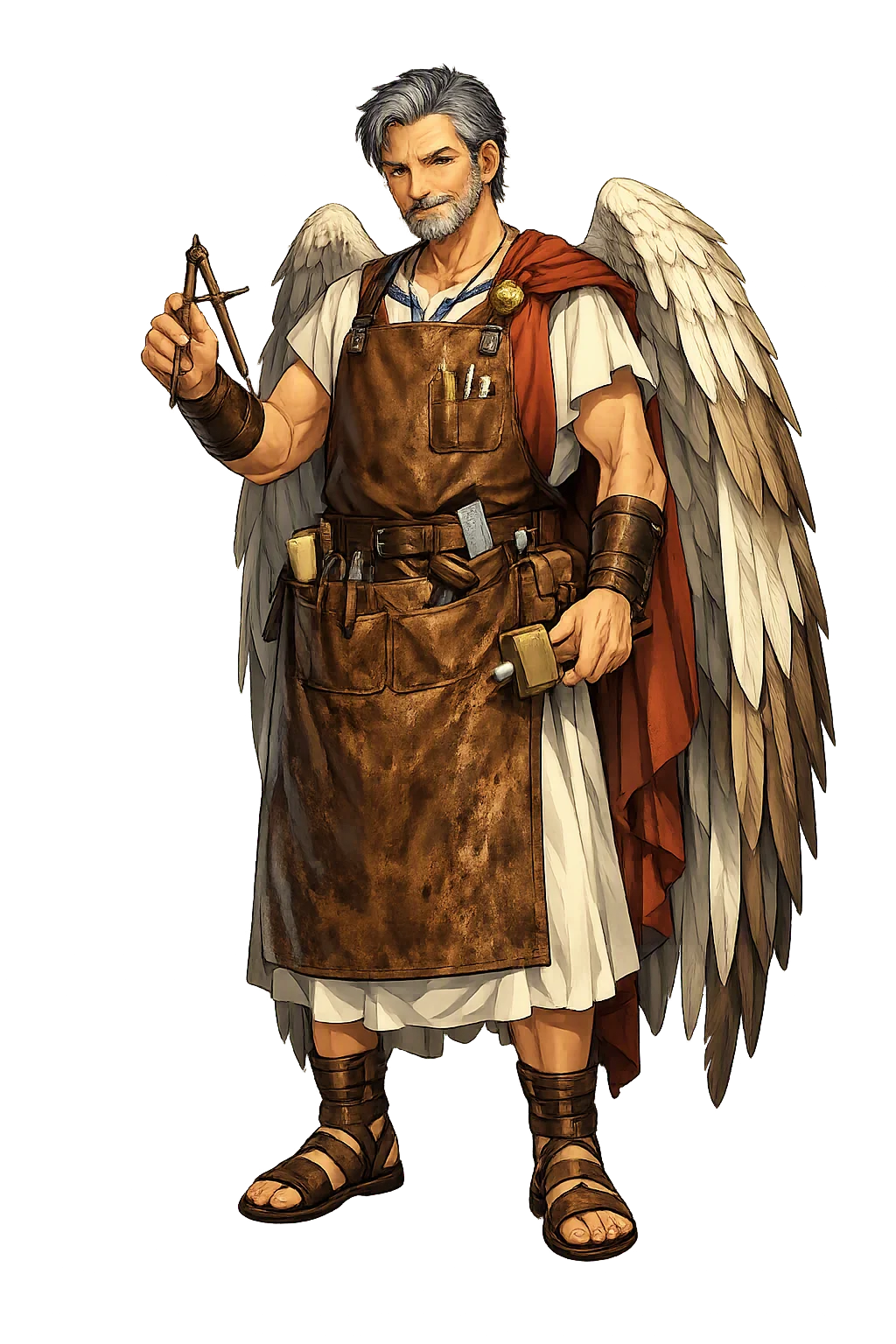
Daidalos is the master craftsman of Greek mythology: the architect of the Labyrinth, the maker of moving statues, and the father of Icarus. His name means "cunningly wrought" and became a byword for any work so skillful that it seemed alive. He is the first engineer in Western literature, the inventor whose ingenuity saves him and destroys those he loves.

Daidalos in Later Traditions

The Greek Daidalos was absorbed into Roman literature as Daedalus, most famously in Ovid's *Metamorphoses*. In the Renaissance he became an emblem of the artist as rebel and genius, and in modern culture he stands for every inventor who creates what he cannot control. James Joyce made Stephen Dedalus a Daidalos-figure, the young artist escaping the nets of family, religion, and nation. The name has also been used for spacecraft, engineering projects, and artificial-intelligence ventures.

Modern Legacy

Daidalos is the archetype of the engineer, the artist, and the scientist whose creations escape his intentions. He built the Labyrinth, the wings, and the moving statues; each invention brought wonder and disaster. Modern discussions of artificial intelligence, genetic engineering, and autonomous weapons revisit his dilemma: can we make things so complex that even their makers cannot predict their effects? Daidalos reminds us that skill without wisdom is exile.

Unicode Restoration as Cultural Act

Restoring Daidalos in a domain name is more than orthographic accuracy. It is a statement that the internet should recognize the full range of human writing — not only the ASCII keyboard.

05

Frequently Asked Questions

Common questions about Daidalos, Craftsman, Inventor, Wings, and Unicode restoration

01How do you pronounce Daidalos?

In reconstructed pronunciation, Daidalos is /dai̯.da.los/ — approximately 'DIE-dah-los' — the first syllable is long and carries the ancient pitch rise; the remaining syllables are short and light..

02What does Daidalos mean?

Daidalos means Cunningly wrought in the greek tradition.

03What are the symbols of Daidalos?

Daidalos is associated with Wings (The instruments of escape and the boundary between human and divine.), Wax (The material that holds the wings together and melts when Icarus flies too close to the sun.), Labyrinth (The architectural puzzle that embodies Daidalos' cunning and its dangerous consequences.), Tools (The axe, file, and compass of the craftsman who can make anything except a safe life.).

04Why restore Daidalos in Unicode?

Plain ASCII daedalus strips the stress, length, and script that make the name specific. Unicode restoration returns the name to its original written dignity.

05What is the most important myth about Daidalos?

Daidalos was born in Athens, where his skill as an inventor aroused the jealousy of his nephew Talos (or Perdix). When the boy invented the saw and the potter's wheel, Daidalos threw him from the Acropolis in envy. For this murder he was exiled from Athens and fled to Crete, where King Minos welcomed him.

06

Scholarly Sources

The philological foundations of this restoration

Every claim on this page is grounded in established scholarship. The orthographic restorations follow disciplinary convention. The etymological chain follows the best available reference works. This is not invention — it is resurrection through scholarship.

Lexicography & Philology

  • Liddell, H. G., Scott, R., & Jones, H. S. A Greek-English Lexicon. Oxford: Clarendon Press, 9th ed. 1996.
  • Pape, W., & Benseler, G. E. Wörterbuch der griechischen Eigennamen. Braunschweig: Vieweg, 1884.
  • Beekes, R. S. P. Etymological Dictionary of Greek. Leiden: Brill, 2010.

Primary Texts

  • Homer, Iliad 18.590-592 (references to Daidalea)
  • Diodorus Siculus, Library of History 4.76-79
  • Apollodorus, Bibliotheca 3.15.8; Epitome 1.8-15
  • Ovid, Metamorphoses 8.152-235

Archaeology & Art History

  • Material evidence — iconography, inscriptions, and temple archaeology — for Daidalos and related cults.

Religious Studies

  • Morris, Sarah, Daidalos and the Origins of Greek Art (1992)
  • Liddell-Scott-Jones Greek-English Lexicon, s.v. Δαίδαλος
Return

The Surface Awaits

You have traced the name from its earliest attestation to its Unicode restoration. Now return to the myth. The story is where the name lives.

Back to Lore
Daidalos mascot