PuniCodex

Extended Lore

칠성 (七星) Chilsong

Etymology · Phonology · Orthography · Cultural Legacy · Primary Sources

Tier 2 Chilsong
Chilsong — Seven Stars, Ursa Major
01

Quick Facts

Essential information about Chilsong, Seven Stars, Ursa Major

Original Script칠성 (七星)
Unicode RestorationChilsong
Reconstructed Pronunciation/tɕʰil.soŋ/
PantheonKorean
DomainSeven Stars, Ursa Major
MeaningSeven stars
ClassificationTier 2
Primary DomainChilsong
Sacred SymbolsBig Dipper, Peach of immortality, Tortoise and snake, Seven lamps or candles
02

Etymology & Word Family

From original script to Unicode restoration

Original Script 칠성 (七星) Chilsong — "Seven stars"
Unicode Restoration Chilsong Restored stress, length, and script
Modern ASCII chilsong Plain-ASCII fallback

The first consonant is aspirated; the second syllable ends in a velar nasal. The name refers to the seven stars of the Northern Dipper.

03

Unicode Character Breakdown

Character-by-character philological analysis

CharacterUnicodeNameBlockPhonetic Role
CU+0043Latin Capital Letter CBasic LatinSame, capitalized
hU+0068Latin Small Letter HBasic LatinSame
iU+0069Latin Small Letter IBasic LatinSame
lU+006CLatin Small Letter LBasic LatinSame
sU+0073Latin Small Letter SBasic LatinSame
oU+006FLatin Small Letter OBasic LatinSame
nU+006ELatin Small Letter NBasic LatinSame
gU+0067Latin Small Letter GBasic LatinSame

The Tier 2 classification reflects how much of the original phonology this restoration preserves — stress and vowel length for Greek names, distinctive letters and diacritics for every other tradition.

04

Cultural Significance

From ancient cult to modern Unicode

Ancient Domain

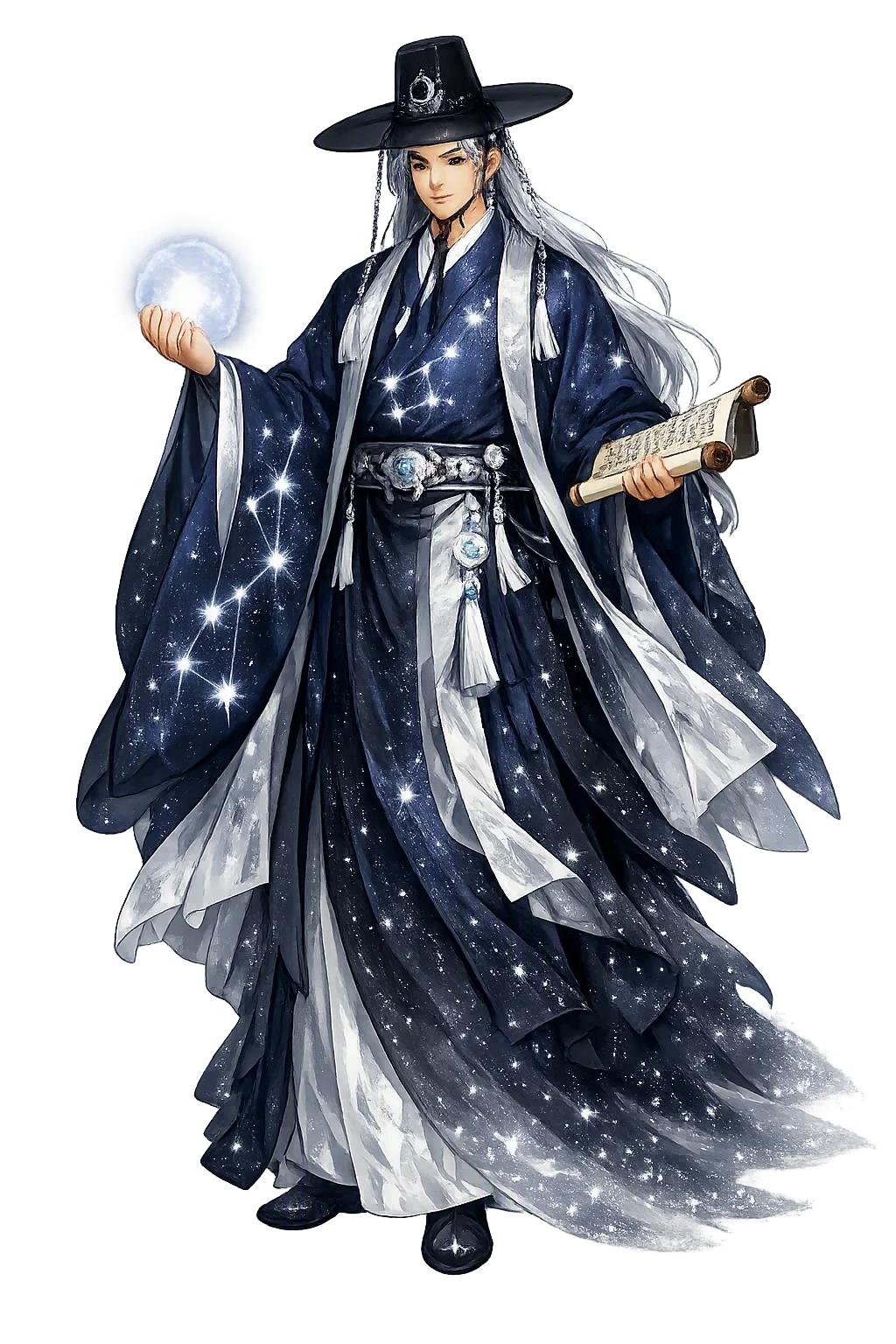
Chilsong is the seven stars, spirits of the Big Dipper who govern longevity, fate, and protection from calamity in Korean tradition. The name means "Seven stars" and belongs to the domain "Seven Stars, Ursa Major." Chilsong means "seven stars" and refers especially to the seven stars of the Big Dipper (Ursa Major). In Korean religion the seven stars are worshipped as Chilseongsin, benevolent spirits who grant longevity, avert disaster, and guide the dead.

Chilsong in Later Traditions

Chilsong is a layered figure. Its astronomical core is shared across East Asia, but in Korea it was shaped by Buddhist star rituals, Daoist longevity practices, and shamanic invocation. Joseon court ritual honoured the seven stars for the welfare of the dynasty, while village practice sought protection for ordinary families. The figure also overlaps with Chinese Xuanwu (Dark Warrior) symbolism and with Buddhist representations of stellar buddhas. Despite these borrowings, the Korean Chilseong-gut has a distinctive musical and choreographic form.

Modern Legacy

Chilsong remains visible in Korean temple art, shamanic paintings, and prayers for longevity. The seven-star motif decorates talismans, funeral garments, and ritual implements. In popular culture, the Big Dipper appears in Korean astronomy education, video games, and media about fate and destiny. The figure also informs Korean Buddhist identity, where Chilseong is one of the most commonly invoked protective deities.

Unicode Restoration as Cultural Act

Restoring Chilsong in a domain name is more than orthographic accuracy. It is a statement that the internet should recognize the full range of human writing — not only the ASCII keyboard.

05

Frequently Asked Questions

Common questions about Chilsong, Seven Stars, Ursa Major, and Unicode restoration

01How do you pronounce Chilsong?

In reconstructed pronunciation, Chilsong is /tɕʰil.soŋ/ — approximately 'CHEEL-song' — The first consonant is aspirated; the second syllable ends in a velar nasal. The name refers to the seven stars of the Northern Dipper..

02What does Chilsong mean?

Chilsong means Seven stars in the korean tradition.

03What are the symbols of Chilsong?

Chilsong is associated with Big Dipper (The seven stars that form the handle and bowl of the celestial ladle.), Peach of immortality (A fruit associated with long life and the blessings of the star spirits.), Tortoise and snake (Dark Warrior (Xuanwu) imagery linking the northern stars with water and longevity.), Seven lamps or candles (Ritual lights arranged in the pattern of the seven stars during ceremonies.).

04Why restore Chilsong in Unicode?

Plain ASCII chilsong strips the stress, length, and script that make the name specific. Unicode restoration returns the name to its original written dignity.

05What is the most important myth about Chilsong?

The seven stars are personified as seven spirits or seven buddhas who preside over human fate. Each star is associated with a particular blessing, such as longevity, wealth, or protection from illness.

06

Scholarly Sources

The philological foundations of this restoration

Every claim on this page is grounded in established scholarship. The orthographic restorations follow disciplinary convention. The etymological chain follows the best available reference works. This is not invention — it is resurrection through scholarship.

Lexicography & Philology

  • Korean folklore
  • Shamanic texts

Primary Texts

  • Primary sources in the korean tradition for Chilsong.

Archaeology & Art History

  • Material evidence — iconography, inscriptions, and temple archaeology — for Chilsong and related cults.

Religious Studies

  • Kim Seong Uk, "Buddhist Rituals of Ch'ilsong, the Seven Stars of the Great Dipper, in Choson Korea," Journal of Korean Religions 14, no. 1 (2023).
  • Grayson, James H., Korea: A Religious and Cultural History (Routledge, 2002).
  • National Folk Museum of Korea, Encyclopedia of Korean Folk Beliefs (2015).
Return

The Surface Awaits

You have traced the name from its earliest attestation to its Unicode restoration. Now return to the myth. The story is where the name lives.

Back to Lore
Chilsong mascot