
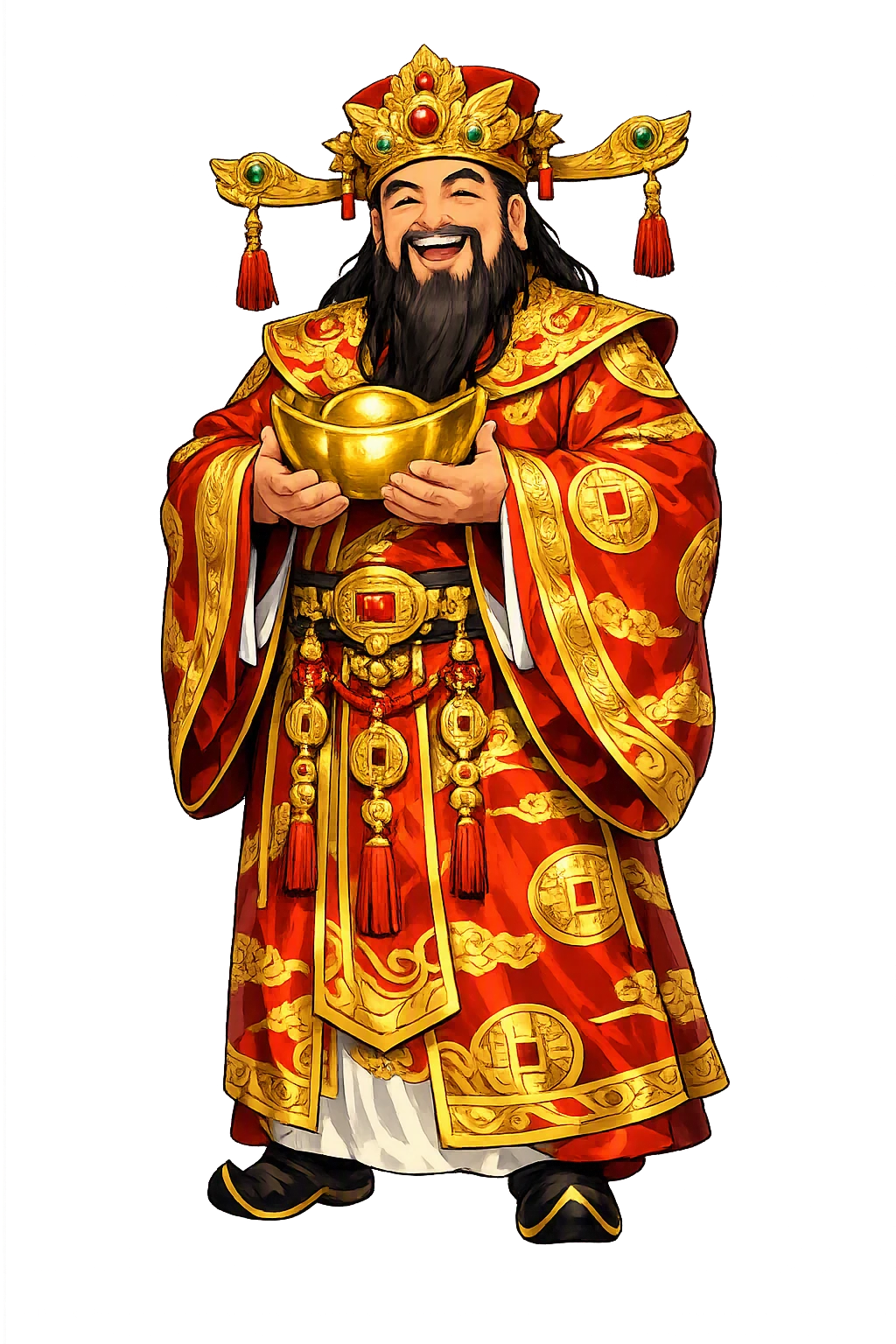
The Cult
Cáishén keeps shop hours: his whole liturgical year is one night at the door. No wealth-god temple is attested before the Song commercial revolution; what grew then, and swelled through the Ming and Qing, was a practice without a priesthood — the fifth-day reception at New Year, the altar above the shop counter or beside the family stove, incense, fruit, and wine set before the red-faced image, the year's first incense contested between rival businesses. Daoist temples admitted him with a wealth-god hall; guild halls enthroned him at the head of the meeting room; temple fairs kept his birthdays with opera and procession. The votive record is deliberately disposable — an icon pasted up at New Year and burned to speed the god on his way — devotion renewed annually rather than endowed forever. His votaries were merchants, and their ledger was the liturgy.