PuniCodex

Extended Lore

ᛒᛁᛋᛏᛚᛅ Bestla

Etymology · Orthography · Cult · Iconography · Reception · Sources

Tier 2 Bestla
Bestla — Mother of Odin, Giantess
01

Quick Facts

Essential information about Bestla, Mother of Odin, Giantess

Original Scriptᛒᛁᛋᛏᛚᛅ
Unicode RestorationBestla
Reconstructed Pronunciation/ˈbest.lɑ/
PantheonNorse
DomainMother of Odin, Giantess
MeaningBark, bast
ClassificationTier 2
Primary DomainBestla
Sacred SymbolsThe lime-bast rope, The genealogy itself, The uncle's songs, The mead-draught
02

Etymology & Word Family

From original script to Unicode restoration

Original Script ᛒᛁᛋᛏᛚᛅ Bestla — "Bark, bast"
Unicode Restoration Bestla Canonical scholarly spelling — ASCII-identical
Modern ASCII bestla Plain-ASCII fallback

The name Bestla reaches the modern world through scholarly transliteration of the norse tradition. Because the conventional spelling uses only Latin letters, its Unicode and ASCII forms coincide — the tradition it carries is in the name itself, not in diacritics.

03

Unicode Character Breakdown

Character-by-character philological analysis

CharacterUnicodeNameBlockPhonetic Role
BU+0042Latin Capital Letter BBasic LatinSame, capitalized
eU+0065Latin Small Letter EBasic LatinSame
sU+0073Latin Small Letter SBasic LatinSame
tU+0074Latin Small Letter TBasic LatinSame
lU+006CLatin Small Letter LBasic LatinSame
aU+0061Latin Small Letter ABasic LatinSame

The Tier 2 classification here reflects fidelity to the attested tradition, not recovered diacritics: every character of Bestla already survives in ASCII. What the restoration preserves is the canonical spelling itself — the form scholarship standardised.

04

Cult & Worship

How the sacred was kept — rites, sanctuaries, remains

The Cult

No temple, altar, or festival of Bestla is recorded anywhere in the Norse sources, and no invocation of her survives: she was worshipped, if at all, only as a name inside the genealogy of the gods she bore. The nearest thing to a cultic memory is textual — her filing among the heiti of troll-women in the þulur of Skáldskaparmál, which kept her name alive as verse-fodder for skalds long after whatever myths explained her were lost. What can be said is circumstantial but pointed: her kin were remembered as a source of sacred teaching, since Hávamál has Óðinn learn his nine spells from her brother, the famed son of Bǫlþorn. Any veneration of Bestla today belongs to modern Heathenry, a conscious revival drawing on the texts, not a survival of Viking-Age practice.

In the Earth

Bestla is an entirely textual figure: no runestone invokes her, no votive deposit names her, no place-name is securely hers, and no image can be identified with her. Her attestations are the Codex Regius of the Poetic Edda (GKS 2365 4to, c. 1270), which alone preserves Hávamál 140, and the manuscripts of Snorri's Edda — the Codex Regius (GKS 2367 4to, early 14th c.), Codex Wormianus, Codex Trajectinus, and the Uppsala Edda — which carry Gylfaginning's genealogy and the þulur that list her among the giantesses. The indirect material context is the same as for the whole jötunn complex: the myth of divine descent from giant-kind belongs to the world of poetry and learned prose, not to dedicatory practice, and no inscription yet found names Bǫlþorn or his daughter.

05

Iconography

How Bestla was imaged across the ages

The Image

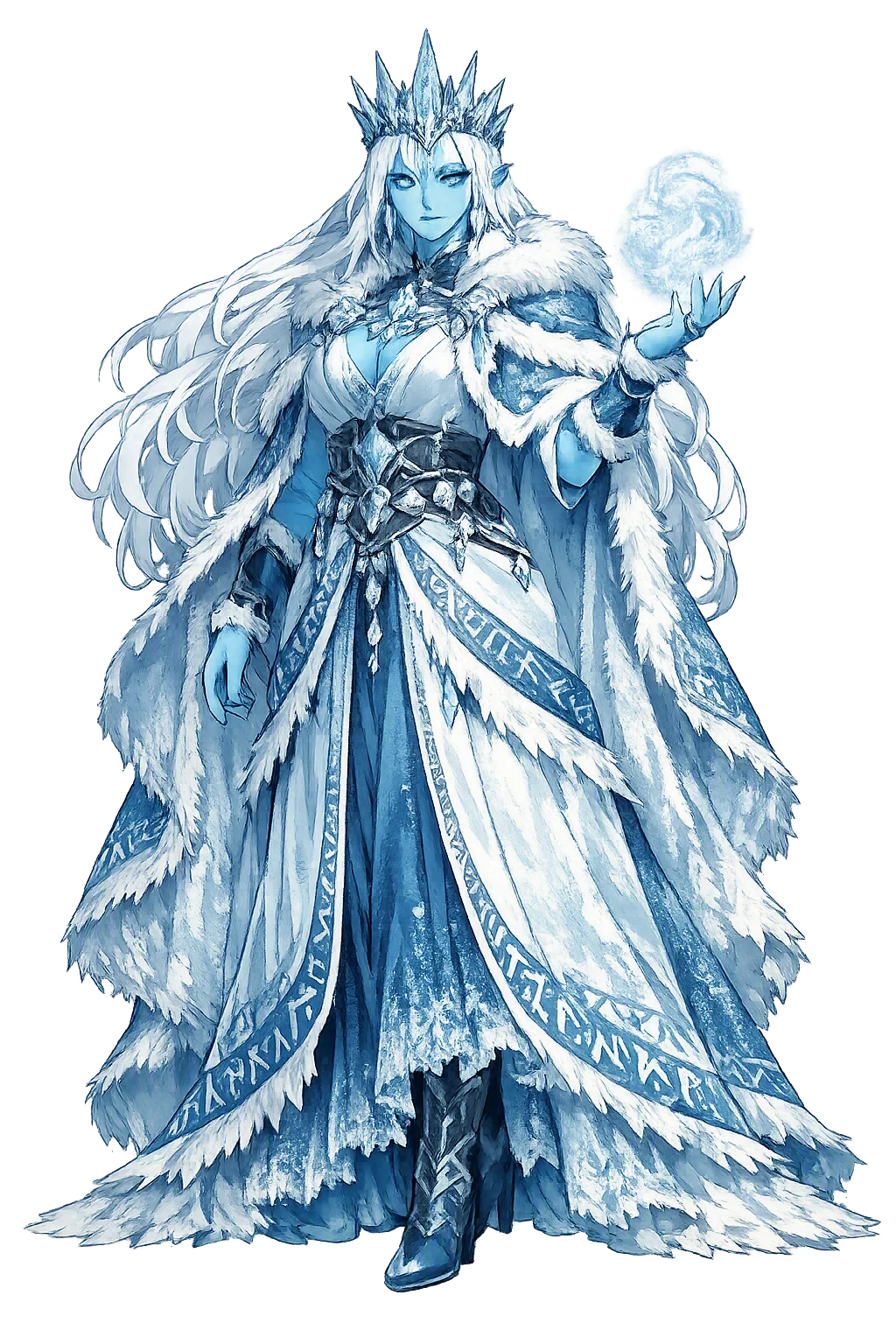
Bestla was never imaged. No picture stone, carving, or medieval manuscript illumination gives her face, dress, or attribute; her only surviving portrait is a position in a family tree. The texts nonetheless supply what an image would have needed: giant descent, as the daughter of Bǫlþorn listed among the troll-women; a marriage across the worlds, to Borr son of Búri; and three sons who made the cosmos from the giant Ymir's body. Modern illustrators have drawn her accordingly — a giantess of the rime-cold north — but every such picture is invention built on two clauses of Snorri and a half-stanza of Hávamál. Her attributes are exactly the ones no artist can paint: a genealogy, a draught of mead, and nine spells learned from her brother.

06

Reception & Transformation

The name after its own age — transmission, translation, survival

Afterlives

Bestla's transmission is the story of the Edda's own. Her name rides in the Codex Regius of the Poetic Edda (c. 1270), the unique manuscript of Hávamál 140, and in the manuscript tradition of Snorri's Prose Edda — Codex Regius, Wormianus, Trajectinus, and the Uppsala Edda. The seventeenth century lifted her from parchment into print: Brynjólfur Sveinsson's recovery of the Codex Regius and Peder Resen's Copenhagen editio princeps of 1665 made the giantess mother of Óðinn a datum of European scholarship. Nineteenth-century philology then turned her into a problem: the tempting derivation from bast, 'lime-bast', made her name a test case in Germanic etymology, weighed through Cleasby–Vigfusson's dictionary (1874) and on into the twentieth-century handbooks. She has inspired no retelling of her own and needed none — her afterlife is her citation, the quiet, unbroken scholarly repetition of the clause where the gods' blood first crosses into giant-kind.

Identifications Across Traditions

Bestla needs no foreign double; her closest comparative frame is inside Germanic culture itself. Tacitus, writing around 98 CE, records that among the Germans a sister's sons are held in the same honour as one's own, and that some peoples regard the bond between a man and his mother's brother as the most sacred of all kinship ties (Germania 20). Hávamál 140 reads like a mythic charter for exactly that institution: Óðinn's initiation into spell-song comes from Bǫlþorn's son, his avunculus. The wider pattern — a divine line that must marry into an older, chthonic race to be complete — has obvious typological cousins, from the Olympians' Titan mothers and wives to the Túatha Dé Danann's marriages with the Fomorians, but the comparison is structural, not historical: the Norse sources state the giant ancestry of the gods without apology, and Bestla is where that ancestry enters the blood.

Modern Legacy

Bestla's afterlife is quiet but real. The nineteenth-century mythographers who canonized the Norse pantheon for the modern world kept her in the family trees, and every handbook since — from the Victorian retellings to Lindow, Simek, and Orchard — repeats Snorri's sentence almost verbatim, because there is nothing more to say and nothing less that can be left out. Modern Heathen and Ásatrú genealogy-work honours her as the mother of the Allfather, and she surfaces occasionally in contemporary fiction and games as the giantess ancestress. Her name never died in Iceland, where Bestla remains a registered, if rare, given name. Her deepest legacy is doctrinal: she is the standing proof, inside the mythology itself, that the Æsir are not a race apart but a young house grown out of the old giants' world.

07

The Meditation

What Bestla means — beyond the dictionary

Bestla is the patron of everything a lineage does not say about itself. The Eddas give her two clauses and no voice; the mythology then spends every remaining page on her descendants. She stands at the exact seam where the official story begins — the grandmother behind the genealogy, the giant inside the gods. That is a truer picture of ancestry than any pedigree chart admits: the line you are named for is never the whole line. Her name, if the old guess is right, means the bast that binds — bark peeled and twisted into rope. Whether or not the etymology holds, the function does: she is the tie that joined two worlds, and the world that resulted never stopped being both.

08

Frequently Asked Questions

Common questions about Bestla, Mother of Odin, Giantess, and Unicode restoration

01How do you pronounce Bestla?

In reconstructed pronunciation, Bestla is /ˈbest.lɑ/ — approximately 'BEST-la' — two short syllables, stress on the first; the 'e' of 'best', then a light open 'ah'.

02What does Bestla mean?

Bestla means Bark, bast in the norse tradition.

03What are the symbols of Bestla?

Bestla is associated with The lime-bast rope (If the etymology holds, her name is the bast of the lime-tree — the bark that binds: the bond between giant-kind and god-kind made personal), The genealogy itself (Her only attested attribute is a position: the line in Snorri's family tree where the gods' pedigree crosses into Jötunheimr), The uncle's songs (The nine mighty spells Hávamál credits to her brother — wisdom descending through the mother's line), The mead-draught (The draught of the precious mead Óðinn drank in the same stanza — inspiration received among giant-kin).

04Why restore Bestla in Unicode?

Bestla is written entirely in ASCII letters, so its restoration is about canonical fidelity rather than recovered diacritics: the temple fixes the name in its scholarly standard spelling, attested in the source tradition, instead of leaving it to drift.

05What is the most important myth about Bestla?

“The Marriage of Borr” — the Gylfaginning 6 story that anchors the mythology of Bestla, told in full on the lore page.

09

Scholarly Sources

The philological foundations of this restoration

Every claim on this page is grounded in established scholarship. The orthographic restorations follow disciplinary convention. The etymological chain follows the best available reference works. This is not invention — it is resurrection through scholarship.

◈

Lexicography & Philology

  • Cleasby-Vigfusson
◎

Primary Texts

  • Prose Edda
  • Snorri Sturluson, Prose Edda: Gylfaginning 6 (Búri, Borr, and the marriage to Bestla, daughter of Bǫlþorn; the birth of Óðinn, Vili, and Vé)
  • Poetic Edda: Hávamál 140 (the nine mighty spells learned from the famed son of Bǫlþorn, Bestla's father, and the draught of Óðrǫrir)
  • Skáldskaparmál, þulur (Bestla among the heiti of troll-women)
◉

Archaeology & Art History

  • Material evidence — iconography, inscriptions, and temple archaeology — for Bestla and related cults.
✦

Religious Studies

  • Tacitus, Germania 20 (the sacred bond between a man and his mother's brother among the Germanic peoples)
  • Cleasby–Vigfusson, An Icelandic-English Dictionary, s.v. Bestla, bast
  • Zoëga, A Concise Dictionary of Old Icelandic, s.v. Bestla
  • Simek, Dictionary of Northern Mythology; Orchard, Dictionary of Norse Myth and Legend; Lindow, Norse Mythology: A Guide — s.v. Bestla (etymology and the giant ancestry of the Æsir)
Return

The Surface Awaits

You have traced the name from its earliest attestation to its Unicode restoration. Now return to the myth. The story is where the name lives.

Back to Lore
Bestla mascot