
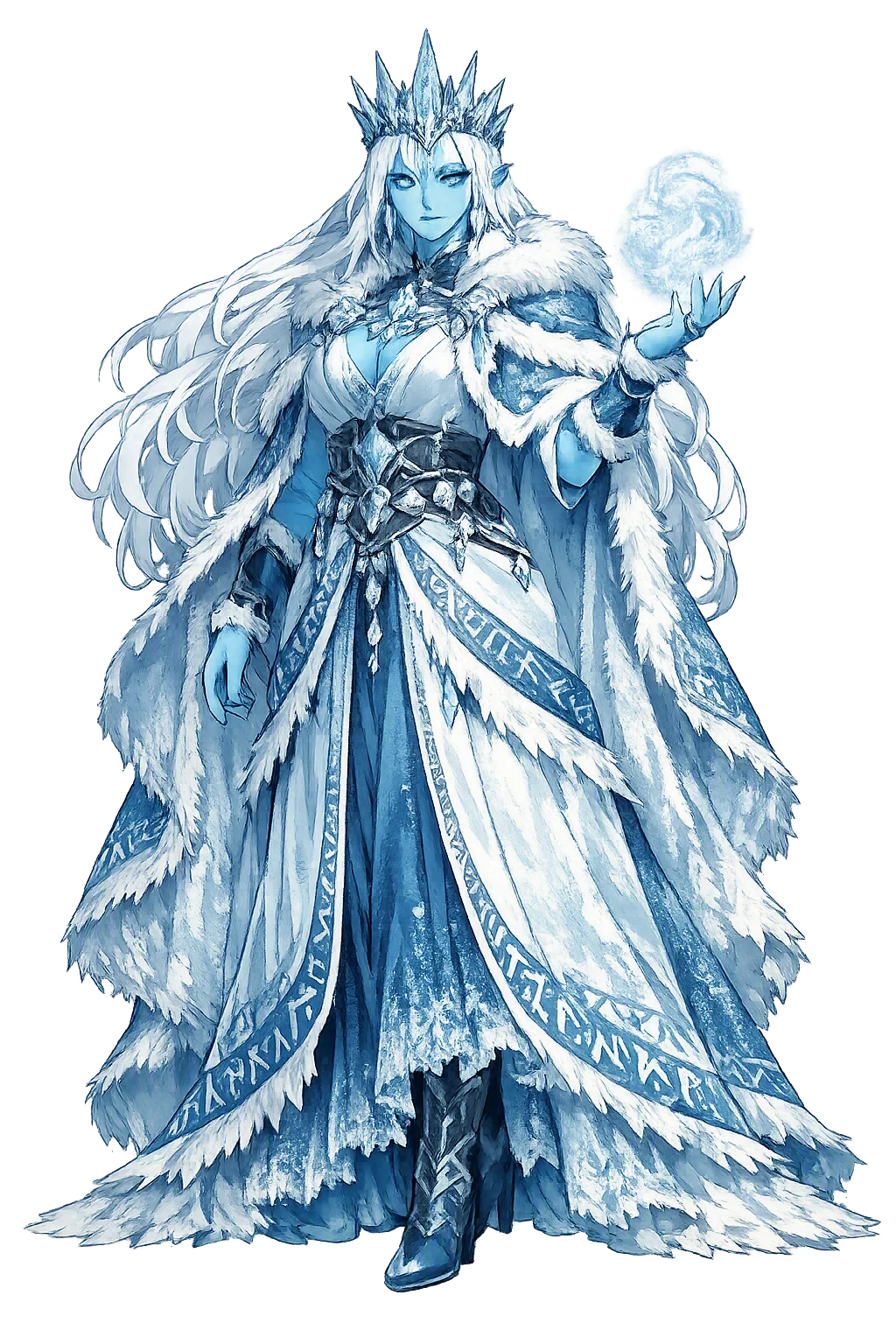
Why Bestla belongs in your address bar
Every address bar is a choice. When you type Bestla, you are not typing a novelty; you are restoring a name that the early DNS, built for English typewriters, could not carry. The plain ASCII form bestla is a leftover of that constraint, not the name itself. This post is the long version of the restoration: where the name comes from, how the Younger Futhark tradition wrote it, how it is pronounced, what the myths and the material record preserve, and why its Unicode form now lives as a working domain. The claim throughout is simple — the original spelling is not decoration. It is the name.
At a Glance
- Restored name: Bestla
- ASCII form: bestla
- Meaning: "Bark, bast"
- Domain of influence: Mother of Odin, Giantess
- Pantheon: Norse
- Classification: Tier 2
- Original script: ᛒᛁᛋᛏᛚᛅ (Younger Futhark)
Overview
Bestla (bestla) — Mother of Odin, Giantess · the Giant Grandmother of the Gods — is the ancestress at the root of the Æsir family tree: the daughter of the giant Bǫlþorn, wife of Borr, and mother of Óðinn, Vili, and Vé — the three brothers who slew Ymir and made the world from his body.
She is one of the most consequential minor figures in the Norse corpus. Snorri's genealogy gives her a single sentence, and Hávamál one oblique stanza, but between them they establish two of the mythology's deepest facts: that the gods descend from giant-kind through the mother's line, and that Óðinn's first initiation into spell-song came from his maternal uncle — 'the famed son of Bǫlþorn, Bestla's father'.
PuniCodex presents the name as Bestla, identical to the ASCII form: the normalized Old Norse spelling carries no diacritic and no distinctive letter, so by the project's mechanical rule the name is Tier 2 — nothing is lost in transit, and nothing needs restoring. No domain form of the name is held in the collection: the plain-ASCII bestla.com is registered to a third party and watched for release, and the temple is served canonically at /bestla/.
The Name
The name is attested in Old Norse as Bestla (a weak feminine, genitive Bestlu). Its etymology is genuinely uncertain. The most-discussed proposal connects it with Old Norse bast, 'bast, the inner bark of the lime-tree', the fibre twisted into rope — whence a reconstructed Proto-Germanic bastjō-, 'she of the bast'. Cleasby–Vigfusson and Zoëga record the name without committing to the etymology; Simek treats the bark-derivation as the standing but unproven guess, and other scholars have looked instead to words for 'wife' or 'embrace'. The lexicon's gloss 'Bark, bast' records the leading proposal, not a settled fact.
Whatever its origin, the name is orthographically uneventful: the normalized Old Norse spelling is plain Latin letters, identical to the ASCII form. By the project's mechanical rule, Bestla is Tier 2 — the restoration preserves no distinctive feature, because the ASCII form loses none.
The letter-by-letter transformation runs:
- b → B — Same, capitalized
- e → e — Same
- s → s — Same
- t → t — Same
- l → l — Same
- a → a — Same
No form of the domain is held by the project: bestla.com is registered to a third party outside the collection and is watched for release. The temple is served at /bestla/ and claims no owned domain.
The Original Script
The name is preserved in medieval Icelandic manuscripts in the Latin alphabet as Bestla — Old Norse (North Germanic), attested 13th–14th c. CE in the Codex Regius of the Poetic Edda (Hávamál 140) and the codices of Snorri's Edda (Gylfaginning 6), recording material centuries older. Before the Latin bookhand, Old Norse names were carved in the Younger Futhark; no runic attestation of this name survives, so the manuscript form is the primary witness.
The scholarly rendering proceeds step by step:
- The name is a weak feminine in -la, genitive Bestlu; its etymology is uncertain, with the leading proposal connecting it to bast, 'lime-bast'.
- The normalized Old Norse spelling is plain Latin letters throughout: no acute accent, no thorn, no eth.
- In the Younger Futhark it would have been carved ᛒᛁᛋᛏᛚᛅ (b-i-s-t-l-a), the ᛁ-rune covering e as it covers i, since the Viking-Age row does not distinguish the front vowels.
- The Unicode form Bestla is therefore letter-for-letter the ASCII form: the name is Tier 2 by the mechanical rule, its restoration complete in plain Latin. Because the name is pure ASCII, its domain was registered decades ago in the ordinary way; bestla.com is held by a third party outside the PuniCodex collection and is watched for release — no form of the name is currently owned, and this temple claims none.
Pronunciation
The reconstructed pronunciation of the name is /ˈbest.lɑ/ — Old Norse Reconstruction.
Phoneme by phoneme:
- Be- — Voiced bilabial stop [b] and short open-mid front [e]; stress falls on the first syllable, as in all Old Norse words
- -stla — Voiceless fricative [s], crisp stop [t], lateral [l], and the short open back [ɑ] of the weak feminine ending
For the modern speaker, the closest approximation is: 'BEST-la' — two short syllables, exactly as the spelling suggests; the 'e' of 'best', then a light open 'ah'.
Kindred and historical forms of the name:
- Old Norse — Bestla, daughter of Bǫlþorn, mother of Óðinn
- Modern Icelandic — Bestla, unchanged and still registered as a given name
- Proposed cognate — Old Norse bast, 'the inner bark of the lime-tree', if the bark-etymology holds
Bestla is Tier 2 because the ASCII form loses nothing: there is no length-mark, no thorn, no eth to restore. The name's difficulty is etymological, not phonological — it is easy to say and hard to explain.
Mythology
Bestla's mythology is a genealogy and a stanza — and between them, the foundation-claim of the whole pantheon.
The Marriage of Borr (Gylfaginning 6)
Snorri's account of the first gods runs: the cow Auðhumla licked the rime-stones until a man appeared, Búri, fair and mighty; Búri's son was Borr, who 'married the woman named Bestla, daughter of the giant Bǫlþorn, and they had three sons: the first was called Óðinn, the second Vili, the third Vé'. It is the mythology's whole notice of her person — and it makes the gods half giants by the mother's side. The three brothers then kill Ymir, carry his body into the middle of Ginnungagap, and build earth, sea, and sky from it; later, walking by the sea, they find two trees and give them breath, wit, and senses — Ask and Embla, the first humans. Everything the gods make, Bestla's sons make.
The Uncle's Nine Songs (Hávamál 140)
Her second attestation is Óðinn's own: 'Nine mighty spells I got from the famed son of Bǫlþorn, Bestla's father, and I got a draught of the precious mead, poured from Óðrǫrir.' The famed son of Bǫlþorn is Bestla's brother — Óðinn's uncle on the mother's side. Before the hanging on the tree and the screaming runes of the following stanzas, the Allfather's first initiation came from his giant mother's house.
Among the Giantess Names (the þulur)
The rhymed name-lists of the Prose Edda file Bestla among the heiti of troll-women, alongside dozens of giantesses no surviving myth uses. The catalogue keeps her with her own kind even as the genealogy marries her out of it — a tension the sources state and never resolve, because they saw none.
Among the Names of Giantesses (Skáldskaparmál, þulur)
Outside the two narratives, the tradition files Bestla where it thinks she belongs: the þulur, the great rhymed name-lists appended to the Prose Edda, count her among the heiti of troll-women — the giantesses of the old world. The lists preserve dozens of jötunn names that no surviving myth ever uses; Bestla alone among them is the mother of the gods. The catalogue keeps her with her own kind even as the genealogy marries her out of it — the two facts the sources never try to reconcile, because they never saw a contradiction.
Symbols & Iconography
Bestla has no cult regalia and no iconography; the corpus attributes nothing to her person. The images that gather around her are the images of her function — binding, descent, and transmission:
- The lime-bast rope — If the etymology from bast holds, her name is the bark-fibre that binds: the cord joining giant-kind to god-kind, an apt if unprovable emblem
- The genealogy — Her sole attested attribute is a position in Snorri's family tree: the line where the Æsir pedigree roots in Jötunheimr
- The nine spells — The songs of power Hávamál credits to her brother, Óðinn's maternal uncle: wisdom descending through the mother's house
- The draught of Óðrǫrir — The precious mead Óðinn says he received in the same stanza: inspiration accepted among his giant kin
Archaeology & Evidence
No cult site, votive deposit, runestone, or named image of Bestla is known; her attestation is entirely literary, and there is no evidence she was ever an object of worship rather than a figure of genealogy. The witnesses are manuscripts: the Codex Regius of the Poetic Edda (GKS 2365 4to, c. 1270), the sole carrier of Hávamál 140, and the principal codices of Snorri's Edda — the Codex Regius (GKS 2367 4to, early 14th c.), the Codex Wormianus, and the Uppsala Edda — which preserve Gylfaginning's genealogy and the þulur that list her among the troll-women.
Her father Bǫlþorn is equally invisible to the material record. The silence is consistent with her function: Bestla exists to anchor a family tree, and family trees live in books.
Realm & Domain
Bestla's sphere is ancestry itself: she is the mother of Óðinn and the point where the divine genealogy crosses into the giants' world.
Mother of Odin
Snorri's whole account of her is the marriage and the birth: Borr 'married the woman named Bestla, daughter of the giant Bǫlþorn, and they had three sons: the first was called Óðinn, the second Vili, the third Vé'. The chief of the Æsir is a giant's grandson on the spear-side of the world-tree — on the spindle-side, entirely so.
Giantess
The þulur of the Prose Edda count her among the heiti of troll-women: the tradition never forgets that the gods' mother belongs to the old kind.
The Maternal Line
Hávamál 140 makes her family the source of Óðinn's first wisdom: nine mighty spells from her brother, the famed son of Bǫlþorn, and a draught of the precious mead.
The Seam of the Genealogy
Every figure of the younger mythology — Þórr, Baldr, Hermóðr, and the rest — descends from her; she is the grandmother of the gods themselves.
Across Cultures
Bestla has no foreign double and was never equated with any Roman or Greek figure; her comparative frame is internal to Germanic culture. Tacitus records that among the Germans a sister's sons are held as dear as a man's own, and that some peoples regard the bond with the mother's brother — the avunculate — as the most sacred tie of all (Germania 20). Hávamál 140 reads like the mythic charter of that institution: the god's first teacher is his avunculus, the son of Bǫlþorn.
Structurally, she belongs to a wider pattern the mythologies of neighbouring peoples share: a young divine house that must marry into an older, chthonic race to be complete. The Olympians descend from Titans and marry into their kind; the Túatha Dé Danann intermarry with the Fomorians they fight. The comparison is typological, not genetic — no borrowing is claimed — but it clarifies what the Norse sources state so calmly: the Æsir are a young dynasty grafted onto the old giant world, and Bestla is the graft. Her kin in the pantheon are the other giant-blooded members of the divine house: Óðinn her son, Loki the full jötunn inside the Æsir's circle, and Skaði and Angrboða, giantesses bound by marriage and by offspring to the gods.
Cultural Legacy
Bestla's afterlife is the afterlife of a foundation-stone: rarely seen, always load-bearing. The nineteenth-century mythographers who rebuilt the Norse pantheon for the modern reader kept her in the family trees, and every scholarly handbook since — Simek, Orchard, Lindow — repeats Snorri's sentence, because it is all there is and it cannot be omitted.
In modern Iceland the name never died: Bestla remains a registered given name, rare but unbroken. In contemporary Heathen and Ásatrú practice she is honoured in genealogical rites as the mother of the Allfather, and she surfaces occasionally in fiction and games as the giantess ancestress of the gods. Her deepest legacy is doctrinal rather than popular: she is the mythology's own standing proof that the Æsir are not a race apart — that the gods of Ásgarðr carry the giants' world in their blood, and carry it through a woman the texts almost entirely passed over.
The Scholarly Record
The account of Bestla given in this edition rests on the witnesses and reference works listed below. The Eddas supply the two attestations; Tacitus frames the maternal-uncle pattern; the lexica and handbooks secure the name's disputed etymology.
- Snorri Sturluson, Edda, Gylfaginning 6–8 (Búri, Borr, Bestla; the sons who made the world), ed. and trans. Anthony Faulkes (London: Everyman, 1987).
- The Poetic Edda, trans. Carolyne Larrington, 2nd ed. (Oxford: Oxford University Press, 2014): Hávamál 140 (the nine spells from Bǫlþorn's son).
- Snorri Sturluson, Edda, Skáldskaparmál, þulur (troll-women's heiti), trans. Faulkes (1987).
- Tacitus, Germania 20, ed. and trans. J. B. Rives (Oxford: Clarendon Press, 1999).
- Cleasby, Richard, and Guðbrandur Vigfússon, An Icelandic-English Dictionary, 2nd ed. (Oxford: Clarendon Press, 1957), s.v. Bestla, bast.
- Zoëga, Geir T., A Concise Dictionary of Old Icelandic (Oxford: Clarendon Press, 1910), s.v. Bestla.
- Simek, Rudolf, Dictionary of Northern Mythology, trans. Angela Hall (Cambridge: D. S. Brewer, 1993), s.v. Bestla.
- Orchard, Andy, Dictionary of Norse Myth and Legend (London: Cassell, 1997), s.v. Bestla.
- Lindow, John, Norse Mythology: A Guide to the Gods, Heroes, Rituals, and Beliefs (Oxford: Oxford University Press, 2001), s.v. Bestla.
A Meditation
Bestla is the patron of everything a lineage does not say about itself. The Eddas give her a sentence and a half; the mythology then spends every remaining page on her descendants. She stands at the exact seam where the official story begins — the grandmother behind the genealogy, the giant inside the gods.
That is a truer picture of ancestry than any pedigree admits: the line you are named for is never the whole line. If the old guess about her name is right, it means the bast that binds — bark peeled and twisted into rope. Whether or not the etymology holds, the function does: she is the tie that joined two worlds, and the world that resulted never stopped being both. The question she puts to every genealogy is the one her descendants had to live with: what are you prepared to owe the side of the family the family does not mention?
The Unicode Restoration
Bestla is classified as Tier 2: the restoration needs no distinctive letters or diacritics its ASCII form would lose. The ASCII fallback bestla still resolves everywhere, but it is the restored form that carries the name's full information. That is the whole thesis of this temple: the marks are the message.
Why This Restoration Matters
Restoring Bestla is part of a larger effort to make the web multilingual by default. The PuniCodex project does not ask users to learn a new alphabet; it asks the infrastructure to respect the alphabets that already exist. Every section of this post — the script, the sound, the myths, the evidence — converges on the same point: the marks in Bestla are information, and information deserves an address of its own. A single Unicode domain is a small proof, but it is a proof that scales: every name restored makes the next one easier, and every visit to the temple is a vote for the restored form.
Explore Further
This post is one doorway into the temple. The home page carries the full character breakdown and the ambient canvas; the lore page tells the myths in long form; the Scholarly Edition preserves the sources, pronunciation data, and revision history; and the patron wall supports the restoration directly. For the wider map, browse the Lexicon, explore the Pantheon, or return to the PuniCodex blog.
Related Names
Sources
The full scholarly apparatus — every citation, revision, and review — lives in the Scholarly Edition. Key references for this post:
- Snorri Sturluson, Edda, Gylfaginning 6 (the genealogy of Búri, Borr, and Bestla), ed. and trans. Anthony Faulkes (London: Everyman, 1987).
- Hávamál 140 (Poetic Edda), trans. Carolyne Larrington, The Poetic Edda, 2nd ed. (Oxford: Oxford University Press, 2014).
- Cleasby, Richard, and Guðbrandur Vigfússon, An Icelandic-English Dictionary, 2nd ed. (Oxford: Clarendon Press, 1957), s.v. Bestla.
- Cleasby, Richard, and Guðbrandur Vigfússon, An Icelandic-English Dictionary, 2nd ed. (Oxford: Clarendon Press, 1957), s.v. Bestla, bast.
- Lexicon authorities for this entry: Prose Edda, Cleasby-Vigfusson.