
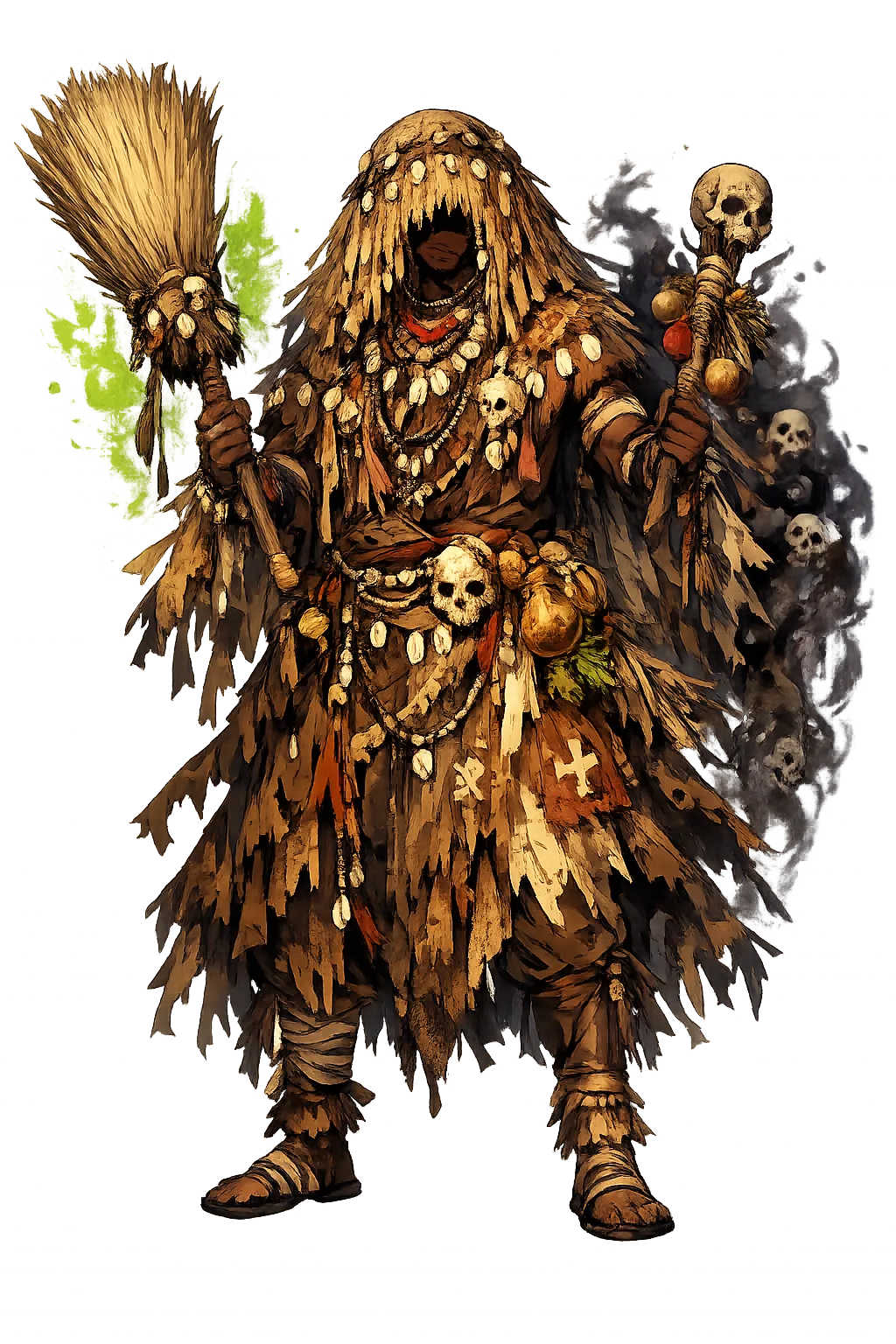
The Cult
Ọbalúayé's ancient cult was a cult of the boundary. In Yorubaland the smallpox deity's shrine stood outside the town, where the settlement meets the bush, and his service belonged to an initiated priesthood bound by strict taboos — his older name, Sọpọnná, was not spoken aloud during an epidemic, since naming summons (Idowu, Bascom). Sacrifice was made at a distance: grains, cooling herbs, and humble things laid at the shrine rather than feasts held in his honour, for a god who sends affliction is approached, not entertained. Colonial medical campaigns of the early twentieth century drove the cult underground in West Africa, and it re-emerged across the Atlantic as one of the most public religions of the Americas. In Cuban Santería his feast falls on 17 December, the day of Saint Lazarus, when crowds in the tens of thousands process to the shrine of San Lázaro at El Rincón outside Santiago de las Vegas, many crawling the last stretch on their knees behind their offerings. In Bahia, Candomblé houses tend Obaluaiê with earth-toned beads and consecrated brooms.