PuniCodex

Extended Lore

Arawn

Etymology · Phonology · Orthography · Cultural Legacy · Primary Sources

Tier 2 Arawn
Arawn — Otherworld, Annwn
01

Quick Facts

Essential information about Arawn, Otherworld, Annwn

Scholarly TransliterationArawn
Unicode RestorationArawn
Reconstructed Pronunciation/aˈraʊn/
PantheonCeltic
DomainOtherworld, Annwn
MeaningSilver-tongued
ClassificationTier 2
Primary DomainArawn
Sacred SymbolsThe white hounds with red ears, The exchanged shape, The single blow, The untouched bed, The ford
02

Etymology & Word Family

From original script to Unicode restoration

Scholarly Transliteration Arawn Arawn — "Silver-tongued"
Unicode Restoration Arawn Restored stress, length, and script
Modern ASCII arawn Plain-ASCII fallback

Arawn is Tier 2 by the mechanical rule: the Middle Welsh form is already plain ASCII — there is no diacritic and no distinctive letter for the restoration to recover, and only the capital distinguishes the restored form from the input. The lexicon's traditional gloss is 'silver-tongued', but the etymology is genuinely unsettled: scholars have proposed a learned borrowing of the biblical Aaron (a suggestion going back to Ifor Williams) as well as native Celtic derivations, and no derivation commands consensus (Koch; GPC, s.v. Arawn).

03

Unicode Character Breakdown

Character-by-character philological analysis

CharacterUnicodeNameBlockPhonetic Role
AU+0041Latin Capital Letter ABasic LatinSame, capitalized
rU+0072Latin Small Letter RBasic LatinSame
aU+0061Latin Small Letter ABasic LatinSame
wU+0077Latin Small Letter WBasic LatinSame
nU+006ELatin Small Letter NBasic LatinSame

The Tier 2 classification reflects how much of the original phonology this restoration preserves — stress and vowel length for Greek names, distinctive letters and diacritics for every other tradition.

04

Cultural Significance

From ancient cult to modern Unicode

Ancient Domain

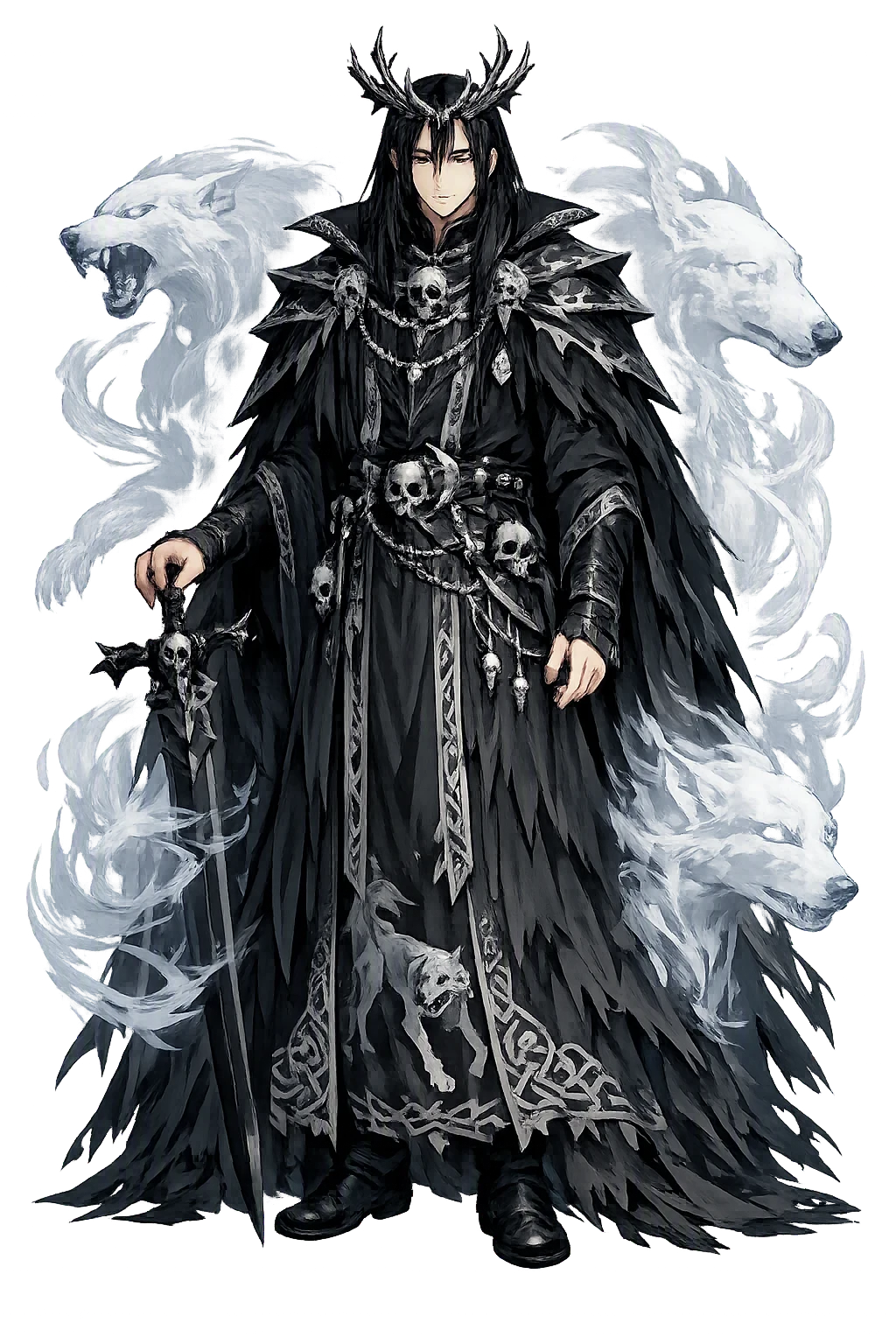
Arawn is the king of Annwn, the Welsh Otherworld: the lord whose white, red-eared hounds bring down a stag in Pwyll's hunting-ground at Glyn Cuch, and whose answer to the insult is the strangest exchange in the Mabinogi — a year and a day in which two kings trade faces, thrones, and beds, so that honor may be tested where no one is watching.

Arawn in Later Traditions

Arawn's comparisons are almost all inward, and the Welsh corpus itself supplies them. His clearest rival for the kingship of the Otherworld is Gwyn ap Nudd, whom Culhwch ac Olwen says God set over the demons of Annwn — a second king of Annwn in a second text, and the folklore gave Gwyn the hounds that the Mabinogi gave Arawn. The structural reading runs deeper: commentators since Mac Cana have read the Annwn adventure as the proving of Pwyll's character before the coming of [[rhiannon|Rhiannon]] — the hero tested in honor and restraint in the Otherworld before the Otherworld's queen chooses him in this one. The name itself may be the tale's one foreign guest: Ifor Williams proposed that Arawn is a learned borrowing of the biblical Aaron, carried into Welsh by Latin learning, and the handbooks register the possibility without deciding it. No Gaulish or Irish counterpart of Arawn has ever been convincingly proposed; the exchange-of-kings motif is the Mabinogi's own.

Modern Legacy

Lady Charlotte Guest's translation of the Mabinogion (1838–49) carried Arawn out of the White and Red Books and into English, and the white red-eared hounds entered the stock of Celtic imagery from that day. In the twentieth century the figure found his widest audience inverted: Lloyd Alexander's Chronicles of Prydain (1964–68) made 'Arawn Death-Lord of Annuvin' the arch-villain of five children's novels, and Disney's The Black Cauldron (1985) kept the dark-lord version on screen — a long way from the most honorable king in Welsh prose, but the reason the name is known worldwide. The Cŵn Annwn meanwhile never left Welsh folklore, still baying as a death-omen in folk memory into the modern period. Modern Druid and pagan practice honours Arawn as lord of the Otherworld and patron of kept faith, and the name survives in Wales as a rare living given name.

Unicode Restoration as Cultural Act

Restoring Arawn in a domain name is more than orthographic accuracy. It is a statement that the internet should recognize the full range of human writing — not only the ASCII keyboard.

05

Frequently Asked Questions

Common questions about Arawn, Otherworld, Annwn, and Unicode restoration

01How do you pronounce Arawn?

In reconstructed pronunciation, Arawn is /aˈraʊn/ — approximately 'a-ROWN' — the aw sounds like the 'ow' of 'town', and the stress falls on the second syllable, the Welsh penult..

02What does Arawn mean?

Arawn means Silver-tongued in the celtic tradition.

03What are the symbols of Arawn?

Arawn is associated with The white hounds with red ears (The colour of the Otherworld — a hunt that arrives from the far side of the boundary), The exchanged shape (Kingship as a trust held for another: the year Arawn's face ruled two realms), The single blow (Restraint as the condition of victory — strike once, or not at all), The untouched bed (Honor kept in the dark, where no one would ever have known), The ford (The meeting-place between realms, where debts are paid and blows are counted).

04Why restore Arawn in Unicode?

Plain ASCII arawn strips the stress, length, and script that make the name specific. Unicode restoration returns the name to its original written dignity.

05What is the most important myth about Arawn?

Pwyll, lord of Dyfed, goes hunting at Glyn Cuch, and there he sees a sight he has never seen: a pack of hounds shining white with red ears bringing down a stag. He drives them off and sets his own hounds on the kill — and the stranger who rides up is Arawn, king of Annwn, and it was his hunt. Arawn names the discourtesy plainly: he will not take revenge, but a man who feeds his hounds on another's kill has wronged him, and Pwyll offers to buy back his friendship at whatever price. Arawn names it. He has a rival, Hafgan, king of the other realm of Annwn, who wars on him without end; let Pwyll take Arawn's shape and his place for a year and a day, and meet Hafgan at the ford at the year's turning.

06

Scholarly Sources

The philological foundations of this restoration

Every claim on this page is grounded in established scholarship. The orthographic restorations follow disciplinary convention. The etymological chain follows the best available reference works. This is not invention — it is resurrection through scholarship.

Lexicography & Philology

  • Mabinogion
  • MacKillop

Primary Texts

  • The Immram Brain (Voyage of Bran); Tochmarc Étaíne; Cóir Anmann; medieval Irish saga literature.

Archaeology & Art History

  • Material evidence — iconography, inscriptions, and temple archaeology — for Arawn and related cults.
  • Arawn is a textual figure: no inscription, votive deposit, or cult site names him, and the epigraphic record of pre-Christian Wales — Latin and ogham memorial stones of roughly the fifth to seventh centuries — records personal names, not theonyms. His evidence is manuscript evidence. The Four Branches survive complete in the White Book of Rhydderch (Aberystwyth, NLW Peniarth MSS 4–5, c. 1350) and the Red Book of Hergest (Oxford, Jesus College MS 111, c. 1382–1410), with earlier fragments in Peniarth 6; the tales' date of composition is argued rather than documented — Ifor Williams placed them in the later eleventh century, and current scholarship generally holds a range around 1060–1120. The geography of the tale is real: Glyn Cuch, where the insult happens, is identified with the valley of the River Cych on the Pembrokeshire–Carmarthenshire border, inside the Dyfed the story governs. The nearest material echo of the Otherworld hunt is literary: the Book of Taliesin, the manuscript that preserves Preiddeu Annwfn, is a fourteenth-century Welsh codex (NLW Peniarth MS 2).

Religious Studies

  • The Mabinogi — First Branch (Pwyll Pendefig Dyfed): trans. Sioned Davies (Oxford, 2007); Welsh text ed. Ifor Williams, Pedeir Keinc y Mabinogi (1930)
  • The Mabinogion, trans. Lady Charlotte Guest (1838–49)
  • Preiddeu Annwfn ('The Spoils of Annwn'), Book of Taliesin — the cauldron of the Head of Annwfn
  • Mac Cana, Proinsias, The Mabinogi, 2nd ed. (University of Wales Press, 1992) — the First Branch as the proving of Pwyll
  • Koch, John T., ed., Celtic Culture: A Historical Encyclopedia (ABC-CLIO, 2006), s.vv. Arawn, Annwn
  • MacKillop, James, Dictionary of Celtic Mythology (Oxford, 1998), s.vv. Arawn, Annwn, Cŵn Annwn
  • Geiriadur Prifysgol Cymru / A Dictionary of the Welsh Language (GPC), s.v. Arawn
Return

The Surface Awaits

You have traced the name from its earliest attestation to its Unicode restoration. Now return to the myth. The story is where the name lives.

Back to Lore
Arawn mascot