PuniCodex

Extended Lore

Ἀφροδίτη Aphrodítē

Etymology · Orthography · Cultural Legacy · Reception · Primary Sources

Tier 1 Aphrodítē.com
Aphrodítē — Love, Beauty, Pleasure
01

Quick Facts

Essential information about Aphrodítē, Love, Beauty, Pleasure

Original ScriptἈφροδίτη
Unicode RestorationAphrodítē
Reconstructed Pronunciation/a.pʰro.dí.tɛː/
PantheonGreek
DomainLove, Beauty, Pleasure
MeaningBorn of sea foam (from ἀφρός)
ClassificationTier 1
Primary DomainAphrodítē.com
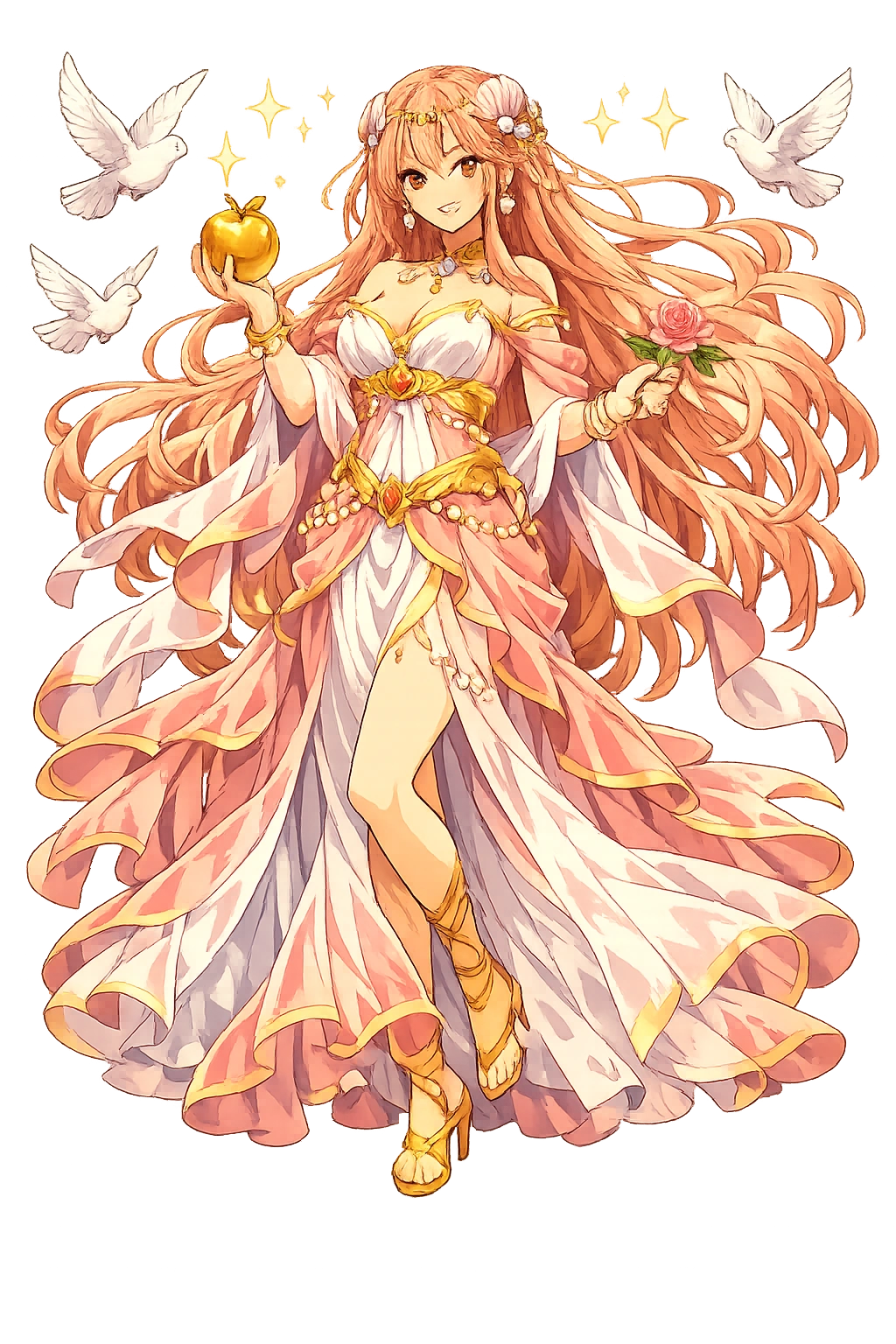
Sacred SymbolsDove, Rose, Scallop shell, Mirror, Girdle
02

Etymology & Word Family

From original script to Unicode restoration

Proto-indo-european *áphrōs foam, froth
Original Script Ἀφροδίτη Aphrodítē — "Born of sea foam (from ἀφρός)"
Unicode Restoration Aphrodítē Restored stress, length, and script
Modern ASCII aphrodite Plain-ASCII fallback

From ἀφρός "foam", born from sea-foam (Hesiod). Possibly Semitic loan via Cyprus.

03

Unicode Character Breakdown

Character-by-character philological analysis

CharacterUnicodeNameBlockPhonetic Role
AU+0041Latin Capital Letter ABasic LatinAlpha
pU+0070Latin Small Letter PBasic LatinPi
hU+0068Latin Small Letter HBasic LatinRough breathing
rU+0072Latin Small Letter RBasic LatinRho
oU+006FLatin Small Letter OBasic LatinOmicron
dU+0064Latin Small Letter DBasic LatinDelta
íU+00EDLatin Small Letter I with AcuteLatin-1 SupplementAcute on short iota
tU+0074Latin Small Letter TBasic LatinTau
ēU+0113Latin Small Letter E with MacronLatin Extended-AEta: long epsilon

The Tier 1 classification reflects how much of the original phonology this restoration preserves — stress and vowel length for Greek names, distinctive letters and diacritics for every other tradition.

04

Cultural Significance

From ancient cult to modern memory

Aphrodítē in Later Traditions

The Romans identified Aphrodítē with Venus, originally a goddess of gardens and spring whose cult became one of the most powerful in Rome. Julius Caesar claimed descent from Venus through Aeneas, making her the divine ancestress of the Roman people. In the Renaissance she became the supreme subject of painting — Botticelli's 'Birth of Venus' is perhaps the most famous image of a pagan goddess in Western art. The planet Venus and the concept of 'venereal' preserve her name. Modern culture still uses her as the archetype of beauty and desire.

Modern Legacy

Aphrodítē shaped Greek culture more deeply than any martial god. Marriage, prostitution, homosexual love, and civic festivals all fell under her patronage. The Aphrodisia was celebrated across the Greek world; her temples at Corinth and Cyprus were famous. In philosophy and poetry she became the symbol of erôs, the force that draws all things toward beauty and unity. The modern cosmetics and fashion industries are secular continuations of her cult. Restoring Aphrodítē with its full Greek accents restores the original sound of the goddess who rules desire itself.

In the Earth

Sanctuary of Aphrodite at Palaepaphos (Kouklia, Cyprus): a 12th-century BCE shrine with later ashlar temple, altar courts, and the famous Cypriot syllabary dedication 'Aphrodite's sanctuary.' At Cythera, the sanctuary of Aphrodite Ourania overlooked the sea from the sixth century BCE. Corinth's temple of Aphrodite on Acrocorinth is attested by Pausanias and excavation. The Knidia of Praxiteles (Roman copies, e.g., Vatican Museums) was housed in a circular tholos at Cnidus.

05

The Meditation

What Aphrodítē means — beyond the dictionary

Aphrodítē is the only Olympian whose power no one can refuse. Wisdom, strength, and even fate can be contested; desire simply arrives. The Greeks did not moralize this. They made her beautiful, dangerous, and sovereign. Her myths show that love can create harmony or ruin cities, and usually both.

In a digital age, desire is more engineered than ever — algorithms optimize for engagement, which often means optimizing for arousal. Aphrodítē's ancient dignity reminds us that desire is not merely a mechanism to be exploited. It is one of the fundamental forces of human life, and it deserves its original name.

06

Screen & Culture

Where Aphrodítē echoes through film, television, and games — and how

07

Frequently Asked Questions

Common questions about Aphrodítē, Love, Beauty, Pleasure, and Unicode restoration

01How do you pronounce Aphrodítē?

In reconstructed pronunciation, Aphrodítē is /a.pʰro.dí.tɛː/ — approximately 'ah-fro-DEE-tay' — the third syllable carries the pitch, and the final vowel is long and clear.

02What does Aphrodítē mean?

Aphrodítē means Born of sea foam (from ἀφρός) in the greek tradition.

03What are the symbols of Aphrodítē?

Aphrodítē is associated with Dove (The bird of love and the vehicle of her chariot), Rose (Beauty, secrecy, and the blood of Adonis), Scallop shell (The sea-foam from which she was born), Mirror (Self-knowledge and the power of appearance), Girdle (Her magical zone that inspires irresistible desire).

04Why are there different spellings of Aphrodítē?

Each form is a historically attested restoration rather than a mistake: Aphroditē is the macron-only form (LSJ convention: length only, no acute). PUNICODEX registers the full set so the tradition is preserved under every defensible spelling.

05Why restore Aphrodítē in Unicode?

Plain ASCII aphrodite strips the stress, length, and script that make the name specific. Unicode restoration returns the name to its original written dignity.

06What is the most important myth about Aphrodítē?

“Born from the Sea” — Aphrodítē's myths anatomize desire as a cosmic power — foam-born from an act of violence, sovereign over gods and mortals alike, equally capable of granting a prince his heart's wish, destroying the greatest city of the age, and making a faithful wife's ruin a matter of divine policy. The full telling lives on the lore page.

08

Scholarly Sources

The philological foundations of this restoration

Every claim on this page is grounded in established scholarship. The orthographic restorations follow disciplinary convention. The etymological chain follows the best available reference works. This is not invention — it is resurrection through scholarship.

Lexicography & Philology

  • Liddell, H. G., Scott, R., & Jones, H. S. A Greek-English Lexicon. Oxford: Clarendon Press, 9th ed. 1996.
  • Pape, W., & Benseler, G. E. Wörterbuch der griechischen Eigennamen. Braunschweig: Vieweg, 1884.
  • Beekes, R. S. P. Etymological Dictionary of Greek. Leiden: Brill, 2010.

Primary Texts

Archaeology & Art History

  • Material evidence — iconography, inscriptions, and temple archaeology — for Aphrodítē and related cults.

Religious Studies

  • Comparative studies of greek religion and the place of Aphrodítē within it.
Return

The Surface Awaits

You have traced the name from its earliest attestation to its Unicode restoration. Now return to the myth. The story is where the name lives.

Back to Lore
Aphrodítē mascot