PuniCodex

Extended Lore

ᛅᚾᛏᚠᛅᚱᛁ Andvari

Etymology · Orthography · Cult · Iconography · Reception · Sources

Tier 2 Andvari
Andvari — Dwarf, Guardian of Gold
01

Quick Facts

Essential information about Andvari, Dwarf, Guardian of Gold

Original Scriptᛅᚾᛏᚠᛅᚱᛁ
Unicode RestorationAndvari
Reconstructed Pronunciation/ˈɑnd.vɑ.rɪ/
PantheonNorse
DomainDwarf, Guardian of Gold
MeaningCareful one
ClassificationTier 2
Primary DomainAndvari
Sacred SymbolsAndvaranaut, Andvarafors, Rán's net, The pike-shape, The otter's ransom
02

Etymology & Word Family

From original script to Unicode restoration

Original Script ᛅᚾᛏᚠᛅᚱᛁ Andvari — "Careful one"
Unicode Restoration Andvari Canonical scholarly spelling — ASCII-identical
Modern ASCII andvari Plain-ASCII fallback

The name Andvari reaches the modern world through scholarly transliteration of the norse tradition. Because the conventional spelling uses only Latin letters, its Unicode and ASCII forms coincide — the tradition it carries is in the name itself, not in diacritics.

03

Unicode Character Breakdown

Character-by-character philological analysis

CharacterUnicodeNameBlockPhonetic Role
AU+0041Latin Capital Letter ABasic LatinSame, capitalized
nU+006ELatin Small Letter NBasic LatinSame
dU+0064Latin Small Letter DBasic LatinSame
vU+0076Latin Small Letter VBasic LatinSame
aU+0061Latin Small Letter ABasic LatinSame
rU+0072Latin Small Letter RBasic LatinSame
iU+0069Latin Small Letter IBasic LatinSame

The Tier 2 classification here reflects fidelity to the attested tradition, not recovered diacritics: every character of Andvari already survives in ASCII. What the restoration preserves is the canonical spelling itself — the form scholarship standardised.

04

Cult & Worship

How the sacred was kept — rites, sanctuaries, remains

The Cult

There is no cult of Andvari to describe, and the corpus is honest about it. No temple, festival, priesthood, or votive deposit names him: he exists only as a character inside the Völsung narrative, preserved in the prose of Reginsmál, Snorri’s Skáldskaparmál, and Völsunga saga, and archaeology has found no runestone, offering, or named image that records him. What tradition preserves in place of worship is a dwelling — Andvarafors, the waterfall — and a legal-economic world in which his gold can be seized as wergild and his last ring taken at spear-point. The nearest thing to a rite in his dossier is the curse itself, the spoken word that turns theft into destiny. Modern Norse pagan practice centers on the recognized gods; no attested modern cult of Andvari is documented. His temple remains the page.

In the Earth

Andvari himself is a purely literary figure: no runestone, votive deposit, or named image records him. But the cycle his gold sets in motion is the best-attested narrative in Viking-Age art. The Ramsund carving in Södermanland (Sö 101, c. 1030) cuts the whole Fáfnir episode into a rock face — Sigurðr thrusting up through the serpent's body, the slain Reginn with his smith's tools, Grani loaded with the treasure, and the birds whose speech the dragon-heart taught — and the Gök stone (Sö 327) weaves the same scenes through a runic inscription. The Drävle runestone (U 1163) shows Sigurðr stabbing the serpent, and related scenes appear on the Isle of Man and in English stone sculpture as far west as the Halton cross in Lancashire. The manuscript witnesses are thin in the usual way: Reginsmál and its narrative prose stand in the Codex Regius of the Poetic Edda, Snorri's account in the codices of the Prose Edda, and Völsunga saga in the paper manuscript NKS 1824 b 4to (c. 1400), the saga's only complete medieval copy.

05

Iconography

How Andvari was imaged across the ages

The Image

Nobody in the Viking Age carved Andvari. The runestones of the Sigurðr cycle cut Fáfnir, Reginn, and the treasure into rock, but the dwarf who owned the gold appears in none of them; his entire visual dossier is a pike-shape, a net, and a waterfall described in words. Medieval art ignored him. The image everyone now carries dates only from print: nineteenth- and early twentieth-century book illustration gave the waterfall scene its first fixed pictures — W. G. Collingwood’s line drawings for the Morris–Magnússon Völsungs (1901) are the classic case, a small hunched keeper in dark water. His attributes are therefore textual, not visual: pike, falls, hoard, and the ring no hand could keep.

06

Reception & Transformation

The name after its own age — transmission, translation, survival

Afterlives

Andvari’s reception is a relay of manuscripts, editions, and debate. Snorri Sturluson received him first, in the 1220s, retelling the catching as an etymology — the otter’s ransom, Fáfnir’s bed — myth pressed into service as a dictionary of gold-kennings. The Völsunga saga writer expanded the same prose a generation later, and the pair of medieval carriers — the Poetic Edda’s Codex Regius (c. 1270) and the saga’s unique complete copy, the c. 1400 paper manuscript now in Copenhagen — bore him toward modernity. The rescue was Icelandic and Danish: Resen’s printed Edda (1665) gave Scandinavia a text to argue with, Árni Magnússon’s collection campaign (1702–1712) swept the vellum to Copenhagen, and nineteenth-century philology — Bugge’s Norrœn fornkvæði (1867), Neckel’s Edda (1914), the translations of Thorpe and Bellows — fixed the episode in the European canon. Around the hoard swirled the Nibelungenfrage, the century-long argument over how the Norse and German versions relate. The dwarf’s own afterlife is the quiet one: andvari, ‘care’, survives as a common noun in every Icelandic dictionary — the careful one finally keeping, in lexicography, what the net took.

Identifications Across Traditions

Andvari needs no foreign counterpart to be understood — the cursed-hoard complex is native Germanic and runs through the whole North: treasure extorted is treasure poisoned. The corpus itself supplies the sharpest contrast in another dwarf-ring: Draupnir, forged freely by Brokkr and Sindri for the gods, which drips eight new rings every ninth night — the given ring multiplies, the taken ring kills. Continental heroic tradition keeps the same stratum: the hoard of the Nibelungenlied, sunk in the Rhine and deadly to its holders, is the southern telling of the Andvaranaut complex, and scholars treat the Norse and German versions as one inheritance rather than borrowings. The dwarf caught in fish-shape also has a family resemblance to the water-spirits of later folklore, but the Eddic Andvari is a smith and hoarder first; his pike-form is camouflage, not nature.

Modern Legacy

Andvari's afterlife is one of the largest in all mythology, under another name. Wagner's Alberich in Das Rheingold — the dwarf of the water's depth who is robbed of his gold, lays a curse on the ring forged from it, and watches it destroy owner after owner through four operas — is built substantially on the Andvari of Reginsmál and Völsunga saga, crossed with the Nibelungenlied's hoard; the curse-motif that drives the entire Ring cycle is the sentence spoken at Andvarafors. William Morris's Sigurd the Volsung (1876) kept the original name before English readers, and the Nibelungenlied's Rhine-gold carried the same hoard into German memory. In Iceland the name itself was revived with no curse attached: Andvari is the title of the learned journal of the Icelandic Literary Society, founded in 1874 — the careful one finally keeping something that multiplies without killing. Modern fantasy's treasury of cursed gold, from dragons' hoards onward, runs downhill from his waterfall.

07

The Meditation

What Andvari means — beyond the dictionary

His name is care itself — andvari, watchfulness, the quality of mind that checks the locks twice. And the myth is merciless to it: the most careful keeper in the corpus is caught in an afternoon, by a borrowed net, in his own water, and stripped to the last hidden ring. Care could not save him, because care guards against theft and what came for him was law — a wergild, a debt, a skin that had to be covered hair by hair. What he had left was speech, and he used it like a dwarf: precisely, vindictively, and with perfect aim. The curse is the one thing he made that nobody could take, because it was already given. Everything after is arithmetic — two brothers, eight princes, no joy — and the myth lets the numbers run for four generations to teach a single lesson the North never tired of: gold that is taken by force does not change owners; it changes victims. Andvari in his waterfall is the small still beginning of the Völsung tragedy, the moment the hook was set. The careful one's revenge on the careless world was simply to tell it the truth about what it had just picked up.

08

Frequently Asked Questions

Common questions about Andvari, Dwarf, Guardian of Gold, and Unicode restoration

01How do you pronounce Andvari?

In reconstructed pronunciation, Andvari is /ˈɑnd.vɑ.rɪ/ — approximately 'AHND-vah-ri' — three even syllables, stress on the first, the v soft as in 'very', the r trilled, the ending a short 'ih' as in 'bit'.

02What does Andvari mean?

Andvari means Careful one in the norse tradition.

03What are the symbols of Andvari?

Andvari is associated with Andvaranaut (The ring taken last and cursed first — a treasure that kills every hand it passes through), Andvarafors (The waterfall named for its keeper — a hoard-hall that flows and cannot be locked), Rán's net (Borrowed catching-power — the gods paying a blood-debt with a fisherman's trick), The pike-shape (The disguise of the careful — a form made for guarding, not for fighting), The otter's ransom (The wergild that had to cover a dead otter's skin from the inside — gold counted out hair by hair).

04Why restore Andvari in Unicode?

Andvari is written entirely in ASCII letters, so its restoration is about canonical fidelity rather than recovered diacritics: the temple fixes the name in its scholarly standard spelling, attested in the source tradition, instead of leaving it to drift.

05What is the most important myth about Andvari?

“The Otter's Ransom” — the Reginsmál (prose) · Skáldskaparmál story that anchors the mythology of Andvari, told in full on the lore page.

09

Scholarly Sources

The philological foundations of this restoration

Every claim on this page is grounded in established scholarship. The orthographic restorations follow disciplinary convention. The etymological chain follows the best available reference works. This is not invention — it is resurrection through scholarship.

◈

Lexicography & Philology

  • Cleasby-Vigfusson
◎

Primary Texts

  • Poetic Edda
  • Poetic Edda: Reginsmál, prose introduction (the killing of Ótr, Rán's net, the ransom, and the curse: 'the gold that Gustr owned shall be the death of two brothers and bring strife to eight of the kin-line; no man shall have joy of my wealth')
  • Poetic Edda: Fáfnismál (Sigurðr and the dying dragon on the hoard) and Atlakviða (the Gjúkungs, the sunken gold, the Rhine as last keeper)
  • Snorri Sturluson, Prose Edda: Skáldskaparmál (the otter's ransom and the kennings for gold — 'forced payment of the Æsir', 'Fáfnir's bed', 'metal of Gnitaheiðr')
◉

Archaeology & Art History

  • Material evidence — iconography, inscriptions, and temple archaeology — for Andvari and related cults.
✦

Religious Studies

  • Völsunga saga, chs. 14 (the catching of Andvari in pike-shape, the ring, the curse), 18–20 (Fáfnir and Reginn, Sigurðr's slaying), and 24–31 (the Gjúkungar, the hoard in the Rhine)
  • Cleasby–Vigfusson, An Icelandic-English Dictionary, s.v. andvari ('care, solicitude'; the dwarf), Andvara-naut, otr-gjöld; Zoëga, A Concise Dictionary of Old Icelandic, s.v. andvari
  • Simek, Dictionary of Northern Mythology; Orchard, Dictionary of Norse Myth and Legend; Lindow, Norse Mythology: A Guide — s.v. Andvari, Andvaranaut, the cursed-hoard complex
Return

The Surface Awaits

You have traced the name from its earliest attestation to its Unicode restoration. Now return to the myth. The story is where the name lives.

Back to Lore
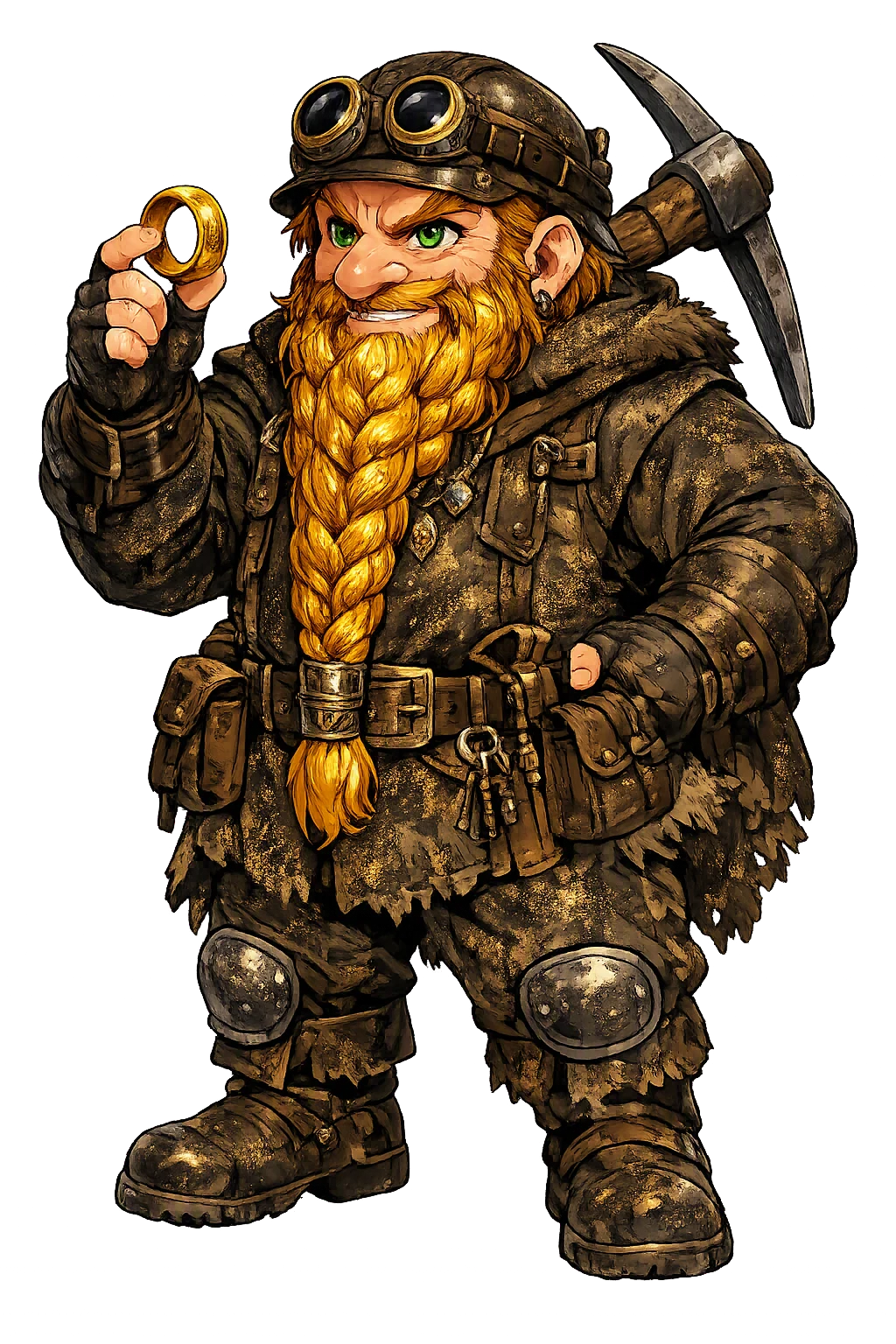
Andvari mascot