PuniCodex

Extended Lore

הֶבֶל Hāḇel

Etymology · Orthography · Cult · Iconography · Reception · Sources

Tier 1 Hāḇel.com
Hāḇel — First Victim
01

Quick Facts

Essential information about Hāḇel, First Victim

Original Scriptהֶבֶל
Unicode RestorationHāḇel
Reconstructed Pronunciation/ˈhɛvɛl/
PantheonCanaanite
DomainFirst Victim
MeaningSecond son of Adam and Eve
ClassificationTier 1
Primary DomainHāḇel.com
Sacred SymbolsLamb, Shepherd's crook, Altar smoke, Blood, Silence
02

Etymology & Word Family

From original script to Unicode restoration

Original Script הֶבֶל Hāḇel — "Second son of Adam and Eve"
Unicode Restoration Hāḇel Restored stress, length, and script
Modern ASCII habel Plain-ASCII fallback

The name Hāḇel carries the orthographic signature of the canaanite tradition: הֶבֶל. Unicode restoration recovers what ASCII flattens.

03

Unicode Character Breakdown

Character-by-character philological analysis

CharacterUnicodeNameBlockPhonetic Role
HU+0048Latin Capital Letter HBasic LatinSame, capitalized
āU+0101Latin Small Letter A with MacronLatin Extended-AMacron: long vowel
ḇU+1E07Latin Small Letter B with Line BelowUnknownBeth with line below
eU+0065Latin Small Letter EBasic LatinSame
lU+006CLatin Small Letter LBasic LatinSame

The Tier 1 classification reflects how much of the original phonology this restoration preserves — stress and vowel length for Greek names, distinctive letters and diacritics for every other tradition.

04

Cult & Worship

How the sacred was kept — rites, sanctuaries, remains

The Cult

No ancient cult of Abel is attested: Genesis gives him an altar but no sanctuary, no priesthood, and no festival, and the archaeological record is silent. What the ancient world did was retell his story — the accepted offering and the crying blood became a fixed point of Jewish, Christian, and Muslim reflection rather than a rite. The one genuine cult site is late and Islamic: Nabi Habil, a shrine on Mount Qassioun above Damascus revered as the resting place of Hābīl's head, has drawn pilgrims — above all Shiʿa — into the modern period. That is the whole material dossier of Abel's worship; ancient innocence never received a temple.

In the Earth

There is no archaeological evidence for Abel as an individual; his story belongs to the primeval cycle of Genesis. The pastoral way of life associated with him is well attested in the ancient Near East through zooarchaeological remains, rock art, and texts from Mesopotamia and the Levant. The contrast between farmers and herders that frames the Cain and Abel story reflects real tensions in early Near Eastern societies.

05

Iconography

How Hāḇel was imaged across the ages

The Image

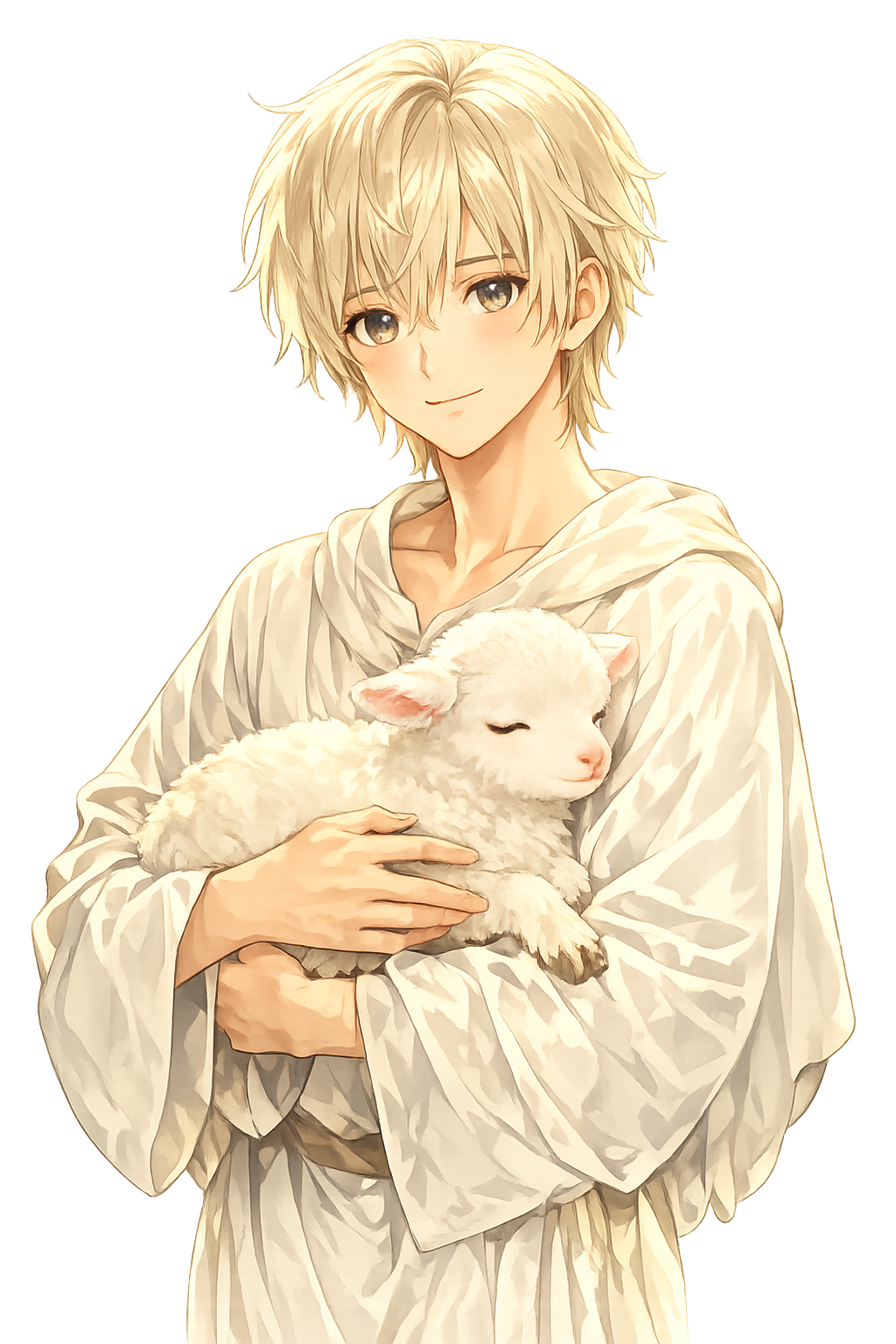
Abel enters art through his sacrifice and his murder. The earliest images are early Christian: third- and fourth-century catacomb frescoes show the two brothers at their altars, and the motif becomes a sarcophagus staple — the accepted lamb against the rejected sheaf as the first types of right and wrong worship. In Ravenna's San Vitale (consecrated 547) Abel's lamb and Melchizedek's bread face Abraham's Isaac across the chancel: the three Old Testament prefigurations of sacrifice set around the Eucharistic altar. Medieval typology kept him ubiquitous in manuscript and stone; the emotional register peaks in the Renaissance, when the killing itself becomes great painting — Titian's Cain and Abel (1542–44), on the ceiling of Santa Maria della Salute in Venice, gives the first murder operatic weight.

06

Reception & Transformation

The name after its own age — transmission, translation, survival

Afterlives

Abel's journey is a history of interpretation layered on nine verses. The Septuagint gave Hebrew Hevel its Greek form Ἅβελ and the Vulgate its Latin one, and the New Testament had already made him the first martyr — “through his faith, though he died, he still speaks” (Hebrews 11:4). Augustine read the brothers as the two cities built by two loves; medieval exegesis made Abel the type of the innocent Church slain by Cain the persecutor, an allegory that governed a millennium of Christian art and drama, from the Wakefield cycle's comic Mactatio Abel to pulpit and psalter. The Reformation era inherited him as faith's model sacrifice, and modern scholarship turned to the story's making: Gunkel's form-critical Genesis commentary (1901) set the primeval narrative beside its Mesopotamian cousins, and the question that starts the story — why the unexplained favor? — remains as open in the commentaries as it was in the field.

Identifications Across Traditions

In the Qur'an, Abel is Hābīl, the righteous son of Adam who warns Cain against killing him and becomes a prophet-martyr. Christian tradition makes him a type of Christ: the innocent shepherd whose blood is shed by his own brother and whose death accuses the world. Medieval Jewish legend gives Abel a speaking role in the afterlife, where his blood testifies before God; the second-century BCE book of Jubilees (4:1–12) already expands the story, giving the brothers a dispute over the division of the earth and Abel a burial by angels. The figure of the innocent, silent victim — whether Abel, Isaac, or the lamb — runs like a thread through the Abrahamic traditions, each retelling deepening the pathos of a life cut short.

Modern Legacy

Hāḇel is the archetype of the innocent victim. His name has named countless characters in literature and film who suffer for their goodness, and the phrase 'Cain and Abel' has become a shorthand for any fatal rivalry between brothers. In theology, Abel's blood becomes a symbol of justice that cannot be silenced; in psychology, the Abel-figure represents the vulnerable self destroyed by envy. The story also haunts discussions of sacrifice: why does divine favor fall on one offering and not another? Abel does not answer; his silence is the point.

07

The Meditation

What Hāḇel means — beyond the dictionary

Hāḇel is the one who does nothing wrong and is destroyed for it. He offers what he has, accepts what comes, and dies without a recorded word. In a culture that celebrates agency, Abel is a difficult figure: he is important precisely because he does not act. His significance lies in being seen, being favored, and being killed — a progression that mirrors the fate of many who are noticed for qualities that provoke others.

Yet Abel's silence is not emptiness. After his death, his blood speaks. The earth itself becomes his witness, refusing to absorb the crime quietly. In this, Abel anticipates every tradition that says the victim's voice must be heard, even — especially — when the victim can no longer speak. To remember Hāḇel is to remember that innocence is not a protection, but it is also not a waste. It cries out until it is answered.

08

Frequently Asked Questions

Common questions about Hāḇel, First Victim, and Unicode restoration

01How do you pronounce Hāḇel?

In reconstructed pronunciation, Hāḇel is /ˈhɛvɛl/ — approximately 'HEH-vel' — both vowels are short 'e' as in 'bed'; the 'v' is soft, and the stress falls on the first syllable.

02What does Hāḇel mean?

Hāḇel means Second son of Adam and Eve in the canaanite tradition.

03What are the symbols of Hāḇel?

Hāḇel is associated with Lamb (The firstling of the flock and the innocent animal whose death prefigures later sacrifice), Shepherd's crook (His pastoral calling and, in Christian reading, the gentle authority of Christ), Altar smoke (The sign of an offering accepted by God), Blood (The blood that cries from the ground and that 'speaks a better word than the blood of Abel' in the New Testament), Silence (Abel never speaks; his voice is heard only after death).

04Why restore Hāḇel in Unicode?

Plain ASCII habel strips the stress, length, and script that make the name specific. Unicode restoration returns the name to its original written dignity.

05What is the most important myth about Hāḇel?

“The Favored Offering” — the Genesis 4:3–5 story that anchors the mythology of Hāḇel, told in full on the lore page.

09

Scholarly Sources

The philological foundations of this restoration

Every claim on this page is grounded in established scholarship. The orthographic restorations follow disciplinary convention. The etymological chain follows the best available reference works. This is not invention — it is resurrection through scholarship.

◈

Lexicography & Philology

  • Abraham
◎

Primary Texts

  • The Ugaritic Baal Cycle; ritual texts from Ugarit and Phoenician inscriptions.
◉

Archaeology & Art History

  • Material evidence — iconography, inscriptions, and temple archaeology — for Hāḇel and related cults.
✦

Religious Studies

  • HALOT s.v. הֶבֶל
  • TDOT s.v. Abel
  • Genesis 4; Jubilees 4:1–12; Josephus, Antiquities 1.52
  • Matthew 23:35; Luke 11:51; Hebrews 11:4; 12:24
  • Qur'an, Surah 5:27–31
Return

The Surface Awaits

You have traced the name from its earliest attestation to its Unicode restoration. Now return to the myth. The story is where the name lives.

Back to Lore
Hāḇel mascot