
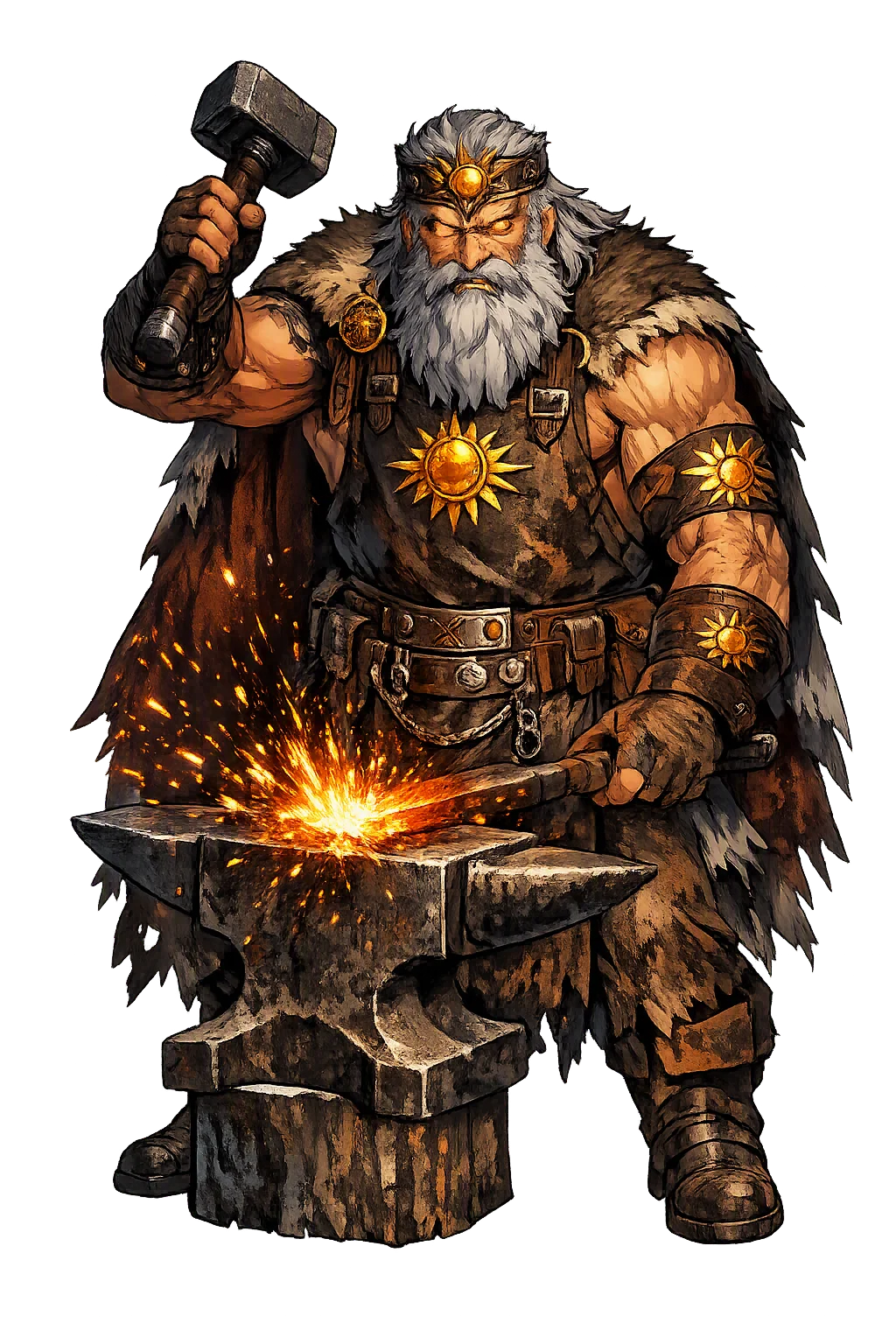
The register rules: Svarog
Evidence dossier 467 — Svarog. Every exhibit catalogued, every ruling stated with its grounds.
At a Glance
- Canonical form: Svarog
- Original script: —
- Pantheon: Slavic
- Convention: the tradition’s own scholarly transliteration standard
- False forms on record: 0
- Contested forms: none attested
- Series: The Canonical Register, No. 467 of 548
The Evidence
Exhibit 1 — the attestation. The tradition's record preserves this name in its romanized scholarly form: Svarog — no older script survives to transcribe, so the canonical content is the exactness of the spelling itself.
Exhibit 2 — the flattened form. The plain form svarog differs from the canonical Svarog only by convention of display — case, not content. It is acceptable everywhere: in legacy systems, in plain-text citation, in the DNS itself. What is not acceptable is what follows in the register: respellings that change the letters, not just their case.
Exhibit 3 — the physical record. There is, strictly speaking, no archaeology of Svarog — no image, temple, amulet, or inscription bearing his name has ever been found, and the famous monumental idols of the Slavs (the Zbruch idol, the Svetovid of Arkona, the Prillwitz figures) belong to other gods. The Slavic smith-god is a documentary phenomenon: three medieval texts and their later copies. This absence is itself instructive. Baltic and Scandinavian pagans left cult objects; the early Slavs, converting earlier and building in wood, left almost none — so the chronicles, compiled by their enemies and converts, are the sole excavation. Every claim about Svarog's worship should be weighed against that silence.
Exhibit 4 — the continuing record. Svarog's modern presence is out of all proportion to his ancient evidence. He is the Slavic god schoolchildren meet first — the smith of the sky in every compendium of Slavic mythology — and his name has become a byword for the lost pre-Christian heritage of Eastern Europe.
The Convention's Own History
Every tradition in this register has its own scholarly transliteration standard, built by its own specialists over decades or centuries, and the register follows each on its own terms: the tradition’s own standard. The principle that unifies them is the one the whole project stands on: a name is evidence, and evidence is not negotiable — not for keyboards, not for convenience, not for anyone.
The Protocol's Position
Can the canonical form live in the address bar? Almost always, yes. IDNA 2008 admits every mark this register defends — the DNS stores them as `xn--` punycode and modern browsers render them natively. The real frictions are practical, not legal: some registrars stock only part of the IDN space, so a theoretically valid name can be temporarily unbuyable; and stacked combinations (an acute riding a macron) remain awkward to type on mobile keyboards even where the protocol accepts them.
The project's answer is a ranked ladder, not a compromise: the full restoration first, then attested fallbacks in descending order of completeness. The ladder's lowest rung, plain ASCII, is a vehicle for legacy systems — sanctioned, but never presented as the scholarly form.
The Verdict
Case closed on Svarog: canonical, cited, and defended. The keyboard form svarog is the same name in another register of display — always acceptable. The register's files remain open: if a source surfaces that changes any line of this entry, the entry changes. Until then, the temple at /svarog/ holds the canonical form.
The docket for this ruling: no false forms on the docket; no contested forms attested; the attestation rests on 6 cited sources — The Svyatoslav Izbornik (1073), Old Russian miscellany, Primary Chronicle (Povest' vremennykh let), anti-pagan sermon, Helmold of Bosau, Chronica Slavorum I.52 (c. 1172).
The Register Continues
Entry 467 of 548 in the Canonical Register. Around it: the temple's founding dispatch, the Restoration File on the marks themselves, the Resonance File on the archetype at work, and the Rulebook behind all of it.
Continue the register — previous entry: Suttungr (read it) · next entry: Syn (read it).
The Canonical Register is written from the same canonical record as the lexicon itself. If a false form is missing from this page, it is because the evidence does not support calling it false — or because we have not seen it yet. Show us, with a citation, and the register will answer.