PuniCodex

Extended Lore

Yánluó

Etymology · Phonology · Orthography · Cultural Legacy · Primary Sources

Tier 1 Yánluó.com
Yánluó — Judgment, Underworld, Order
01

Quick Facts

Essential information about Yánluó, Judgment, Underworld, Order

Scholarly TransliterationYánluó
Unicode RestorationYánluó
Reconstructed Pronunciation/jɛn˧˥ lwo˧˥/
PantheonChinese
DomainJudgment, Underworld, Order
Meaning'King Yan' (閻羅, from Yama), the judge of the dead
ClassificationTier 1
Primary DomainYánluó.com
Sacred SymbolsThe judge's cap, The brush, The ox-head and horse-face
02

Etymology & Word Family

From original script to Unicode restoration

Scholarly Transliteration Yánluó Yánluó — "'King Yan' (閻羅, from Yama), the judge of the dead"
Unicode Restoration Yánluó Restored stress, length, and script
Modern ASCII yanluo Plain-ASCII fallback

Yánluó 阎罗 abbreviates Yánluówáng 阎罗王, "King Yama" — the Sanskrit Yamarāja worn down by two millennia of Chinese speech. The second tone on yán and the rising luó are fixed by tradition; the full Sanskrit form survives in Buddhist ritual language beside the everyday king.

03

Unicode Character Breakdown

Character-by-character philological analysis

CharacterUnicodeNameBlockPhonetic Role
YU+0059Latin Capital Letter YBasic LatinSame letter
áU+00E1Latin Small Letter A with AcuteLatin-1 SupplementStress mark (acute/tone)
nU+006ELatin Small Letter NBasic LatinSame letter
lU+006CLatin Small Letter LBasic LatinSame letter
uU+0075Latin Small Letter UBasic LatinSame letter
óU+00F3Latin Small Letter O with AcuteLatin-1 SupplementStress mark (acute/tone)

The Tier 1 classification reflects which ancient features stress, length, or script are preserved in this restoration.

04

Cultural Significance

From ancient cult to modern Unicode

Ancient Domain

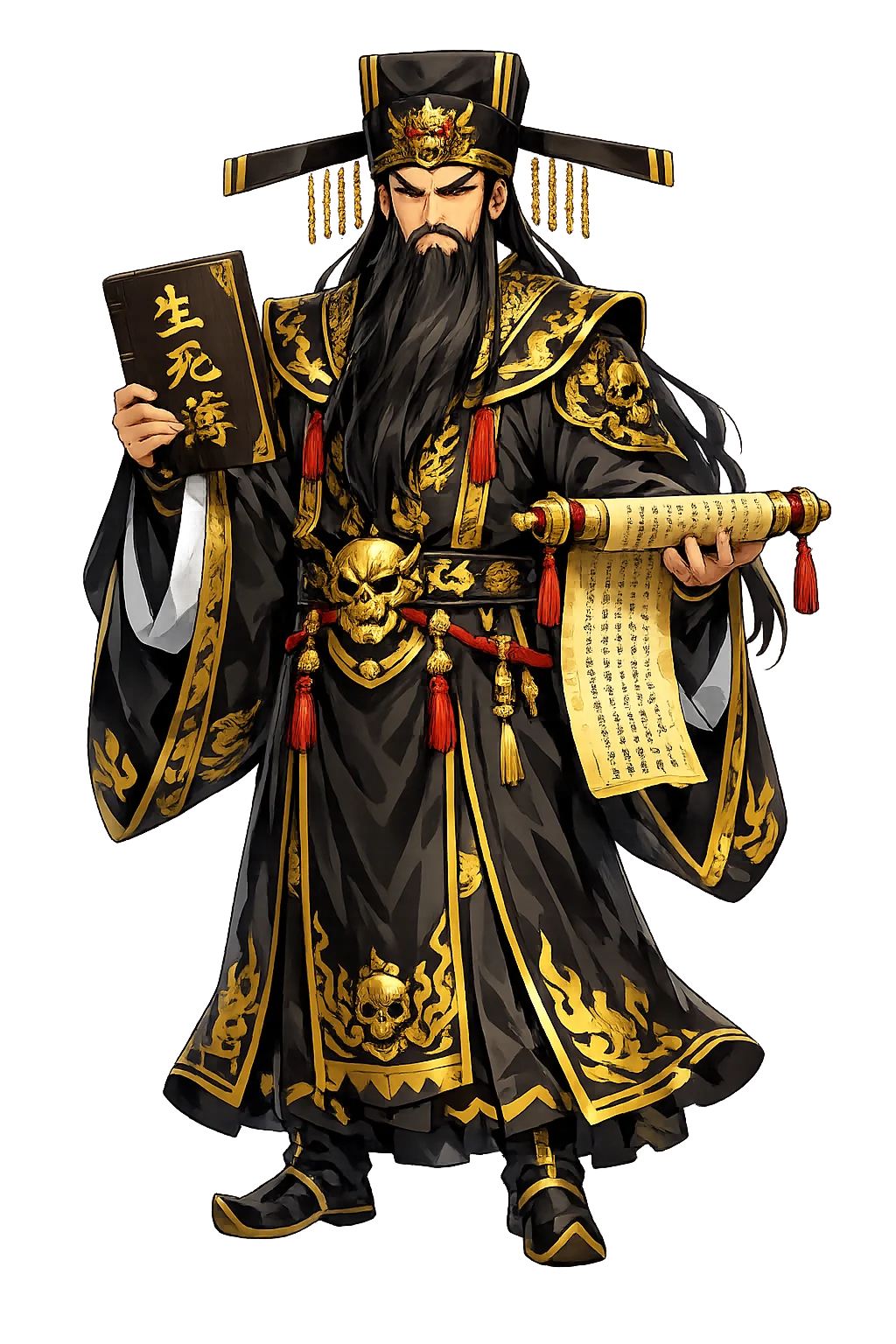
Yánluó is the magistrate at the centre of the Chinese afterlife: the Indian god Yama enthroned in a Chinese courtroom, judging the dead from their own record books. Before him, the myth insists, wealth and rank are nothing — the only evidence is what you did.

Yánluó in Later Traditions

He is the supreme case of Buddhist localization: Yama became Yánluó in China, Enma in Japan (with his own mirror and the red-faced scowl of a thousand temple gates), Yeomna in Korea, and the judges of Vietnamese and Central Asian afterlives. Daoism staffed his courts with its own celestial bureaucrats; folk religion added Mèngpó's tea and the City God as his local deputies. The whole edifice — Indian god, Chinese paperwork, village morality — is East Asia's most successful religious import.

Modern Legacy

"Meeting Yánluó" (见阎罗) remains the everyday Chinese idiom for dying; "Yánwáng ye" names any pitiless authority. Japanese Enma anchors a thousand festivals and anime (Jigoku Shōjo's Enma Ai made him a household name to a new century). The judgment imagery — mirror, ledger, no bribes — shaped East Asian ethics as deeply as any scripture: a whole civilization's conscience, staffed by one borrowed god.

Unicode Restoration as Cultural Act

Restoring Yánluó in a domain name is more than orthographic accuracy. It is a statement that the internet should recognize the full range of human writing — not only the ASCII keyboard.

05

Frequently Asked Questions

Common questions about Yánluó, Judgment, Underworld, Order, and Unicode restoration

01How do you pronounce Yánluó?

In reconstructed pronunciation, Yánluó is /jɛn˧˥ lwo˧˥/ — approximately yen-lwoh, rising tone on both syllables..

02What does Yánluó mean?

Yánluó means 'King Yan' (閻羅, from Yama), the judge of the dead in the chinese tradition.

03What are the symbols of Yánluó?

Yánluó is associated with The judge's cap (The Chinese magistrate's hat on an Indian god — the Silk Road in one image), The brush (The instrument of the verdict — deaths recorded, sentences written), The ox-head and horse-face (His bailiffs: the two wardens who fetch the souls of the dead).

04Why restore Yánluó in Unicode?

Plain ASCII yanluo strips the stress, length, and script that make the name specific. Unicode restoration returns the name to its original written dignity.

05What is the most important myth about Yánluó?

Before he was a king of hell he was the first man to die: the Ṛgveda's Yama chose mortality, found the road to the other world, and became the guide and host of the fathers — honoured with songs and offerings. Buddhism inherited him as the dharma-king who interrogates the dead: the three messengers — old age, sickness, death — are his summonses, sent to every house.

06

Scholarly Sources

The philological foundations of this restoration

Every claim on this page is grounded in established scholarship. The orthographic restorations follow disciplinary convention. The etymological chain follows the best available reference works. This is not invention — it is resurrection through scholarship.

Lexicography & Philology

  • Fengshen Yanyi
  • Chinese Buddhist canon
  • Teiser

Primary Texts

  • Rigveda

Archaeology & Art History

  • Material evidence — iconography, inscriptions, and temple archaeology — for Yánluó and related cults.
  • The Ten Kings paintings — sets of hanging scrolls showing each court — survive from the Ningbo workshops of the 12th–13th centuries (the finest sets in Nara and the Metropolitan Museum), with Yánluó's tribunal at their dramatic centre. Fengdu ghost city's temples stage the full bureaucratic underworld in statuary. Dunhuang documents preserve the Sūtra of the Ten Kings, the charter-text of the whole system, copied in tens of thousands for the dead's benefit.

Religious Studies

  • Chinese Buddhist canon
  • Teiser
  • Chinese folk religion
  • Chinese Buddhist texts
  • Buddhist texts
Return

The Surface Awaits

You have traced the name from its earliest attestation to its Unicode restoration. Now return to the myth. The story is where the name lives.

Back to Lore
Yánluó mascot