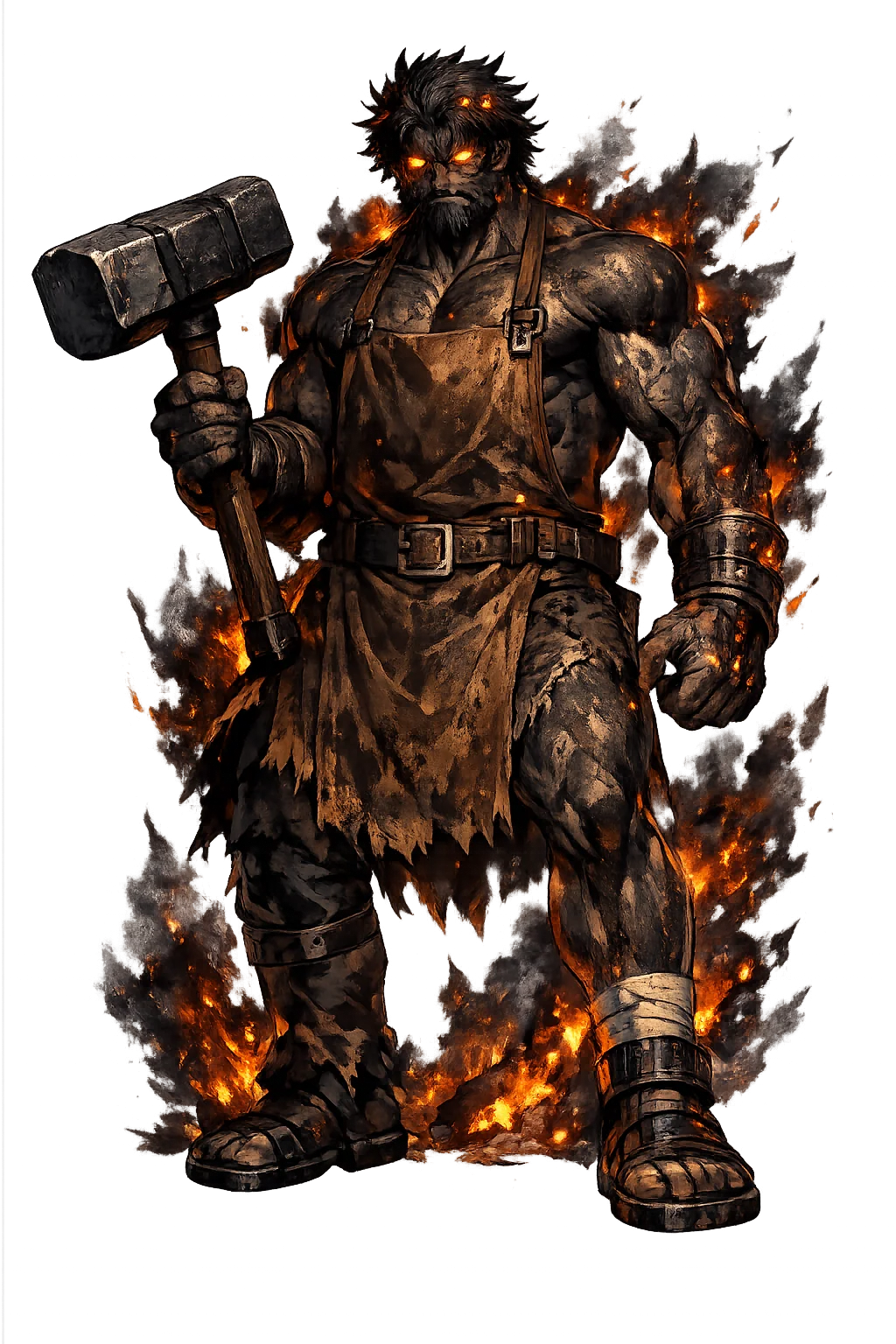
PuniCodex

Extended Lore

Vulcānus

Etymology · Phonology · Orthography · Cultural Legacy · Primary Sources

Tier 1 Vulcānus.com
Vulcānus — Fire, Forge, Craft
01

Quick Facts

Essential information about Vulcānus, Fire, Forge, Craft

Scholarly TransliterationVulcānus
Unicode RestorationVulcānus
Reconstructed Pronunciation/vulˈkaː.nus/
PantheonRoman
DomainFire, Forge, Craft
MeaningPossibly from fulgere (to flash) or a pre-Roman fire root
ClassificationTier 1
Primary DomainVulcānus.com
Sacred SymbolsThe hammer, The tongs, The bonfire
02

Etymology & Word Family

From original script to Unicode restoration

Scholarly Transliteration Vulcānus Vulcānus — "Possibly from fulgere (to flash) or a pre-Roman fire root"
Unicode Restoration Vulcānus Restored stress, length, and script
Modern ASCII vulcanus Plain-ASCII fallback

Latin Vulcānus — also Volcānus in inscriptions — scans with a long ā; its origin is pre-Roman and possibly Cretan (Wchanos has been proposed), making him one of the oldest names in the Roman pantheon. The macron marks the quantity on which the classical poets agree.

03

Unicode Character Breakdown

Character-by-character philological analysis

CharacterUnicodeNameBlockPhonetic Role
VU+0056Latin Capital Letter VBasic LatinSame letter
uU+0075Latin Small Letter UBasic LatinSame letter
lU+006CLatin Small Letter LBasic LatinSame letter
cU+0063Latin Small Letter CBasic LatinSame letter
āU+0101Latin Small Letter A with MacronLatin Extended-AMacron marks the long vowel
nU+006ELatin Small Letter NBasic LatinSame letter
uU+0075Latin Small Letter UBasic LatinSame letter
sU+0073Latin Small Letter SBasic LatinSame letter

The Tier 1 classification reflects which ancient features stress, length, or script are preserved in this restoration.

04

Cultural Significance

From ancient cult to modern Unicode

Ancient Domain

Vulcānus is Rome's ambivalent fire: the destructive flame that must be kept outside the walls and the tamed forge-fire that arms the state. His festival burns fish alive in midsummer — not for food, but to buy the city's safety from the god who burns cities.

Vulcānus in Later Traditions

His equation with Hēphaistos is complete in art, but Rome insisted on the difference: Vulcānus is fire as danger, kept at arm's length — his oldest shrine outside the pomerium, his temple on the Campus Martius. Through Vulcano island his name fused with every smoking mountain; through the Aeolian forges he merged with the Cyclopes. The word "volcano" is his inheritance, which no other god can claim: a deity's name become a category of the planet.

Modern Legacy

Vulcanization — Goodyear's process for rubber — borrowed his name for fire's mastery of matter; volcanoes, volcanology, and a Star Trek homeworld followed. In Rome he gave his title Mulciber to every poet's image of gentle strength. The deeper legacy is conceptual: he embodies technology's eternal contract — the same fire that forges the shield burns the city — and every safety code is his Volcanalia continued by other means.

Unicode Restoration as Cultural Act

Restoring Vulcānus in a domain name is more than orthographic accuracy. It is a statement that the internet should recognize the full range of human writing — not only the ASCII keyboard.

05

Frequently Asked Questions

Common questions about Vulcānus, Fire, Forge, Craft, and Unicode restoration

01How do you pronounce Vulcānus?

In reconstructed pronunciation, Vulcānus is /vulˈkaː.nus/ — approximately vul-KAH-nus, long ā on the stressed second syllable..

02What does Vulcānus mean?

Vulcānus means Possibly from fulgere (to flash) or a pre-Roman fire root in the roman tradition.

03What are the symbols of Vulcānus?

Vulcānus is associated with The hammer (Force made precise — the smith's answer to the flame), The tongs (The hand's extension into fire; technology as safe distance), The bonfire (Fire acknowledged and bargained with).

04Why restore Vulcānus in Unicode?

Plain ASCII vulcanus strips the stress, length, and script that make the name specific. Unicode restoration returns the name to its original written dignity.

05What is the most important myth about Vulcānus?

At the Volcanalia, the hottest and driest month, Romans threw live fish from the Tiber into bonfires at the Volcanal. The calendars explain the rite as substitution: souls of water given to fire, so that fire takes the offering instead of the granaries. It is propitiation, not celebration — Rome's insurance premium paid in flame.

06

Scholarly Sources

The philological foundations of this restoration

Every claim on this page is grounded in established scholarship. The orthographic restorations follow disciplinary convention. The etymological chain follows the best available reference works. This is not invention — it is resurrection through scholarship.

Lexicography & Philology

  • Lewis & Short
  • Virgil
  • Ovid

Primary Texts

  • Ovid
  • Cicero

Archaeology & Art History

  • Material evidence — iconography, inscriptions, and temple archaeology — for Vulcānus and related cults.
  • The Volcanal in the Forum — an open precinct above the Lapis Niger, with the archaic dedication of a Senate's honorific to the god — anchors his cult in Rome's oldest ground. Vulcano in the Aeolian islands preserves the fumarole fields the ancients called his workshops, and the islands' obsidian industry fed Neolithic trade millennia before the myths. Pompeii's forges, with their anvils and half-finished work, show his everyday cult of the artisans who kept his festival as their own holiday.

Religious Studies

  • Lewis & Short
  • Varro
  • Pliny
  • Cambridge
Return

The Surface Awaits

You have traced the name from its earliest attestation to its Unicode restoration. Now return to the myth. The story is where the name lives.

Back to Lore
Vulcānus mascot