PuniCodex

Extended Lore

ᚢᛅᛚᚼᚢᛚ Valhǫll

Etymology · Phonology · Orthography · Cultural Legacy · Primary Sources

Tier 2 Valhǫll.com
Valhǫll — Hall of the Slain
01

Quick Facts

Essential information about Valhǫll, Hall of the Slain

Original Scriptᚢᛅᛚᚼᚢᛚ
Unicode RestorationValhǫll
Reconstructed Pronunciation/ˈwal.hɔlː/
PantheonNorse
DomainHall of the Slain
MeaningHall of the slain warriors
ClassificationTier 2
Primary DomainValhǫll.com
Sacred SymbolsGolden shields on the roof, Spears and mail, The boar Sæhrímnir, Heiðrún the goat
02

Etymology & Word Family

From original script to Unicode restoration

Original Script ᚢᛅᛚᚼᚢᛚ Valhǫll — "Hall of the slain warriors"
Unicode Restoration Valhǫll Restored stress, length, and script
Modern ASCII valholl Plain-ASCII fallback

Valhǫll is Tier 2: the ǫ (o with ogonek) preserves the distinctive short rounded back vowel of Old Norse, but the name carries no stress accent or additional length mark. Modern editions often print Valhalla from the medieval Latinized form; Valhǫll restores the native Norse vowel.

03

Unicode Character Breakdown

Character-by-character philological analysis

CharacterUnicodeNameBlockPhonetic Role
VU+0056Latin Capital Letter VBasic LatinSame
aU+0061Latin Small Letter ABasic LatinSame
lU+006CLatin Small Letter LBasic LatinSame
hU+0068Latin Small Letter HBasic LatinSame
ǫU+01EBLatin Small Letter O with OgonekLatin Extended-BO-hook: short /ɔ/ vowel
lU+006CLatin Small Letter LBasic LatinSame

The Tier 2 classification reflects which ancient features stress, length, or script are preserved in this restoration.

04

Cultural Significance

From ancient cult to modern Unicode

Ancient Domain

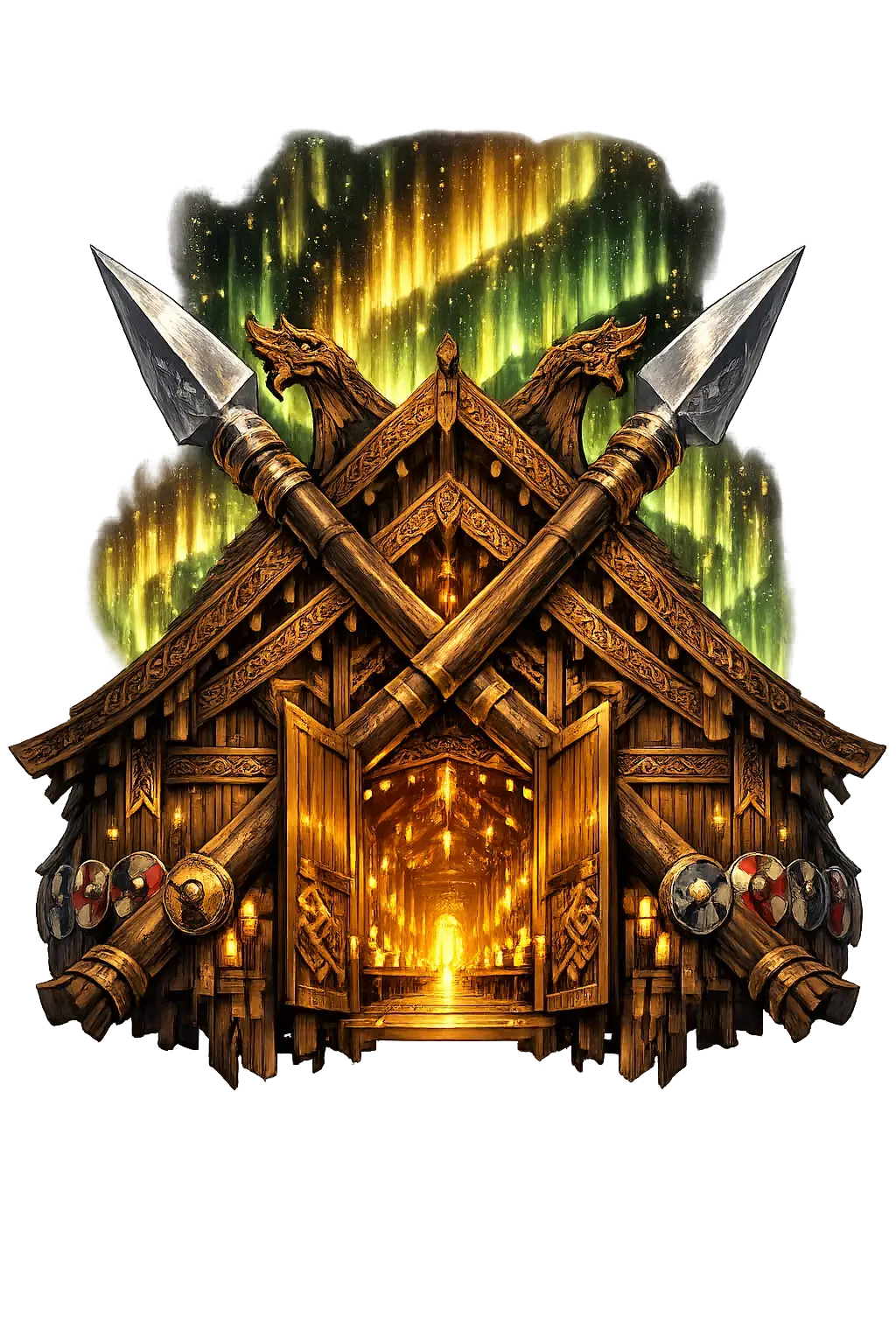
Valhǫll is the great hall of Óðinn, roofed with shields and crowded with the einherjar — warriors who died in battle and were chosen by the valkyries. It is not a quiet heaven but a warrior's training ground: by day the dead fight to the death, by night they rise whole and feast on the ever-renewing boar Sæhrímnir, while the she-goat Heiðrún pours mead from her udders.

Valhǫll in Later Traditions

Valhǫll has often been compared to the warrior paradises of other Indo-European peoples, such as the Celtic Tech Duinn (the House of Donn) or the Germanic comitatus ideal of the lord's hall continued after death. Some scholars have seen Christian influence in its structure — the hall of the divine king, the everlasting feast — while others argue that the lord's mead-hall was already the central social institution of Germanic life and needed no borrowing to become an afterlife. The Latinized form Valhalla entered English through 18th-century romantic translations and has become the standard popular term.

Modern Legacy

Valhalla has become one of the most recognizable names from Norse mythology, invoked by soldiers, athletes, musicians, and movements seeking a martial afterlife. In modern Heathenry it is honored as the destination of those who die with courage, though practitioners differ on whether it is reserved for battlefield death alone. The image of the warrior's paradise — feasting, fighting, and awaiting the final call — has shaped fantasy literature, heavy-metal imagery, and popular understandings of Viking belief. Yet the medieval sources present it as one among several afterlives, including Fólkvangr, Hel, and the local grave-mound.

Unicode Restoration as Cultural Act

Restoring Valhǫll in a domain name is more than orthographic accuracy. It is a statement that the internet should recognize the full range of human writing — not only the ASCII keyboard.

05

Frequently Asked Questions

Common questions about Valhǫll, Hall of the Slain, and Unicode restoration

01How do you pronounce Valhǫll?

In reconstructed pronunciation, Valhǫll is /ˈwal.hɔlː/ — approximately 'VAHL-holl' — stress the first syllable, pronounce the 'a' as in 'father', and hold the final 'l' slightly longer than English usually allows..

02What does Valhǫll mean?

Valhǫll means Hall of the slain warriors in the norse tradition.

03What are the symbols of Valhǫll?

Valhǫll is associated with Golden shields on the roof (The hall's most famous feature: a roof thatched with war-shields, turning shelter into arsenal.), Spears and mail (Weapons hang on the walls; every einherjar is armed for the final day.), The boar Sæhrímnir (The ever-renewed feast, symbol of abundance sustained by sacrifice.), Heiðrún the goat (She chews the leaves of Læraðr and pours mead from her udders for the warriors.).

04Why restore Valhǫll in Unicode?

Plain ASCII valholl strips the stress, length, and script that make the name specific. Unicode restoration returns the name to its original written dignity.

05What is the most important myth about Valhǫll?

In Grímnismál, Óðinn in disguise describes Valhǫll in detail: it has 540 doors, and through each door eight hundred warriors will march abreast at Ragnarök. Its roof is covered with golden shields, its benches are strewn with mail coats, and the hall itself is so vast that it contains enough space for all the chosen dead. The poem makes war into architecture.

06

Scholarly Sources

The philological foundations of this restoration

Every claim on this page is grounded in established scholarship. The orthographic restorations follow disciplinary convention. The etymological chain follows the best available reference works. This is not invention — it is resurrection through scholarship.

Lexicography & Philology

  • Cleasby-Vigfusson
  • Zoëga

Primary Texts

  • Poetic Edda: Grímnismál (description of Valhǫll's doors, shields, and host)
  • Poetic Edda: Völuspá (valkyries and the chosen slain)
  • Snorri Sturluson, Prose Edda: Gylfaginning (daily life of the einherjar)

Archaeology & Art History

  • Material evidence — iconography, inscriptions, and temple archaeology — for Valhǫll and related cults.
  • No material structure can be identified with Valhǫll, but the lord's hall was the central monument of Scandinavian elite culture from the Iron Age through the Viking period. Excavated halls such as Lejre in Denmark, Borg in Lofoten, and Uppsala in Sweden show the architectural reality behind the myth: long buildings with high roofs, central hearths, and feasting debris. Weapon deposits in wetlands and warrior graves furnished with weapons, drinking vessels, and riding gear reflect the warrior ethos that Valhǫll mythologizes.

Religious Studies

  • Cleasby & Vigfusson, An Icelandic-English Dictionary (1874), s.v. valr, hǫll
  • Zoëga, A Concise Dictionary of Old Icelandic (1910), s.v. Valhöll
  • de Vries, Jan, Altgermanische Religionsgeschichte
  • Simek, Rudolf, Dictionary of Northern Mythology
  • Lindow, John, Norse Mythology: A Guide to the Gods, Heroes, Rituals, and Beliefs
Return

The Surface Awaits

You have traced the name from its earliest attestation to its Unicode restoration. Now return to the myth. The story is where the name lives.

Back to Lore
Valhǫll mascot