PuniCodex

Extended Lore

वज्रपाणि Vajrapāṇi

Etymology · Phonology · Orthography · Cultural Legacy · Primary Sources

Tier 1 Vajrapāṇi.com
Vajrapāṇi — Thunderbolt Holder, Protection
01

Quick Facts

Essential information about Vajrapāṇi, Thunderbolt Holder, Protection

Original Scriptवज्रपाणि
Unicode RestorationVajrapāṇi
Reconstructed Pronunciation/ʋɐdʒ.rɐ.ˈpaː.ɳi/
PantheonBuddhist
DomainThunderbolt Holder, Protection
MeaningN. of Indra, ṢaḍvBr.; MBh. &c.
ClassificationTier 1
Primary DomainVajrapāṇi.com
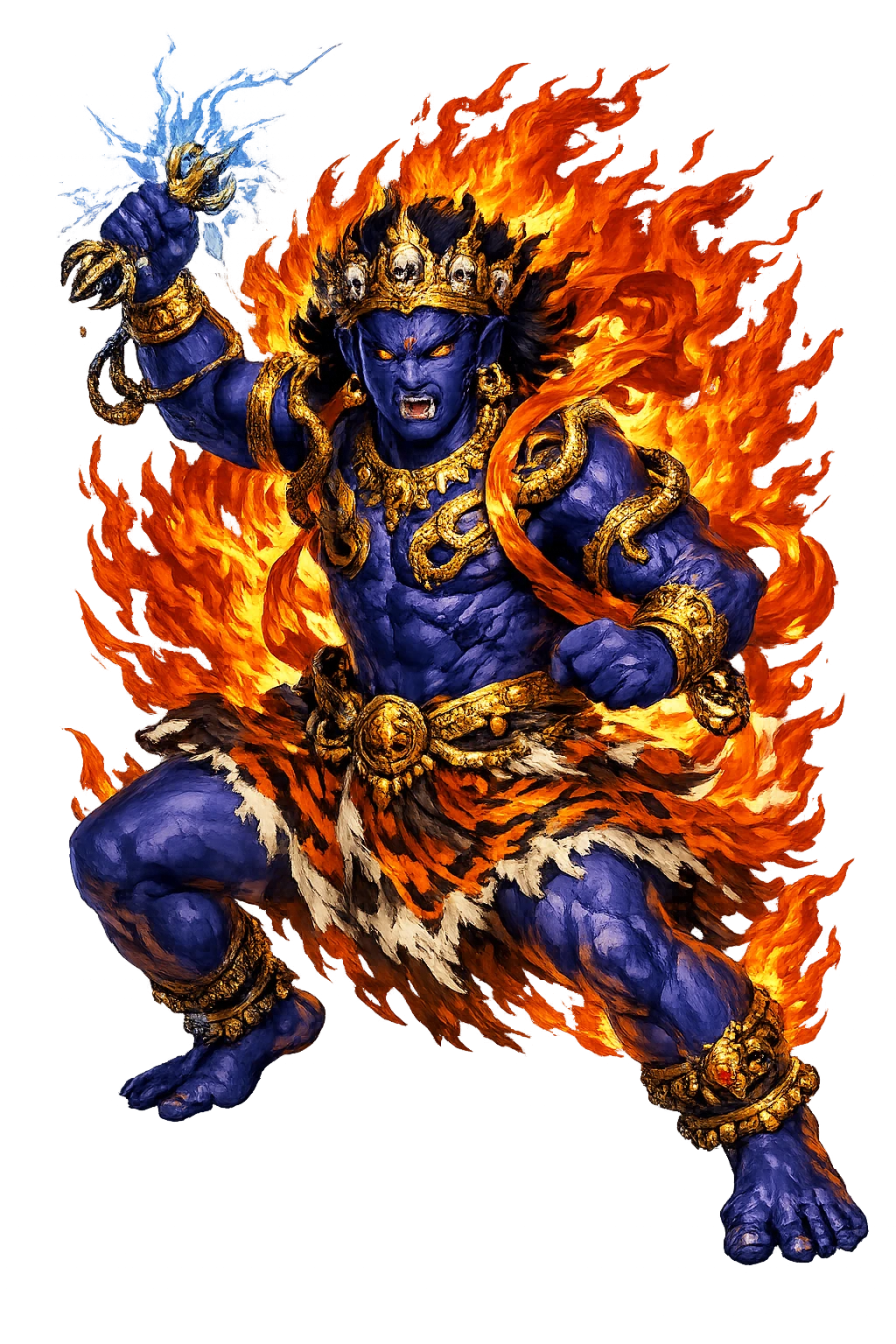
Sacred SymbolsThe vajra, The wrathful stance, The serpent ornaments
02

Etymology & Word Family

From original script to Unicode restoration

Original Script वज्रपाणि Vajrapāṇi — "N. of Indra, ṢaḍvBr.; MBh. &c."
Unicode Restoration Vajrapāṇi Restored stress, length, and script
Modern ASCII vajrapani Plain-ASCII fallback

Vajrapāṇi is a bahuvrīhi: vajra, "thunderbolt, diamond," + pāṇi, "hand" (Monier-Williams) — "the one with the vajra in hand." The name is older than Buddhism: Monier-Williams lists it first as an epithet of Indra, the thunderbolt-wielder, and the lexicon preserves that gloss. Buddhism transferred the weapon and the title to the Buddha's own protector. The restoration keeps the long ā and the retroflex ṇ; the ASCII "Vajrapani" flattens both. Tier-1 by rule.

03

Unicode Character Breakdown

Character-by-character philological analysis

CharacterUnicodeNameBlockPhonetic Role
VU+0056Latin Capital Letter VBasic LatinSame, capitalized
aU+0061Latin Small Letter ABasic LatinSame
jU+006ALatin Small Letter JBasic LatinSame
rU+0072Latin Small Letter RBasic LatinSame
aU+0061Latin Small Letter ABasic LatinSame
pU+0070Latin Small Letter PBasic LatinSame
āU+0101Latin Small Letter A with MacronLatin Extended-ALong vowel
U+1E47Latin Small Letter N with Dot BelowUnknownSpecial character
iU+0069Latin Small Letter IBasic LatinSame

The Tier 1 classification reflects how much of the original phonology this restoration preserves — stress and vowel length for Greek names, distinctive letters and diacritics for every other tradition.

04

Cultural Significance

From ancient cult to modern Unicode

Ancient Domain

Vajrapāṇi is the power of the Buddhas in person: the thunderbolt-bearer who walks at the Buddha's shoulder in the earliest Gandhāran panels, the enforcer who once held a blazing club over a liar's head in the Pāli canon, and the Lord of Secrets to whom the tantras themselves were entrusted.

Vajrapāṇi in Later Traditions

His lineage is a relay of weapons: Indra's vajra — the name is first Indra's epithet, as Monier-Williams records — passed to the Buddha's yakkha enforcer, then to the bodhisattva of power; and in East Asia the single figure split into the paired gate-guardians of every great temple: the Kongōrikishi or Niō of Japan, mouths open and closed, the alpha and omega of the spoken world. The Heracles parallel runs in both directions: as the Greeks lent him a body in Gandhāra, so scholarship reads him as the Buddha's answer to every culture's strong-armed god — Zeus's bolt, Indra's club, Thor's hammer — reassigned to the protection of awakening.

Modern Legacy

Vajrapāṇi gave the third turning of Buddhism its very name: Vajrayāna, the diamond-thunderbolt vehicle, is the way of his implement. The paired Niō still loom in the gates of Japanese temples — the colossal guardians of Tōdai-ji's Nandaimon, set up in 1203 by the studios of Unkei and Kaikei, are national treasures — and the wrathful krodha protectors of Himalayan art inherit his stance, his serpents, and his color. His is the oldest continuously-employed job in Buddhist art: someone has to hold the thunderbolt.

Unicode Restoration as Cultural Act

Restoring Vajrapāṇi in a domain name is more than orthographic accuracy. It is a statement that the internet should recognize the full range of human writing — not only the ASCII keyboard.

05

Frequently Asked Questions

Common questions about Vajrapāṇi, Thunderbolt Holder, Protection, and Unicode restoration

01How do you pronounce Vajrapāṇi?

In reconstructed pronunciation, Vajrapāṇi is /ʋɐdʒ.rɐ.ˈpaː.ɳi/ — approximately vuj-ruh-PAH-nih — the j is as in 'jam'; the ṇ is the retroflex n; the ā of pāṇi is long..

02What does Vajrapāṇi mean?

Vajrapāṇi means N. of Indra, ṢaḍvBr.; MBh. &c. in the buddhist tradition.

03What are the symbols of Vajrapāṇi?

Vajrapāṇi is associated with The vajra (The weapon that gives Vajrayāna its very name: the diamond vehicle is his vehicle), The wrathful stance (Pratyālīḍha, the warrior's lunge: compassion with its patience spent), The serpent ornaments (The nāga girdle of the wrathful form: the powers of the deep enlisted as jewelry).

04Why restore Vajrapāṇi in Unicode?

Plain ASCII vajrapani strips the stress, length, and script that make the name specific. Unicode restoration returns the name to its original written dignity.

05What is the most important myth about Vajrapāṇi?

His earliest certain appearance is already dramatic. In the Dīgha Nikāya's Ambaṭṭha Sutta, the proud young brahmin Ambaṭṭha twice evades the Buddha's direct question about his lineage; and there appears above his head the yakkha Vajirapāṇi, holding aloft a great blazing iron club, ready to split his skull into seven pieces if he refuses a third time. Ambaṭṭha answers. The episode is the whole doctrine in miniature: the thunderbolt exists not to strike but to make truth the easier choice.

06

Scholarly Sources

The philological foundations of this restoration

Every claim on this page is grounded in established scholarship. The orthographic restorations follow disciplinary convention. The etymological chain follows the best available reference works. This is not invention — it is resurrection through scholarship.

Lexicography & Philology

  • Vajrayana texts
  • Buddhist texts

Primary Texts

  • The Larger Sukhāvatī-vyūha Sūtra; the Smaller Sukhāvatī-vyūha Sūtra; the Amitāyurdhyāna Sūtra; the Lotus Sūtra.

Archaeology & Art History

  • Material evidence — iconography, inscriptions, and temple archaeology — for Vajrapāṇi and related cults.
  • His material record begins with Gandhāra: schist panels of the second and third centuries CE — now divided among Peshawar, Lahore, the British Museum, and the Musée Guimet — show the Heracles-bodied attendant at the Buddha's shoulder, the first datable images of a bodhisattva-protector. The type traveled: Chinese guardian kings, the Korean Geumgang yeoksa, and Japan's Niō descend from him, culminating in the Nandaimon colossi of Tōdai-ji (1203, Unkei and Kaikei workshops). Himalayan art fixed his wrathful blue form by the Pāla period, and the three-lords triad became the standard threshold of Tibetan sacred painting.

Religious Studies

  • Ambaṭṭha Sutta (DN 3)
  • Tattvasaṃgraha Tantra
  • Guhyasamāja Tantra
  • Edgerton, Buddhist Hybrid Sanskrit Dictionary
  • Monier-Williams
Return

The Surface Awaits

You have traced the name from its earliest attestation to its Unicode restoration. Now return to the myth. The story is where the name lives.

Back to Lore
Vajrapāṇi mascot