PuniCodex

Extended Lore

Τύχη Týchē

Etymology · Phonology · Orthography · Cultural Legacy · Primary Sources

Tier 1 Týchē.com
Týchē — Fortune, Chance, Turning
01

Quick Facts

Essential information about Týchē, Fortune, Chance, Turning

Original ScriptΤύχη
Unicode RestorationTýchē
Reconstructed Pronunciation/tý.kʰɛː/
PantheonGreek
DomainFortune, Chance, Turning
Meaning'That which happens' (from τυγχάνω)
ClassificationTier 1
Primary DomainTýchē.com
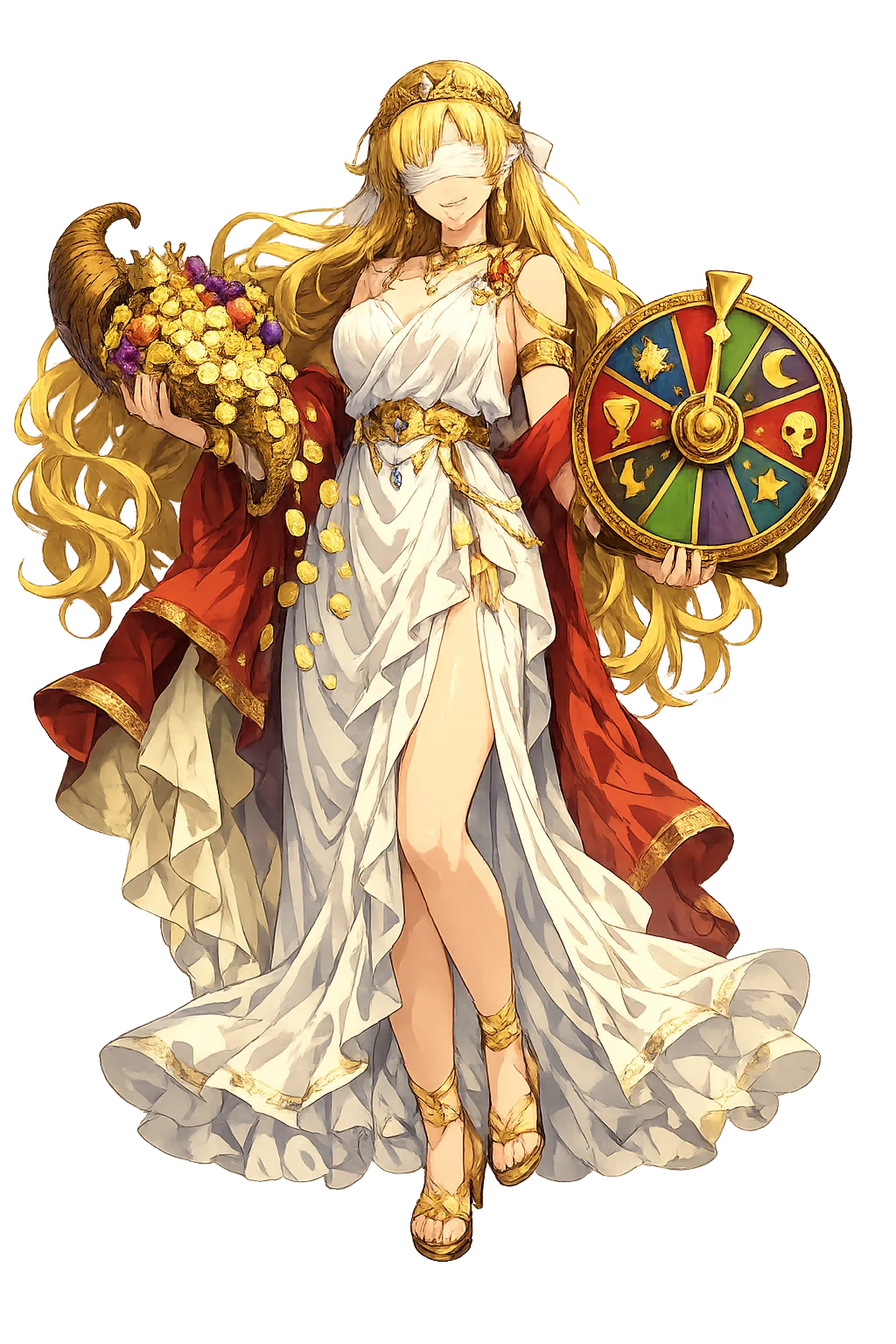
Sacred SymbolsThe rudder, The cornucopia, The mural crown, The wheel
02

Etymology & Word Family

From original script to Unicode restoration

Original Script Τύχη Týchē — "'That which happens' (from τυγχάνω)"
Unicode Restoration Týchē Restored stress, length, and script
Modern ASCII tyche Plain-ASCII fallback

Greek Τύχη bears the acute on the first syllable — Týchē — from τυγχάνω, "to happen, to hit the mark." The long eta of the second syllable is the standard macron; Stoic philosophers made her name the technical term for chance, and the word still means "outcome" in modern Greek. Modern Greek tychi keeps the meaning of outcome; the ancient accent on the first syllable is what the restoration marks.

03

Unicode Character Breakdown

Character-by-character philological analysis

CharacterUnicodeNameBlockPhonetic Role
TU+0054Latin Capital Letter TBasic LatinSame letter
ýU+00FDLatin Small Letter Y with AcuteLatin-1 SupplementStress mark (acute/tone)
cU+0063Latin Small Letter CBasic LatinSame letter
hU+0068Latin Small Letter HBasic LatinSame letter
ēU+0113Latin Small Letter E with MacronLatin Extended-AMacron marks the long vowel

The Tier 1 classification reflects which ancient features stress, length, or script are preserved in this restoration.

04

Cultural Significance

From ancient cult to modern Unicode

Ancient Domain

Týchē is the last goddess added to the Greek pantheon and the most modern in feeling: the personification of what happens. When the old gods' plans no longer explained the Hellenistic world's upheavals, the Greeks enthroned accident itself — and gave her a cornucopia, a rudder, and a wheel.

Týchē in Later Traditions

Rome merged her with Fortuna — a native Italian goddess with far older roots — and the fusion produced antiquity's most worshipped abstraction: Fortuna Primigenia at Praeneste with her famous sortes (lot-oracle), Fortuna Redux for safe returns, Fortuna Augusta for the emperor's luck. On coins, every city from Palmyra to Alexandria stamped its Tyche-Fortuna: the mural-crowned figure became the standard icon of urban pride across three continents.

Modern Legacy

The word outlasted the cult: tyche is Aristotle's and the Stoics' technical term, and "stochastic" — from the sibling root for aiming — now names the mathematics of chance. Polybius made Tyche the playwright of history ("she brings all human affairs onto one stage"), and every discussion of black swans, tail risk, and algorithmic randomness is, unknowingly, her temple.

Unicode Restoration as Cultural Act

Restoring Týchē in a domain name is more than orthographic accuracy. It is a statement that the internet should recognize the full range of human writing — not only the ASCII keyboard.

05

Frequently Asked Questions

Common questions about Týchē, Fortune, Chance, Turning, and Unicode restoration

01How do you pronounce Týchē?

In reconstructed pronunciation, Týchē is /tý.kʰɛː/ — approximately TU-khee, stress on the first syllable with a long ē..

02What does Týchē mean?

Týchē means 'That which happens' (from τυγχάνω) in the greek tradition.

03What are the symbols of Týchē?

Týchē is associated with The rudder (Steering without destination — guidance of the contingent), The cornucopia (Abundance as accident; the gifts no one earned), The mural crown (The city walls she wears — fortune as civic identity), The wheel (Roman addition — the turning that raises and ruins).

04What is the difference between Týchē.com?

Each is a historically defensible restoration. Tychē.com is the macron-only form: LSJ convention: length only, no stress mark.

05Why restore Týchē in Unicode?

Plain ASCII tyche strips the stress, length, and script that make the name specific. Unicode restoration returns the name to its original written dignity.

06What is the most important myth about Týchē?

Hesiod makes her an Oceanid, daughter of Ōkeanos and Tēthys — chance as one of the primordial waters' three thousand daughters. Pindar, elevating her, calls her Týchē Sōteira, "saviour fortune," and a child of Zeús Eleutherios: luck ennobled into divine pedigree. The disagreement is the point — even the Greeks could not decide if chance is cosmic or capricious.

06

Scholarly Sources

The philological foundations of this restoration

Every claim on this page is grounded in established scholarship. The orthographic restorations follow disciplinary convention. The etymological chain follows the best available reference works. This is not invention — it is resurrection through scholarship.

Lexicography & Philology

  • Liddell, H. G., Scott, R., & Jones, H. S. A Greek-English Lexicon. Oxford: Clarendon Press, 9th ed. 1996.
  • Pausanias
  • Polybius

Primary Texts

  • Hesiod, Theogony
  • Pindar
  • Pausanias

Archaeology & Art History

  • Material evidence — iconography, inscriptions, and temple archaeology — for Týchē and related cults.
  • Eutychides' bronze original is lost, but the Vatican and Louvre Roman copies preserve the Tyche of Antioch exactly, and the type is confirmed by Antiochene coins and the tiny bronze "Antioch" statuettes. Praeneste's (Palestrina's) vast sanctuary of Fortuna Primigenia — a mountainside of terraces rediscovered by WWII bombing — shows the cult's architecture at full scale. Hundreds of civic coins bearing mural-crowned Tychai map the goddess's reach from Spain to Afghanistan.

Religious Studies

  • Aristotle
  • Polybius
Return

The Surface Awaits

You have traced the name from its earliest attestation to its Unicode restoration. Now return to the myth. The story is where the name lives.

Back to Lore
Týchē mascot