PuniCodex

The Authentic Orthography

Τάρταρος Tártaros

The Primordial Abyss · Deep place (from τάρταρος)
Tier 2 Tártaros.com
Tártaros — The Primordial Abyss
01

The Authentic Name

Unicode restoration and ASCII comparison

Original Script

Τάρταρος

The name in its original Greek form. Tártaros (Τάρταρος) is attested in the source tradition — “Deep place (from τάρταρος)”. Its acute accents carry the full phonetic and orthographic weight of the source tradition.

ASCII Constraint

tartaros

Reduced to plain tartaros, the name loses everything that made it specific: acute accents. What remains is an ASCII string that machines can parse but that no longer speaks with its original voice.

Unicode Restoration

Tártaros

The Unicode restoration recovers what ASCII flattened. Tártaros restores acute accents, returning the name to its original written dignity. The domain encodes to Punycode, but the browser displays the truth.

Punycode Encoding
Tártaros.com → xn--trtaros-hwa.com

The non-ASCII characters in Tártaros are encoded while the ASCII remains visible. To the DNS, it is Punycode. To humanity, it is Tártaros.

02

Original Script & Provenance

How Tártaros travels from ancient script to the modern URL

Τάρταρος
Greek
Tártaros
Reading: /ˈtar.ta.ros/
Reconstruction: /ˈtar.ta.ros/
Greek alphabet (Classical / Attic) · left-to-right · Ancient Greek, c. 8th century BCE – present · Greece and the Greek-speaking Mediterranean
Τ
Greek letter Τ
Τ
Letter
Greek letter with its classical phonetic value; accents mark pitch and length.
ά
Greek letter ά
ά
Letter
Greek letter with its classical phonetic value; accents mark pitch and length.
ρ
Greek letter ρ
ρ
Letter
Greek letter with its classical phonetic value; accents mark pitch and length.
τ
Greek letter τ
τ
Letter
Greek letter with its classical phonetic value; accents mark pitch and length.
α
Greek letter α
α
Letter
Greek letter with its classical phonetic value; accents mark pitch and length.
ρ
Greek letter ρ
ρ
Letter
Greek letter with its classical phonetic value; accents mark pitch and length.
ο
Greek letter ο
ο
Letter
Greek letter with its classical phonetic value; accents mark pitch and length.
ς
Greek letter ς
ς
Letter
Greek letter with its classical phonetic value; accents mark pitch and length.
Original Script
Τάρταρος
Indigenous writing
Transliteration
Tártaros
Scholarly reading
Unicode Restoration
Tártaros
Registrable form
Punycode
xn--Trtaros-hwa.com
DNS encoding
ASCII Fallback
tartaros
Flattened spelling

Etymology

Greek Τάρταρος; the deep abyss beneath Hades; etymology uncertain, perhaps connected with ταρταρίζειν “to shiver".

Meaning

The Primordial Abyss

From original to transliteration

  1. The Greek form Τάρταρος is written in the Classical Greek alphabet.
  2. Letters with acute, grave, or circumflex accents preserve the pitch accent of Ancient Greek.
  3. Macrons and omegas (η, ω) mark long vowels, a feature lost in the plain ASCII form.
  4. The Unicode restoration Tártaros encodes the scholarly spelling as a registrable domain name.
  • Τάρταρος Original script
  • Tártaros Unicode restoration
  • tartaros ASCII fallback
  • Hesiod, Theogony
    c. 700 BCE Greece Hesiod, Theogony 116–125
  • Homeric Hymns
    c. 700–500 BCE Greece Homeric Hymns, selected hymns
  • Homer, Iliad and Odyssey
    c. 750–650 BCE Greece Homer, Iliad and Odyssey, selected passages
Beekes, Etymological Dictionary of GreekTier 1
Chantraine, Dictionnaire étymologique de la langue grecqueTier 2
Liddell-Scott-Jones (LSJ)Tier 1
Pape-BenselerTier 1

DNS / IDN note

The Unicode restoration Tártaros preserves Greek stress and length; the ASCII form tartaros loses these features.

  • !The exact phonetic realization of pitch accent in Classical Greek is reconstructed.
  • !Some letters (e.g., ζ) had dialectal pronunciations that remain debated.
  • !Classical Greek accents originally marked pitch, not stress; the later Byzantine stress pronunciation is conventional today.
  • !Some names may be pre-Greek loans, making purely Greek etymologies uncertain.
03

Pronunciation

How Tártaros was spoken

/tár.ta.ros/ Attic Greek Reconstruction
Tá- Voiceless tau with acute pitch on short alpha — the name strikes downward.
-rta- Rho-tau-alpha, a rolling descent into the second syllable.
-ros Short omicron and sigma, a name that ends in depth.
04

The Primordial Abyss

The Primordial Abyss

Tártaros is the deepest place. It lies beneath Hades as far as Hades lies beneath the earth, and the earth beneath the sky. It is not merely a dungeon; it is a cosmic depth, the inverted dome that balances the celestial dome above.

The Pit

The bottomless chasm beneath the foundations of the world.

The Bronze Gates

Hesiod describes walls and gates of bronze, built by Poseidon, guarded by the Hecatoncheires.

Storm and Darkness

The "stormy pit" — winds, gloom, and the roar of imprisoned powers.

Divine Punishment

The place where the worst offenders — Titans and mortal sinners — receive eternal justice.

Sacred Symbols

Bronze anvil Hesiod's measure of its depth: nine days' fall from earth
Iron gates The impassable boundary
Triple night The darkness that wraps the abyss
Storm winds The imprisoned forces that issue from its depths
Fettered Titan The defeated gods chained below
05

Mythology

Stories of Tártaros

Tártaros appears almost as soon as the world begins. It is the third primordial in Hesiod's list — gap, earth, abyss — and it remains the final destination for every cosmic rebel.

Theogony

The Third Primordial

After Cháos and Gaia, Hesiod names Tártaros: "dim Tartarus, in the depths of the broad-pathed earth" (Theogony 119). It is both a place and a power, the body of the pit itself. Homer adds the famous measurement: Tártaros is as far beneath Hades as heaven is above earth (Iliad 8.13–16).

The Prison

The Titans Cast Down

After the Titanomachy, Zeus imprisoned the defeated Titans in Tártaros. Poseidon built bronze gates; the Hecatoncheires stood guard. The Iliad describes them seated at the threshold, "a dreadful thing to hear" for any who would approach (Iliad 8.481).

The Birth of Typhon

Tartarus and Gaia

Angered by the destruction of her children the Giants, Gaia lay with Tártaros and bore Typhōn, the youngest and most terrible of monsters. In Hesiod's genealogy, this union confirms Tártaros as not merely a prison but a generative chthonic power (Theogony 820–822; Apollodorus 1.6.3).

The Punished

Sisyphus, Tantalus, Ixion

In later tradition, especially Plato's Gorgias and the tragedians, Tártaros became the place of punishment for the worst mortal sinners. Sisyphus rolls his stone, Tantalus stands in water he cannot drink, Ixion turns on his wheel — images of eternal, futile labor that shaped later ideas of Hell.

Go Deeper

Extended Lore

There is a depth beneath death, and the Greeks named it Tártaros. It is not hell in the modern sense, because it holds gods as well as sinners — the Titans, Typhōn, and the most monstrous hybrids of earth and abyss. It is the cosmic landfill, the place where order stores what it cannot destroy but dare not release.

Enter Extended Lore
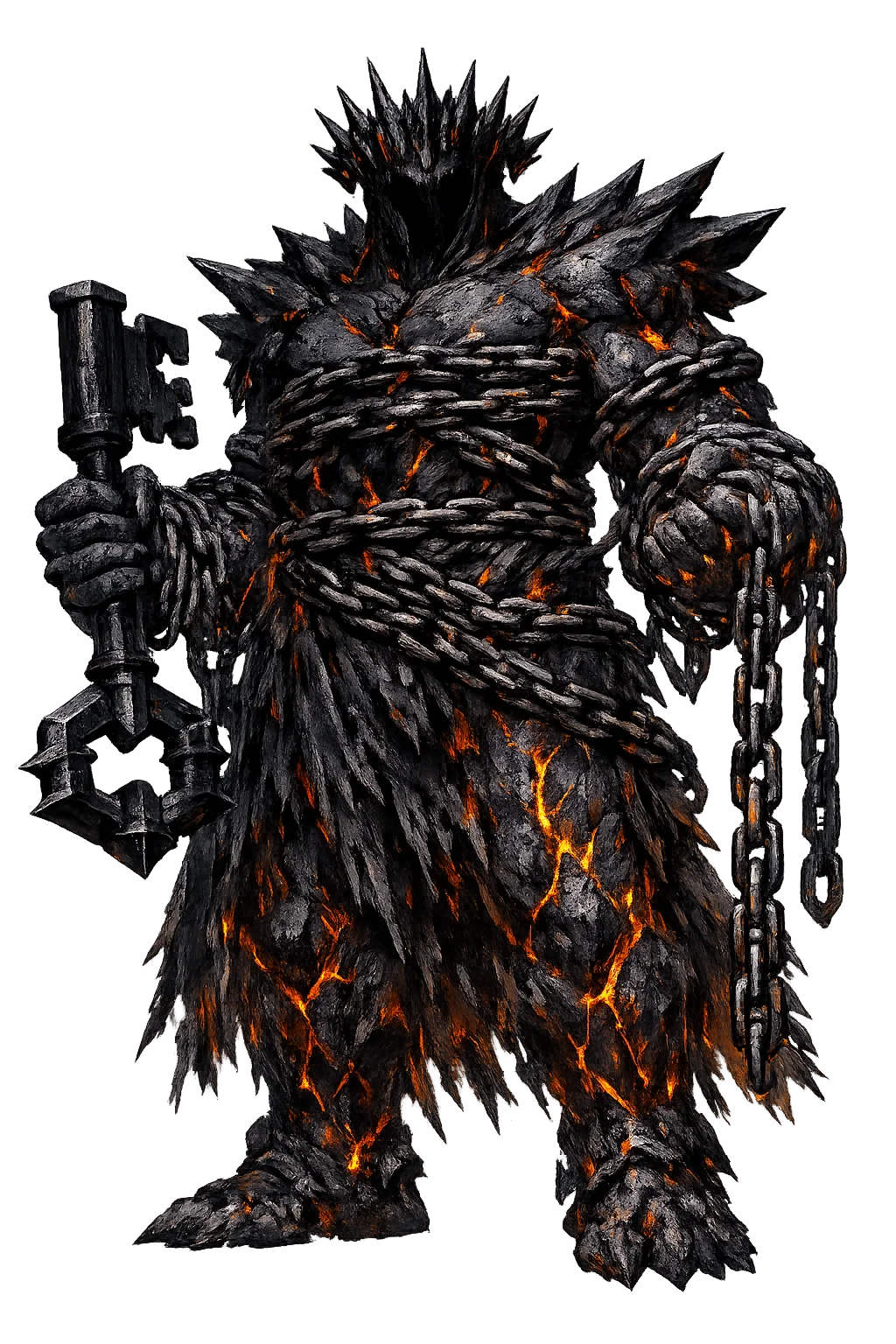
Tártaros mascot