The Authentic Orthography
River of Hate, Oaths · The River of Unbreakable Oaths
Unicode restoration and ASCII comparison
Στύξ
The name in its original Greek form. Stýx (Στύξ) is attested in the source tradition — “Hateful”. Its acute accents carry the full phonetic and orthographic weight of the source tradition.
styx
Reduced to plain styx, the name loses everything that made it specific: acute accents. What remains is an ASCII string that machines can parse but that no longer speaks with its original voice.
Stýx
The Unicode restoration recovers what ASCII flattened. Stýx restores acute accents, returning the name to its original written dignity. The domain encodes to Punycode, but the browser displays the truth.
Stýx.com → xn--stx-moa.com
The non-ASCII characters in Stýx are encoded while the ASCII remains visible. To the DNS, it is Punycode. To humanity, it is Stýx.
How Stýx is preserved in writing
A bespoke provenance study for Stýx is being prepared by the PUNICODEX scholarly team.
Contribute scholarly provenance →How Stýx was spoken
The Boundary, the Vow, and the Water the Gods Fear
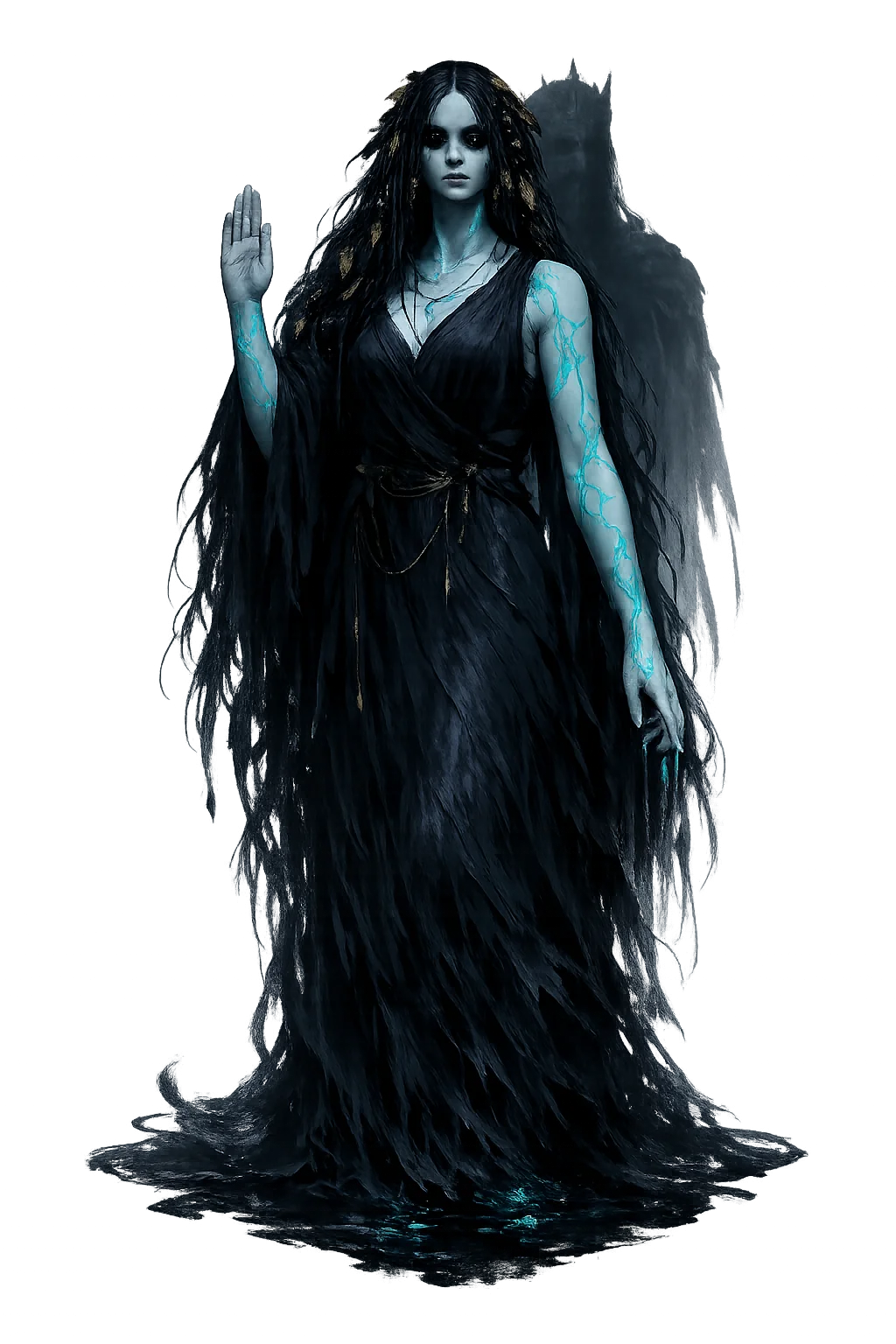
Stýx is the river by which the gods themselves are bound: the underworld stream whose water makes an oath unbreakable even for Olympos, the eldest daughter of the Ocean, and the mother of Force, Rivalry, Power, and Victory.
Swear on her and the vow is iron — Zeús himself cannot break it.
The river of the threshold: between the living and the dead, the world and the under.
First-born of Ōkeanos and Tēthys — the river with seniority among all waters.
Her children: Bía (Force), Zêlos (Rivalry), Krátos (Power), Níkē (Victory).
Stories of Stýx
Stýx's myths are about the one thing stronger than the gods: the word you cannot take back — and the water that enforces it.
The Iliad's formula runs through the epic: "let this now be my inviolable oath, by the water of Stýx" — and even Zeús trembles at the breaking. When Hēra tricks him into binding his own hands over the fate of Troy, the poem's whole machinery turns on the fact that the oath, sworn on her water, cannot be unsaid. A god who breaks the oath lies nine years breathless, and nine more years cut off from the gods' feasts: the river punishes heaven itself.
Hesiod's Theogony makes her the hinge of Zeús' kingdom: Stýx, eldest daughter of Ōkeanos, brought her four children — Bía (Force), Zêlos (Rivalry), Krátos (Power), Níkē (Victory) — to Olympos at the start of the war with the Titans, the first immortal to side with Zeús. For this he honored her above all waters and set her children at his side forever. The king's throne, the poets say, is propped by a river and her brood.
Her water is the underworld's own: a cold plunge from a high cliff, a tenth part of Ōkeanos' whole flow, circling the land of the dead nine times in the later tellings. The dead drink nothing, but the river is there anyway — the boundary that needs no ferryman because it is the law itself in liquid form. Styx is not a place you cross; she is a condition you agree to.
Stýx is the god of the word that costs something. Every contract, every vow, every "I promise" works because somewhere the tradition decided that speaking must bind — and her water is that decision made into a river. She asks the question every oath answers: what are you willing to swear on, and what will it cost you to keep it?
Enter Extended Lore