PuniCodex

Extended Lore

Ṣàngó

Etymology · Phonology · Orthography · Cultural Legacy · Primary Sources

Tier 2 Ṣàngó.com
Ṣàngó — Thunder, Fire, Justice
01

Quick Facts

Essential information about Ṣàngó, Thunder, Fire, Justice

Scholarly TransliterationṢàngó
Unicode RestorationṢàngó
Reconstructed Pronunciation/ʃà.ŋɡó/
PantheonYoruba
DomainThunder, Fire, Justice
MeaningHe who strikes
ClassificationTier 2
Primary DomainṢàngó.com
Sacred SymbolsThunderstones (ọ̀pá Ṣàngó), Double-headed axe (ọ̀gẹ́), Bàtá drum, Red and white beads
02

Etymology & Word Family

From original script to Unicode restoration

Scholarly Transliteration Ṣàngó Ṣàngó — "He who strikes"
Unicode Restoration Ṣàngó Restored stress, length, and script
Modern ASCII shango Plain-ASCII fallback

Ṣàngó is Tier 2: the acute accent on ó preserves the high tone of the final syllable, but Yoruba tone is not length. The dot below ṣ marks the historical/orthographic distinction of the Yoruba 's' series.

03

Unicode Character Breakdown

Character-by-character philological analysis

CharacterUnicodeNameBlockPhonetic Role
U+1E62Latin Capital Letter S with Dot BelowUnknownS with dot below
N/ADropped characterYoruba orthographyNot written
àU+00E0Latin Small Letter A with GraveLatin-1 SupplementGrave on a
nU+006ELatin Small Letter NBasic LatinSame
gU+0067Latin Small Letter GBasic LatinSame
óU+00F3Latin Small Letter O with AcuteLatin-1 SupplementAcute on o

The Tier 2 classification reflects which ancient features stress, length, or script are preserved in this restoration.

04

Cultural Significance

From ancient cult to modern Unicode

Ancient Domain

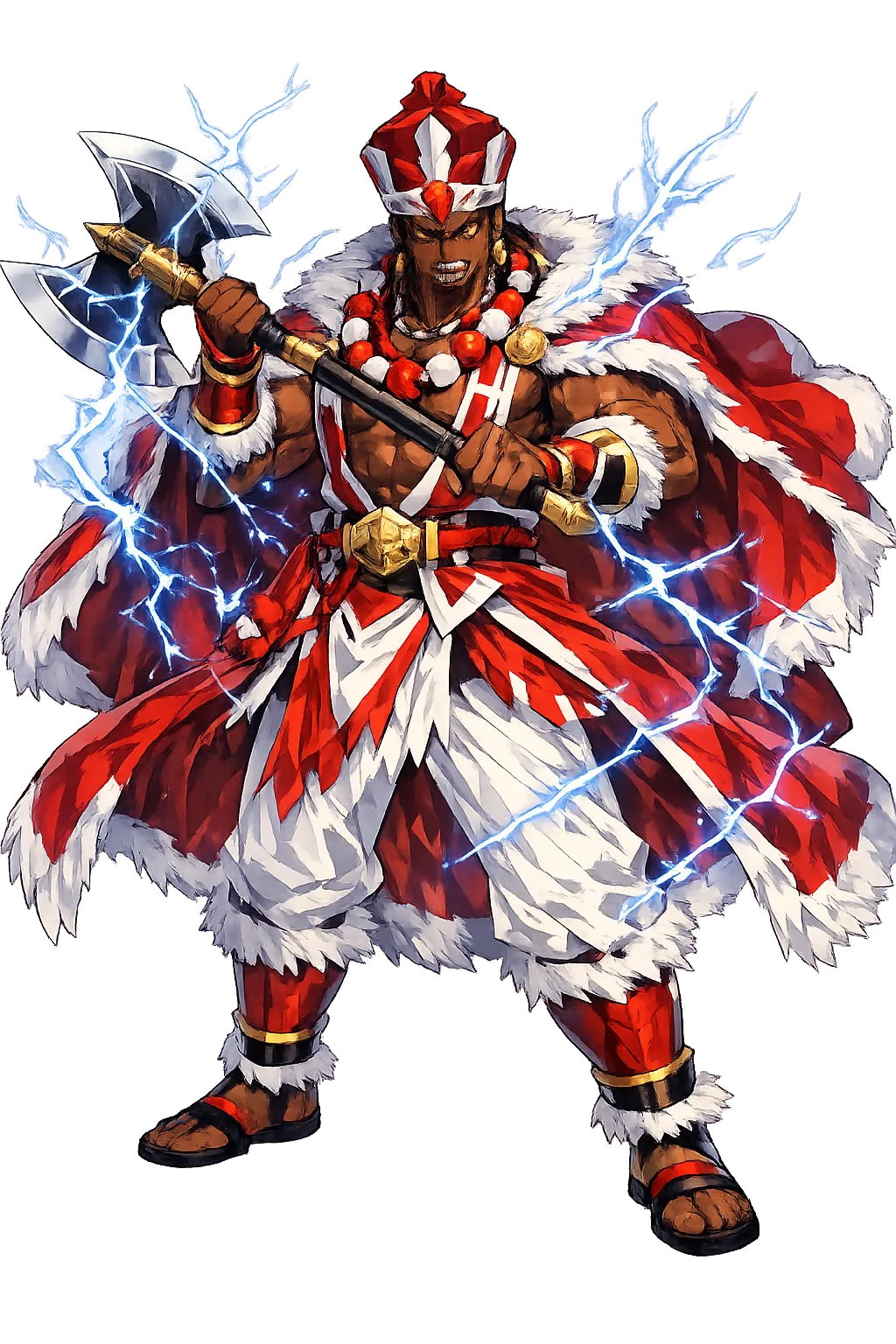
Ṣàngó is the thunder-god and the deified fourth king of the Oyo Empire. In life he was a warrior-king; in death he became the storm itself, the fire that strikes from heaven and the drumbeat that makes the possessed dance. He is justice without bureaucracy, punishment without delay, and charisma so intense that it can kill.

His mythology is inseparable from history. The kings of Oyo traced their legitimacy to him, and his priests kept the sacred stones said to be thunderbolts he had hurled to earth.

Ṣàngó in Later Traditions

In Brazilian Candomblé, Ṣàngó became Xangô, syncretised with Saint Barbara because of her association with lightning and thunder. In Cuban Santería he is Changó, one of the most popular orishas, often merged with the Catholic Saint Barbara and celebrated with bàtá drumming. The diaspora emphasis on dance and drumming preserves the Yoruba connection between kingship, rhythm, and storm. Haitian Vodou knows him as Ogou, though the Haitian figure absorbs multiple West African iron and war gods.

Modern Legacy

Ṣàngó is one of the most recognisable orishas in the African diaspora. His image appears in Caribbean and Latin American art, music, and festival; his bàtá drumming has influenced jazz, salsa, and contemporary world music. In Nigeria, the Ṣàngó Festival in Oyo draws thousands annually, and the Aláàfin still maintains ritual ties to him. Politically, Ṣàngó remains a symbol of Yoruba royal authority and cultural pride, while spiritually he embodies the idea that justice should be as visible and unavoidable as a thunderclap.

Unicode Restoration as Cultural Act

Restoring Ṣàngó in a domain name is more than orthographic accuracy. It is a statement that the internet should recognize the full range of human writing — not only the ASCII keyboard.

05

Frequently Asked Questions

Common questions about Ṣàngó, Thunder, Fire, Justice, and Unicode restoration

01How do you pronounce Ṣàngó?

In reconstructed pronunciation, Ṣàngó is /ʃà.ŋɡó/ — approximately SHAH-ngoh — low 'sha', then a sharp high 'ngoh' with the final syllable slightly nasal..

02What does Ṣàngó mean?

Ṣàngó means He who strikes in the yoruba tradition.

03What are the symbols of Ṣàngó?

Ṣàngó is associated with Thunderstones (ọ̀pá Ṣàngó) (Prehistoric stone axes believed to be the thunderbolts Ṣàngó hurled to earth.), Double-headed axe (ọ̀gẹ́) (The emblem of his kingship and his power to render judgment.), Bàtá drum (The drum language that summons him and encodes Yoruba history.), Red and white beads (The colours of fire, blood, and royal authority.).

04Why restore Ṣàngó in Unicode?

Plain ASCII shango strips the stress, length, and script that make the name specific. Unicode restoration returns the name to its original written dignity.

05What is the most important myth about Ṣàngó?

Ṣàngó was the fourth Aláàfin (king) of Oyo. The traditions disagree about his end: some say he hanged himself after a political defeat, others that he was consumed by his own fire and ascended to heaven. What is consistent is that after his death he was deified, and subsequent Oyo kings ruled as his descendants. His capital at Koso became a major cult centre.

06

Scholarly Sources

The philological foundations of this restoration

Every claim on this page is grounded in established scholarship. The orthographic restorations follow disciplinary convention. The etymological chain follows the best available reference works. This is not invention — it is resurrection through scholarship.

Lexicography & Philology

  • Abraham

Primary Texts

  • The Ifá divination corpus; ọ̀rọ̀ àṣà and oríkì traditions; Abraham’s Dictionary of Modern Yoruba.

Archaeology & Art History

  • Material evidence — iconography, inscriptions, and temple archaeology — for Ṣàngó and related cults.
  • The Ṣàngó cult centre at Koso (near Oyo, Nigeria) preserves ritual memory of the deified king, while pre-colonial and colonial-era collections hold thunderstones (prehistoric stone axes identified as Ṣàngó's weapons), brass double-headed axes, and bàtá drums. Diaspora museums and religious houses conserve his red-and-white bead necklaces, carved dance wands, and thunderstone shrines.

Religious Studies

  • Bascom, Ifa Divination
  • Johnson, The History of the Yorubas
  • Law, The Oyo Empire c. 1600–c. 1836
  • Mason, Four New World Yoruba Rituals
  • Verger, Notes sur le Culte des Orisa et Vodun
  • Murphy, Santería: African Spirits in America
Return

The Surface Awaits

You have traced the name from its earliest attestation to its Unicode restoration. Now return to the myth. The story is where the name lives.

Back to Lore
Ṣàngó mascot