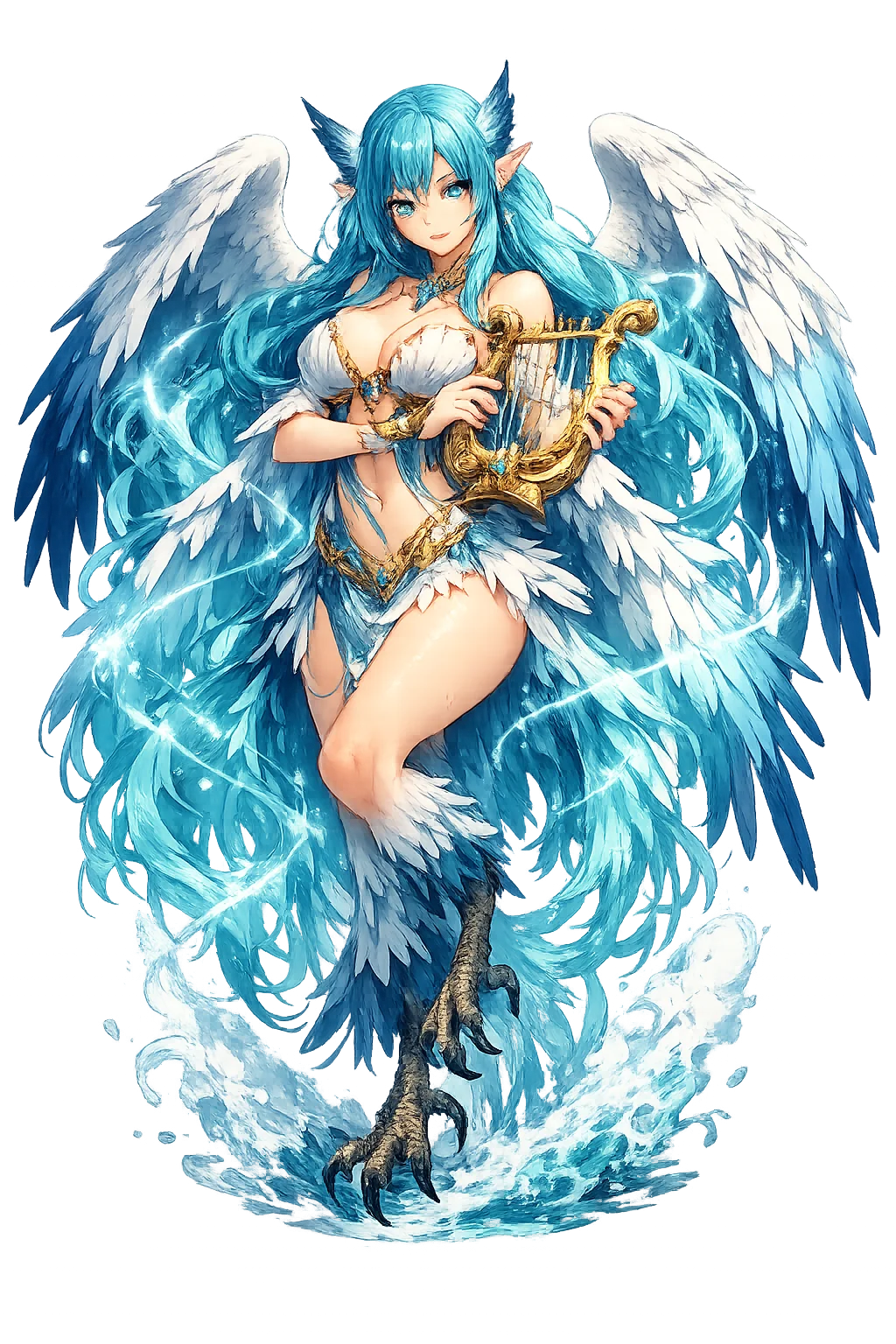
PuniCodex

Extended Lore

Σειρήν Seirḗn

Etymology · Phonology · Orthography · Cultural Legacy · Primary Sources

Tier 1 Seirḗn.com
Seirḗn — Enchanting Singer
01

Quick Facts

Essential information about Seirḗn, Enchanting Singer

Original ScriptΣειρήν
Unicode RestorationSeirḗn
Reconstructed Pronunciation/sɛː.rɛ̌ːn/
PantheonGreek
DomainEnchanting Singer
MeaningBinder, entangler
ClassificationTier 1
Primary DomainSeirḗn.com
Sacred SymbolsThe lyre, The meadow of bones, The wax
02

Etymology & Word Family

From original script to Unicode restoration

Original Script Σειρήν Seirḗn — "Binder, entangler"
Unicode Restoration Seirḗn Restored stress, length, and script
Modern ASCII seiren Plain-ASCII fallback

Greek Σειρήν carries the accent on the final syllable — Seirḗn — and the etymology is contested: folk tradition heard σεῖρα, "cord," for the binding song, while modern scholarship looks to Semitic or pre-Greek roots. The macron on the eta preserves the long vowel of the nominative.

03

Unicode Character Breakdown

Character-by-character philological analysis

CharacterUnicodeNameBlockPhonetic Role
SU+0053Latin Capital Letter SBasic LatinS uppercase
eU+0065Latin Small Letter EBasic Latine same
iU+0069Latin Small Letter IBasic Latini same
rU+0072Latin Small Letter RBasic Latinr same
U+1E17Latin Small Letter E with Macron and AcuteUnknownStress + length
nU+006ELatin Small Letter NBasic Latinn same

The Tier 1 classification reflects which ancient features stress, length, or script are preserved in this restoration.

04

Cultural Significance

From ancient cult to modern Unicode

Ancient Domain

Seirḗn is the most intelligent monster in the Odyssey: she does not promise pleasure but knowledge — "we know everything that happens on the fruitful earth." The Greeks feared her because her offer is exactly what the wise cannot refuse.

Seirḗn in Later Traditions

Late antiquity moralized her: Christian writers made the Sirens the seductions of the world, the mast the cross. The Middle Ages merged her with the fish-tailed northern mermaid — the bird-maiden of Greece becoming the siren of romance — and French gave the world sirène, which is why modern alarm sirens and mermaids share a word. Kafka's parable "The Silence of the Sirens" gave her the last modern turn: a more fatal weapon than song is silence.

Modern Legacy

"Siren song" is the fixed phrase for an irresistible, ruinous offer; "siren" became the alarm that itself enchants. Adorno and Horkheimer made Odysseus-at-the-mast the parable of the bourgeois self — pleasure permitted only under bondage — and feminist readings recover the Sirens as the suppressed voice of female knowledge. Ambulance sirens, film mermaids, and every warning that allures are her descendants.

Unicode Restoration as Cultural Act

Restoring Seirḗn in a domain name is more than orthographic accuracy. It is a statement that the internet should recognize the full range of human writing — not only the ASCII keyboard.

05

Frequently Asked Questions

Common questions about Seirḗn, Enchanting Singer, and Unicode restoration

01How do you pronounce Seirḗn?

In reconstructed pronunciation, Seirḗn is /sɛː.rɛ̌ːn/ — approximately say-RAIN, stacked macron+acute on the final ē..

02What does Seirḗn mean?

Seirḗn means Binder, entangler in the greek tradition.

03What are the symbols of Seirḗn?

Seirḗn is associated with The lyre (Song as the instrument of capture — art's dangerous edge), The meadow of bones (The flowering shore ringed with the rotting skins of the enchanted), The wax (Deliberate deafness — the technology of the will).

04Why restore Seirḗn in Unicode?

Plain ASCII seiren strips the stress, length, and script that make the name specific. Unicode restoration returns the name to its original written dignity.

05What is the most important myth about Seirḗn?

Kirkē warns Odysseus: the Sirens "enchant all who come near," and their island is heaped with bones. He has his crew plug their ears with wax and lash him to the mast. The Sirens hail him by name — they know his story — and promise that whoever hears them sails away "wiser." He strains at the ropes; the ship passes; the danger is measured in the distance of a song.

06

Scholarly Sources

The philological foundations of this restoration

Every claim on this page is grounded in established scholarship. The orthographic restorations follow disciplinary convention. The etymological chain follows the best available reference works. This is not invention — it is resurrection through scholarship.

Lexicography & Philology

  • Homer
  • Liddell, H. G., Scott, R., & Jones, H. S. A Greek-English Lexicon. Oxford: Clarendon Press, 9th ed. 1996.

Primary Texts

  • Homer
  • Euripides
  • Apollodorus

Archaeology & Art History

  • Material evidence — iconography, inscriptions, and temple archaeology — for Seirḗn and related cults.
  • Greek art fixes her form early: bird-bodied, woman-headed, from the 7th century BCE — the famous Attic black-figure stamnos in the British Museum shows Odysseus bound to the mast beneath two enormous birds with women's faces. South Italian funerary art made Sirens the musicians of the dead, carved on tombs of Campania and Apulia as mourning escorts. Odyssey-related localizations — the Sirenum scopuli off the Amalfi coast — are ancient tourism, reported already by Strabo.

Religious Studies

  • Apollonius
Return

The Surface Awaits

You have traced the name from its earliest attestation to its Unicode restoration. Now return to the myth. The story is where the name lives.

Back to Lore
Seirḗn mascot