The Authentic Orthography
Sea, Earthquakes, Horses · Lord of the Earth (from πόσις + δᾶ)
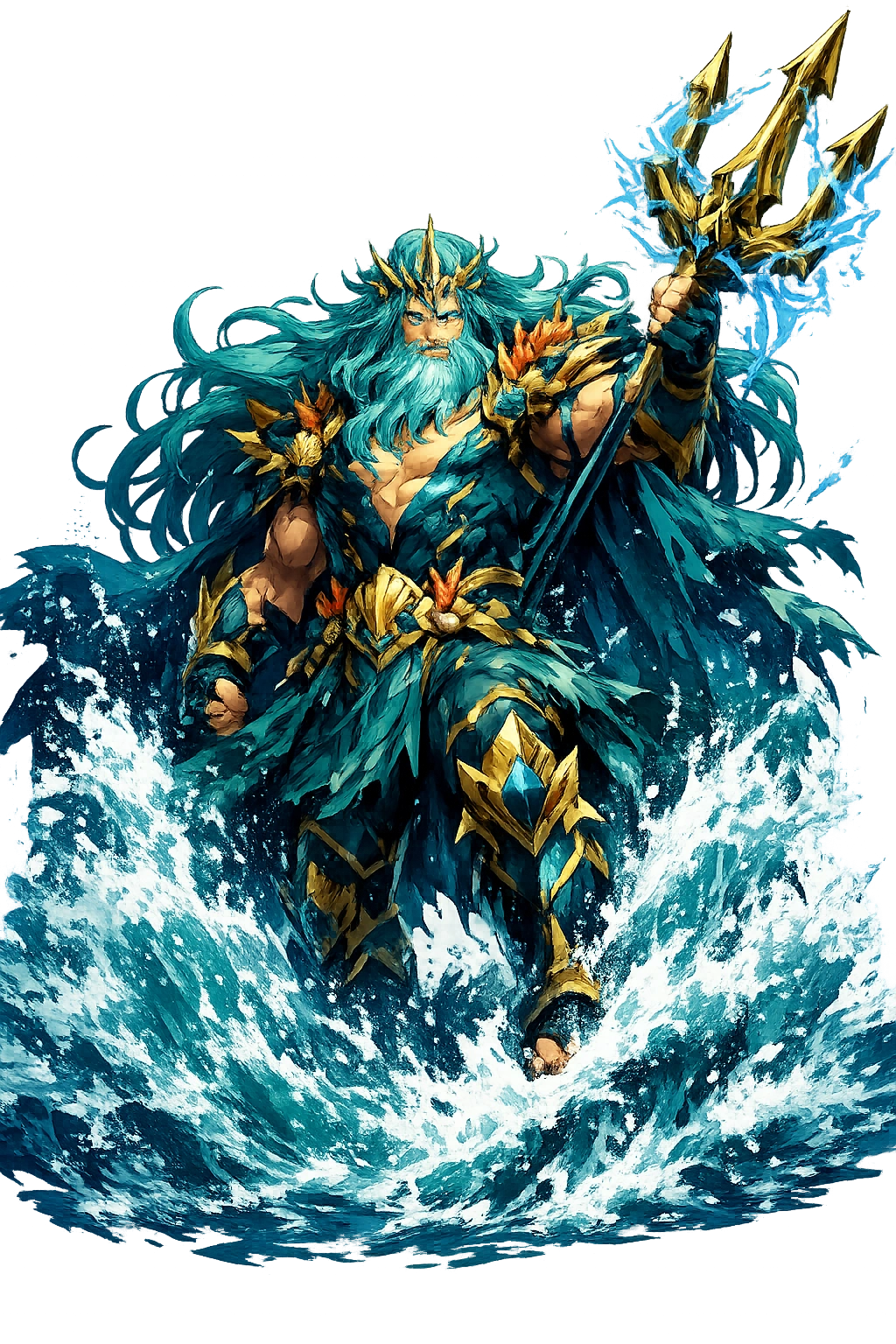
Unicode restoration and ASCII comparison
Ποσειδῶν
The name in its original Greek form. Poseidôn (Ποσειδῶν) is attested in the source tradition — “Lord of the Earth (from πόσις + δᾶ)”. Its diphthongs, long vowels, and acute accents carry the full phonetic and orthographic weight of the source tradition.
poseidon
Reduced to plain poseidon, the name loses everything that made it specific: diphthongs, long vowels, and acute accents. What remains is an ASCII string that machines can parse but that no longer speaks with its original voice.
Poseidôn
The Unicode restoration recovers what ASCII flattened. Poseidôn restores diphthongs, long vowels, and acute accents, returning the name to its original written dignity. The domain encodes to Punycode, but the browser displays the truth.
Poseidôn.com → xn--poseidn-y0a.com
The non-ASCII characters in Poseidôn are encoded while the ASCII remains visible. To the DNS, it is Punycode. To humanity, it is Poseidôn.
How Poseidôn travels from ancient script to the modern URL
Greek Ποσειδῶν; usually analysed as πόσις “lord, husband" + δᾶ “earth" (Doric for γῆ), hence “lord of the earth".
Sea, Earthquakes, Horses
The Unicode restoration Poseidôn preserves Greek stress and length; the ASCII form poseidon loses these features.
How Poseidôn was spoken
Sea, Earthquakes, Horses, and Storms
Poseidôn is the lord of the waters that surround and threaten every Greek city. He is not a gentle sea; he is the earth-shaker, the tamer of horses, the sudden storm that overturns ships and cracks land. His power is older than Zeús in some traditions, and his rivalry with Athena for Athens defines the tension between maritime force and civic wisdom.
Poseidôn commands the Mediterranean itself — calm or wrathful, generous or deadly.
His trident strikes rock and splits the earth; every tremor is his chariot passing beneath.
He created the horse, either as a gift to Athens or as a creature of the breaking wave.
The sudden gale, the waterspout, and the drowning wave all answer to him.
Stories of Poseidôn
Poseidôn's myths dramatize the rage of the excluded. He is a great Olympian, yet he is repeatedly thwarted — by Athena at Athens, by Odysseus after the blinding of Polyphemus, by the very mortals whose sacrifices he demands.
After the defeat of the Titans, Zeús, Poseidôn, and Hádês divided the cosmos by lot. Zeús took the sky, Hádês the underworld, and Poseidôn the sea. The earth remained common to all three. This tripartition makes Poseidôn equal in dignity to his brothers, yet his watery realm is restless and uncontainable — a fitting symbol of his temperament.
Poseidôn and Athénā competed for the patronage of Athens. He struck the Acropolis with his trident and produced a salt spring; she planted the olive tree. The city chose her gift. Poseidôn flooded Attica in revenge, and the Athenians placated him by giving the first fruits of the harvest and by honoring Erechtheus, whom he had destroyed. The myth encodes the Greek insight that sea power must yield to civic wisdom.
When Odysseus blinded the Cyclops Polyphemus — Poseidôn's son — the god pursued the hero across the sea for ten years. Every storm, every shipwreck, every near-drowning was Poseidôn's vengeance. Yet the god's wrath is also a narrative force: without it, the Odyssey would not exist. Poseidôn is the obstacle that makes the return meaningful.
Poseidôn invented the horse, either in his failed bid for Athens or as a gift to mortals. The horse embodies his nature: beautiful, powerful, and potentially destructive. In Thessaly and Athens he was worshipped as Hippios, 'Horseman,' and chariot races honored him. The breaking wave and the galloping horse share the same curve and the same danger.
Poseidôn is the god of what the Greeks could not control. The sea was not a highway to them; it was a vast, unpredictable power that could swallow cities. Earthquakes were even worse — no warning, no defense, no explanation except the anger of the god. Poseidôn therefore represents the limits of human mastery, the forces that mock our plans.
Enter Extended Lore