The Authentic Orthography
Underworld, Wealth, the Dead · Underworld, Wealth, the Dead · "The Rich One" — Roman lord of the underworld and of buried wealth
Unicode restoration and ASCII comparison
Plūtō
The name survives only in scholarly transliteration. Plūtō is the standard Roman romanisation, documented in academic sources — “"The Rich One" — Roman lord of the underworld and of buried wealth”. Its macron-length vowels preserve distinctions lost in plain ASCII.
The original script for this roman name has not yet been added to PUNICODEX. The form shown is a scholarly transliteration.
pluto
Reduced to plain pluto, the name loses everything that made it specific: macron-length vowels. What remains is an ASCII string that machines can parse but that no longer speaks with its original voice.
Plūtō
The Unicode restoration recovers what ASCII flattened. Plūtō restores macron-length vowels, returning the name to its original written dignity. The domain encodes to Punycode, but the browser displays the truth.
Plūtō.com → xn--plt-sxa2m.com
The non-ASCII characters in Plūtō are encoded while the ASCII remains visible. To the DNS, it is Punycode. To humanity, it is Plūtō.
How Plūtō is preserved in writing
A bespoke provenance study for Plūtō is being prepared by the PUNICODEX scholarly team.
Contribute scholarly provenance →How Plūtō was spoken
Underworld, Wealth, and the Doors of the Deep
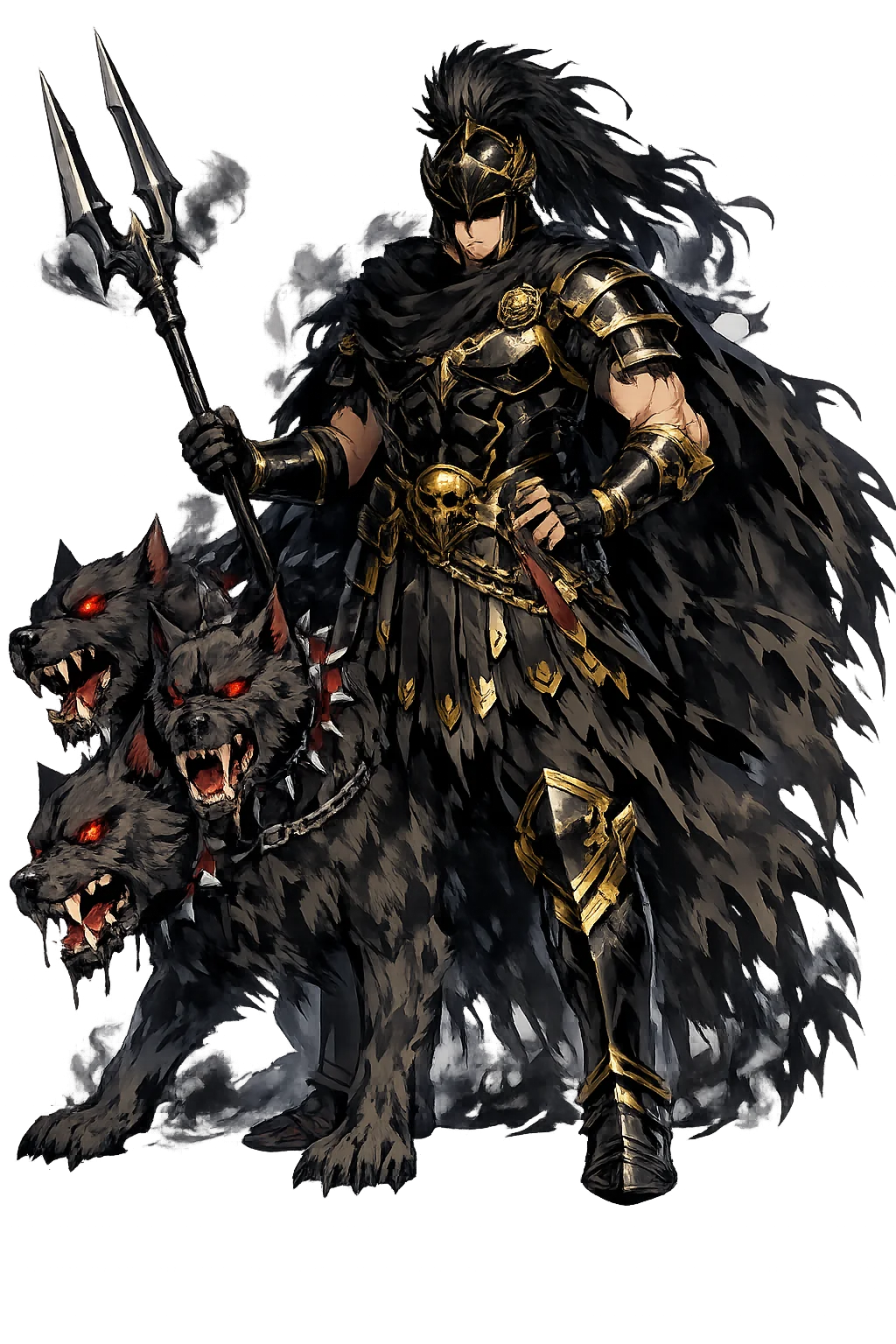
Plūtō is Rome's underworld god in his own right — not merely Hádēs renamed, but the Latin "Rich One" who rules the dead and the buried treasure together: the god in whose name the ground gives up both its wealth and its silence.
The Plutonia — the underworld gates, of which Rome kept its own at the Aventine.
His twin-name: the wealth-god Plutus — cornucopia from below.
The three-headed hound of the threshold — the deep's own border guard.
The queen he took by force and kept by season — Rome's Persephonē.
Stories of Plūtō
Plūtō's Roman myths retell the Greek cycle with a merchant's accent: the underworld as a treasury as much as a tribunal.
Ovid tells the Roman version of the oldest underworld story: Plūtō rose through the earth of Henna's meadow as Proserpina gathered flowers, and carried her down through the lake's opening to be his queen. Cerēs searched the world with torches; the famine followed her grief; and the settlement — half the year above, half below — made the seasons. Rome read it as agriculture's charter-myth: seed descends, grain returns.
Under the name Plūtus he was the benign twin: the wealth that comes from under the earth — grain, metal, the harvest itself. Aristophanes' comedy made him a blind old man who, healed, gives riches to the just; Rome's poets used him for the moral that wealth, like the grave, is no respecter of persons. The two names stayed one god: the Rich One below is also the Giver below.
Rome kept its own door to his kingdom: the Plutonium on the Aventine's slope, where, in 249 BCE during the darkest days of the First Punic War, the Senate staged the devotio — Valerius and his men hurled themselves into the pit to seal it with their lives, and the war turned. The story made his gate Rome's nuclear option: the last, deepest offering a city can make to the Rich One Below.
Plūtō is the god of what the ground holds: the dead, the ore, the seed, the secret. Rome's insight was to give all four one name and one address — the rich dark below where everything valuable also fears to go. He asks the miner's and the mourner's common question: what will you trust to the deep — and what, in your season, will it give back?
Enter Extended Lore