PuniCodex

Extended Lore

Perkūnas

Etymology · Phonology · Orthography · Cultural Legacy · Primary Sources

Tier 2 Perkūnas.com
Perkūnas — God of Thunder, Lightning and Storms
01

Quick Facts

Essential information about Perkūnas, God of Thunder, Lightning and Storms

Scholarly TransliterationPerkūnas
Unicode RestorationPerkūnas
Reconstructed Pronunciation/pʲɛrˈkuːnɐs/
PantheonBaltic
DomainGod of Thunder, Lightning and Storms
MeaningLithuanian/Baltic thunder deity, cognate with Slavic Perun and Indo-Iranian Parjanya.
ClassificationTier 2
Primary DomainPerkūnas.com
Sacred SymbolsStone axe or hammer, Oak tree, Flaming chariot or goat-drawn cart, Fire and spark
02

Etymology & Word Family

From original script to Unicode restoration

Proto-indo-european *perkʷu- oak, thunder
Scholarly Transliteration Perkūnas Perkūnas — "Lithuanian/Baltic thunder deity, cognate with Slavic Perun and Indo-Iranian Parjanya."
Unicode Restoration Perkūnas Restored stress, length, and script
Modern ASCII perkunas Plain-ASCII fallback

Perkūnas is a Tier-2 macron restoration. The long ū is the preserved non-English feature. The name descends from Proto-Baltic *Perkūnas and is cognate with Slavic Perun, reflecting a common Indo-European thunder deity.

03

Unicode Character Breakdown

Character-by-character philological analysis

CharacterUnicodeNameBlockPhonetic Role
PU+0050Latin Capital Letter PBasic LatinSame, capitalized
eU+0065Latin Small Letter EBasic LatinSame
rU+0072Latin Small Letter RBasic LatinSame
kU+006BLatin Small Letter KBasic LatinSame
ūU+016BLatin Small Letter U with MacronLatin Extended-AMacron marks long u
nU+006ELatin Small Letter NBasic LatinSame
aU+0061Latin Small Letter ABasic LatinSame
sU+0073Latin Small Letter SBasic LatinSame

The Tier 2 classification reflects which ancient features stress, length, or script are preserved in this restoration.

04

Cultural Significance

From ancient cult to modern Unicode

Ancient Domain

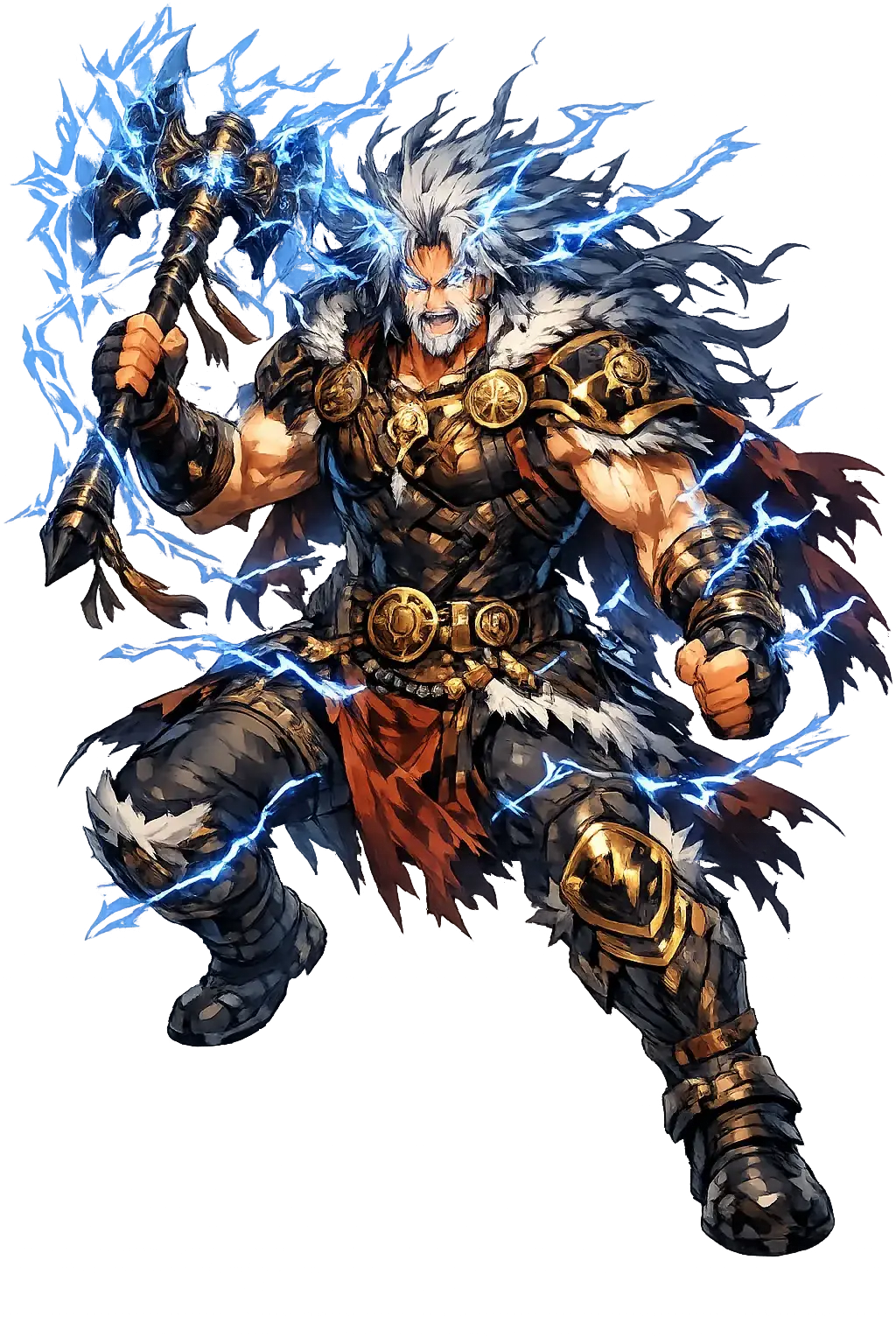
Perkūnas is the Lithuanian thunder god, the voice of the oak and the bolt that strikes the unjust. In Baltic folklore he rides across the sky in a flaming chariot, hurling stone axes and lightning arrows at demons, liars, and those who break their oaths. He is not merely weather; he is the moral sky, the enforcer of cosmic law in a world of dark forests and hidden spirits.

Perkūnas in Later Traditions

Perkūnas is cognate with Slavic Perun and Indo-Iranian Parjanya, all descendants of a Proto-Indo-European thunder deity. Slavic Perun, worshipped at Kiev and other centers, is the closest historical parallel. In Christianized folklore, Perkūnas was partially displaced by Saint Michael, Elijah, or God the Father, but his oak cult, thunder lore, and moral role survived under Christian names. Scholars have also compared him to Germanic Thor, Greek Zeus, and Vedic Indra, though each culture shaped the thunder god according to its own landscape.

Modern Legacy

Perkūnas remains a living symbol of Lithuanian and Latvian national identity. His name appears in place names, folk songs, and contemporary pagan (Romuva) revival rituals. Oak groves are still protected in the Baltic states as natural and cultural heritage, and the thunder god features in metal music, fantasy literature, and neo-pagan art. For linguists, Perkūnas is a key witness to the survival of Indo-European theonyms in a region that preserved archaic traditions longer than most of Europe.

Unicode Restoration as Cultural Act

Restoring Perkūnas in a domain name is more than orthographic accuracy. It is a statement that the internet should recognize the full range of human writing — not only the ASCII keyboard.

05

Frequently Asked Questions

Common questions about Perkūnas, God of Thunder, Lightning and Storms, and Unicode restoration

01How do you pronounce Perkūnas?

In reconstructed pronunciation, Perkūnas is /pʲɛrˈkuːnɐs/ — approximately pyair-KOO-nuss — roll the 'r,' make the 'oo' long, and give the final syllable a light hiss..

02What does Perkūnas mean?

Perkūnas means Lithuanian/Baltic thunder deity, cognate with Slavic Perun and Indo-Iranian Parjanya. in the baltic tradition.

03What are the symbols of Perkūnas?

Perkūnas is associated with Stone axe or hammer (The thunderbolt weapon that Perkūnas hurls and that Neolithic axes symbolized as fallen from the sky), Oak tree (His sacred tree, struck by lightning and used for offerings), Flaming chariot or goat-drawn cart (His vehicle as he travels the sky), Fire and spark (The sacred fire struck from the sky and preserved in Baltic ritual).

04What is the difference between Perkūnas.com?

Each is a historically defensible restoration. perkūnas.com.com is the owned form: Owned domain form.

05Why restore Perkūnas in Unicode?

Plain ASCII perkunas strips the stress, length, and script that make the name specific. Unicode restoration returns the name to its original written dignity.

06What is the most important myth about Perkūnas?

In Lithuanian folklore, Perkūnas strikes the oak with lightning, and the fire that results is sacred. Oak groves were his temples, and people would kindle new fire from a tree hit by his bolt. The oak's hardness and height made it the natural home of the sky-god's power, and acorns were gathered as protective amulets.

06

Scholarly Sources

The philological foundations of this restoration

Every claim on this page is grounded in established scholarship. The orthographic restorations follow disciplinary convention. The etymological chain follows the best available reference works. This is not invention — it is resurrection through scholarship.

Lexicography & Philology

  • Folklore
  • Ivanov-Toporov

Primary Texts

  • Primary sources in the baltic tradition for Perkūnas.

Archaeology & Art History

  • Material evidence — iconography, inscriptions, and temple archaeology — for Perkūnas and related cults.
  • Direct archaeological evidence for Perkūnas's cult is limited because it was largely suppressed and conducted in natural settings. However, Baltic hillforts, sacred oak groves, and deposits of stone axes interpreted as thunderstones attest to sky-god veneration. Neolithic and Bronze Age stone axes were often kept as protective thunderstones in Baltic households. Christian churches and crosses sometimes occupy former sacred oak sites, and Latvian dainas preserve the oral memory of a once-widespread thunder cult.

Religious Studies

  • Lithuanian folklore collections (Lietuvių mitologija, Jonas Basanavičius)
  • Latvian dainas (Krišjānis Barons, Latvju dainas)
  • Old Prussian Catechisms (Percunis)
  • Ivanov & Toporov, Issledovanija v oblasti slavjanskikh drevnostej
  • Mallory & Adams, The Oxford Introduction to Proto-Indo-European and the Proto-Indo-European World
  • Gimbutas, The Balts
  • Greimas, Of Gods and Men: Studies in Lithuanian Mythology
  • Kūlgrinda and Romuva ritual traditions
Return

The Surface Awaits

You have traced the name from its earliest attestation to its Unicode restoration. Now return to the myth. The story is where the name lives.

Back to Lore
Perkūnas mascot