Unicode restoration and ASCII comparison
Olódùmarè
The name survives only in scholarly transliteration. Olódùmarè is the standard Yoruba romanisation, documented in academic sources — “Owner of the universe”. Its acute stress marks preserve distinctions lost in plain ASCII.
No indigenous writing system is securely attested for individual yoruba names. The form shown is a modern scholarly transliteration.
olodumare
Reduced to plain olodumare, the name loses everything that made it specific: acute stress marks. What remains is an ASCII string that machines can parse but that no longer speaks with its original voice.
Olódùmarè
The Unicode restoration recovers what ASCII flattened. Olódùmarè restores acute stress marks, returning the name to its original written dignity. The domain encodes to Punycode, but the browser displays the truth.
Olódùmarè.com → xn--oldmar-8ua7frc.com
The non-ASCII characters in Olódùmarè are encoded while the ASCII remains visible. To the DNS, it is Punycode. To humanity, it is Olódùmarè.
How Olódùmarè is preserved in writing
No indigenous writing system is securely attested for individual yoruba names. The form shown is a modern scholarly transliteration.
Contribute scholarly provenance →How Olódùmarè was spoken
Supreme Creator, Destiny, and Final Authority
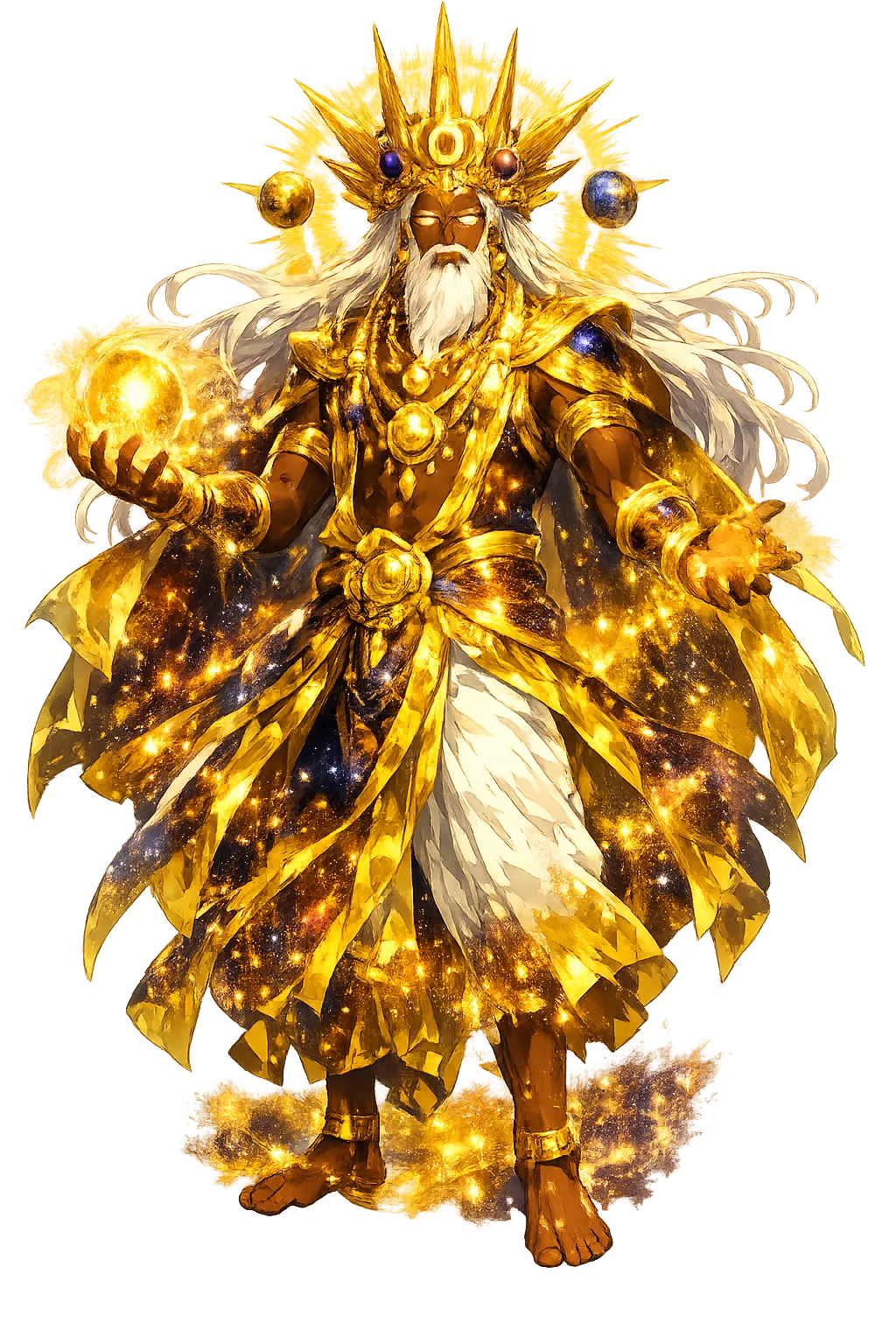
Olódùmarè is the high god of Yoruba religion, the sole creator who owns heaven and earth and everything that breathes. Unlike the orishas, who mediate between humans and the sacred, Olódùmarè is remote, self-sufficient, and without need of offerings. He delegates: the orishas govern the world, but they do so on his behalf.
He is the source of àṣàyàn (destiny) and the one before whom all orishas bow. In Yoruba theology he is not one god among many but the ground from which the many arise.
He alone creates ex nihilo; the orishas shape and govern what he has made.
He assigns àyẹ̀wò, the destiny chosen by each soul before birth.
No orisha can override his decree; even Ọrúnmìlà interprets rather than changes fate.
He needs no temple image; he is worshipped through the sky, the sun, and the breath of life.
Stories of Olódùmarè
Olódùmarè's mythology is theology: it concerns the origin of the world, the distribution of destiny, and the hierarchy between the high god and the orishas.
Olódùmarè created the universe and then sent the orishas down to finish it. Ọbatalá shaped human bodies from clay, and Olódùmarè himself breathed life into them. The story preserves a strict division: the creator originates, the orishas administer, and humans receive both matter and spirit.
Before birth, each soul travels to the house of Àjàláyé, the potter of heads, to choose a destiny. Olódùmarè authorises the choices and gives each person the breath that makes the destiny live. Once chosen, destiny can be mitigated by sacrifice and wisdom but not abolished. Olódùmarè is the final guarantor of this contract.
Yoruba tradition explains Olódùmarè's distance by saying that he is too pure and too great to be approached directly. Humans therefore relate to him through the orishas, who are his ministers. This does not diminish his supremacy; it structures it. Olódùmarè is the king who rules through a court of divine officials.
Olódùmarè is the god who needs nothing. He does not eat sacrifices the way the orishas do; he does not possess dancers or demand festivals. He simply is — the owner of the universe, the breath in every body, the sky above every shrine. This makes him easy to overlook and impossible to escape.
Enter Extended Lore