PuniCodex

Extended Lore

Ὀδυσσεύς Odysseús

Etymology · Phonology · Orthography · Cultural Legacy · Primary Sources

Tier 1 Odysseús.com
Odysseús — Cunning, Journey
01

Quick Facts

Essential information about Odysseús, Cunning, Journey

Original ScriptὈδυσσεύς
Unicode RestorationOdysseús
Reconstructed Pronunciation/o.dys.seús/
PantheonGreek
DomainCunning, Journey
MeaningHated, painful
ClassificationTier 1
Primary DomainOdysseús.com
Sacred SymbolsThe great bow, The olive-trunk bed, The scar, The oar, The ship
02

Etymology & Word Family

From original script to Unicode restoration

Original Script Ὀδυσσεύς Odysseús — "Hated, painful"
Unicode Restoration Odysseús Restored stress, length, and script
Modern ASCII odysseus Plain-ASCII fallback

Odysseús is Tier 1 because the Greek Ὀδυσσεύς contains both stress (the acute on the final syllable) and length (the diphthong ευ). The restoration keeps the acute on ú; the diphthong itself survives in the standard transliteration eu. English 'Odysseus' flattens the pitch that Greek put on the name's last syllable.

03

Unicode Character Breakdown

Character-by-character philological analysis

CharacterUnicodeNameBlockPhonetic Role
OU+004FLatin Capital Letter OBasic LatinO uppercase
dU+0064Latin Small Letter DBasic Latind same
yU+0079Latin Small Letter YBasic Latiny same
sU+0073Latin Small Letter SBasic Latins same
eU+0065Latin Small Letter EBasic Latine same
úU+00FALatin Small Letter U with AcuteLatin-1 SupplementAcute on u
sU+0073Latin Small Letter SBasic Latins same

The Tier 1 classification reflects how much of the original phonology this restoration preserves — stress and vowel length for Greek names, distinctive letters and diacritics for every other tradition.

04

Cultural Significance

From ancient cult to modern Unicode

Ancient Domain

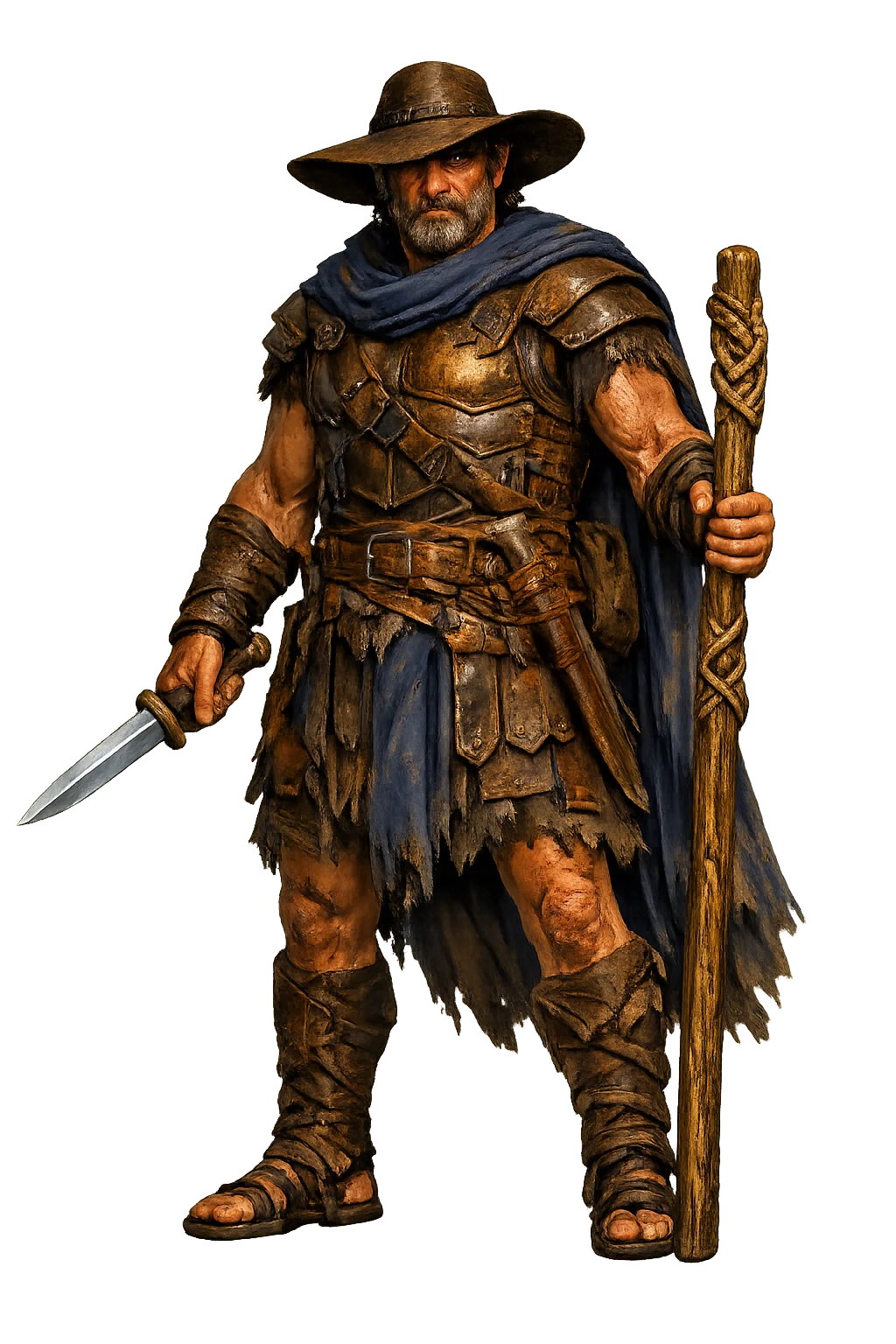
Odysseús is the Greeks' fullest study of intelligence under pressure: the strategist of Troy, the wanderer of ten years, the beggar who comes home to a house full of enemies and wins it back with patience, a bow, and a rooted bed. Homer gives him more words than any other hero — his weapon is speech itself.

Odysseús in Later Traditions

The western Greeks pronounced his name with -l-, and through them it reached Italy: Latin Ulixēs, English Ulysses. Rome admired his cunning and distrusted it; Virgil's Aeneid makes him the face of Greek deceit, while the philosophers reclaimed him as the Stoic sage. Dante's Ulisse sails beyond the Pillars of Herakles and drowns for the love of knowledge — the Christian epic's answer to Homer. Long before all this, the Odyssey itself had performed the boldest syncretism: it turned a folktale wanderer into the type of every human journey, so that his name, as the common noun 'odyssey', no longer needs him at all.

Modern Legacy

He is the most rewritten figure of the ancient world: Sophocles' divided portraits, Euripides' stage villain, Tennyson's aging voyager ('to strive, to seek, to find, and not to yield'), Joyce's Ulysses, in which a Dublin advertisement canvasser lives the whole epic in a day, Kazantzakis's modern sequel, Cavafy's Ithaka — 'wise as you will have become, so full of experience' — and a hundred films and novels. Space probes and wanderers' memoirs borrow the noun he became. Restoring Odysseús keeps the stress Greek put on his last syllable: the name itself rises at the end, like a mast coming over the horizon.

Unicode Restoration as Cultural Act

Restoring Odysseús in a domain name is more than orthographic accuracy. It is a statement that the internet should recognize the full range of human writing — not only the ASCII keyboard.

05

Frequently Asked Questions

Common questions about Odysseús, Cunning, Journey, and Unicode restoration

01How do you pronounce Odysseús?

In reconstructed pronunciation, Odysseús is /o.dys.seús/ — approximately 'oh-dyss-SEWS' — three quick syllables gathering into a long, high final surge, like a wave cresting at the name's end..

02What does Odysseús mean?

Odysseús means Hated, painful in the greek tradition.

03What are the symbols of Odysseús?

Odysseús is associated with The great bow (The weapon only he could string; the test by which the beggar becomes the king), The olive-trunk bed (Built into a living, rooted tree — the immovable sign by which Penelope knows her husband), The scar (The boar's-tusk wound from Parnassos, by which the old nurse Eurykleia knows him first), The oar (Carried inland until a wayfarer mistakes it for a winnowing-fan — the prophecy of his peace), The ship (The vessel of the much-turned man; he loses every one and still comes home).

04Why restore Odysseús in Unicode?

Plain ASCII odysseus strips the stress, length, and script that make the name specific. Unicode restoration returns the name to its original written dignity.

05What is the most important myth about Odysseús?

Ten years of force had not taken Troy; Odysseús took it in a night by craft. The horse, built by Epeios with Athena's help, carried the pick of the Achaeans within the walls as a pretended offering, and the Odyssey remembers it as his design. The Iliad ends before the fall, but the Odyssey tells the rest: the plan, the peril of Helen's voice at the horse's side, and the sack that followed were all his.

06

Scholarly Sources

The philological foundations of this restoration

Every claim on this page is grounded in established scholarship. The orthographic restorations follow disciplinary convention. The etymological chain follows the best available reference works. This is not invention — it is resurrection through scholarship.

Lexicography & Philology

  • Homer
  • Beekes, R. S. P. Etymological Dictionary of Greek. Leiden: Brill, 2010.

Primary Texts

  • Homer
  • Sophocles
  • Euripides
  • Apollodorus
  • Virgil

Archaeology & Art History

  • Material evidence — iconography, inscriptions, and temple archaeology — for Odysseús and related cults.
  • Ithaki, the island that still bears his name, has Mycenaean remains at Pelikata and Aetos, and at Polis Bay a cave sanctuary of the Nymphs whose votive deposits run from the Late Bronze Age to the Roman period — the very cave where later Ithacans placed Odysseús's homecoming, and where a Hellenistic terracotta fragment inscribed ΕΥΧΗΝ ΟΔΥΣΣΕΙ, 'a prayer to Odysseus', attests his hero-cult. The Bronze Age site above Polis Bay, long called the School of Homer, remains conjectural as his palace. Beyond Ithaka his cult is epigraphic and scattered; his truest monument is Homer's text.

Religious Studies

  • Comparative studies of greek religion and the place of Odysseús within it.
Return

The Surface Awaits

You have traced the name from its earliest attestation to its Unicode restoration. Now return to the myth. The story is where the name lives.

Back to Lore
Odysseús mascot