The Authentic Orthography
World of Fire · Muspel-home (world-ender)
Unicode restoration and ASCII comparison
ᛘᚢᛋᛒᛁᛚᛚᚼᛁᛘᚱ
The name in its original Norse form. Muspellheimr (ᛘᚢᛋᛒᛁᛚᛚᚼᛁᛘᚱ) is attested in the source tradition — “Muspel-home (world-ender)”. Its original diacritics and script distinctions carry the full phonetic and orthographic weight of the source tradition.
muspellheimr
The plain muspellheimr form is identical to the Unicode restoration. Because this name is already written in Latin letters, no diacritics, stress, or script information were lost — only capitalization differs.
Muspellheimr
The Unicode restoration does not need to recover lost marks for Muspellheimr. Its value is canonical spelling and consistent cataloguing, not the reconstruction of erased orthography. The domain is readable as-is to both DNS and humanity.
Muspellheimr.com → muspellheimr.com
The non-ASCII characters in Muspellheimr are encoded while the ASCII remains visible. To the DNS, it is Punycode. To humanity, it is Muspellheimr.
How Muspellheimr travels from ancient script to the modern URL
Old Norse Muspellheimr; from Muspell, the fire-giant or fire-realm, + heimr “home"; the world of fire.
World of Fire
The Unicode restoration Muspellheimr uses registrable Thorn and vowel accents; the runic form is not used because runic TLD support is impractical.
How Muspellheimr was spoken
The domain of Muspellheimr
In the norse tradition, Muspellheimr governed world of fire. The name encodes a sphere of power that shaped ritual, narrative, and social order.
The fire giant Surtr will lead Muspell's sons across Bifröst, burning the world at Ragnarǫk.
Sparks from Muspellheimr met Niflheimr's ice in Ginnungagap, melting the primordial rime from which Ymir emerged.
Muspellheimr's inhabitants are burning beings for whom order itself is fuel; no gods dwell there.
The southern realm of flame is both the furnace of creation and the terminal conflagration of the cosmos.
Stories of Muspellheimr
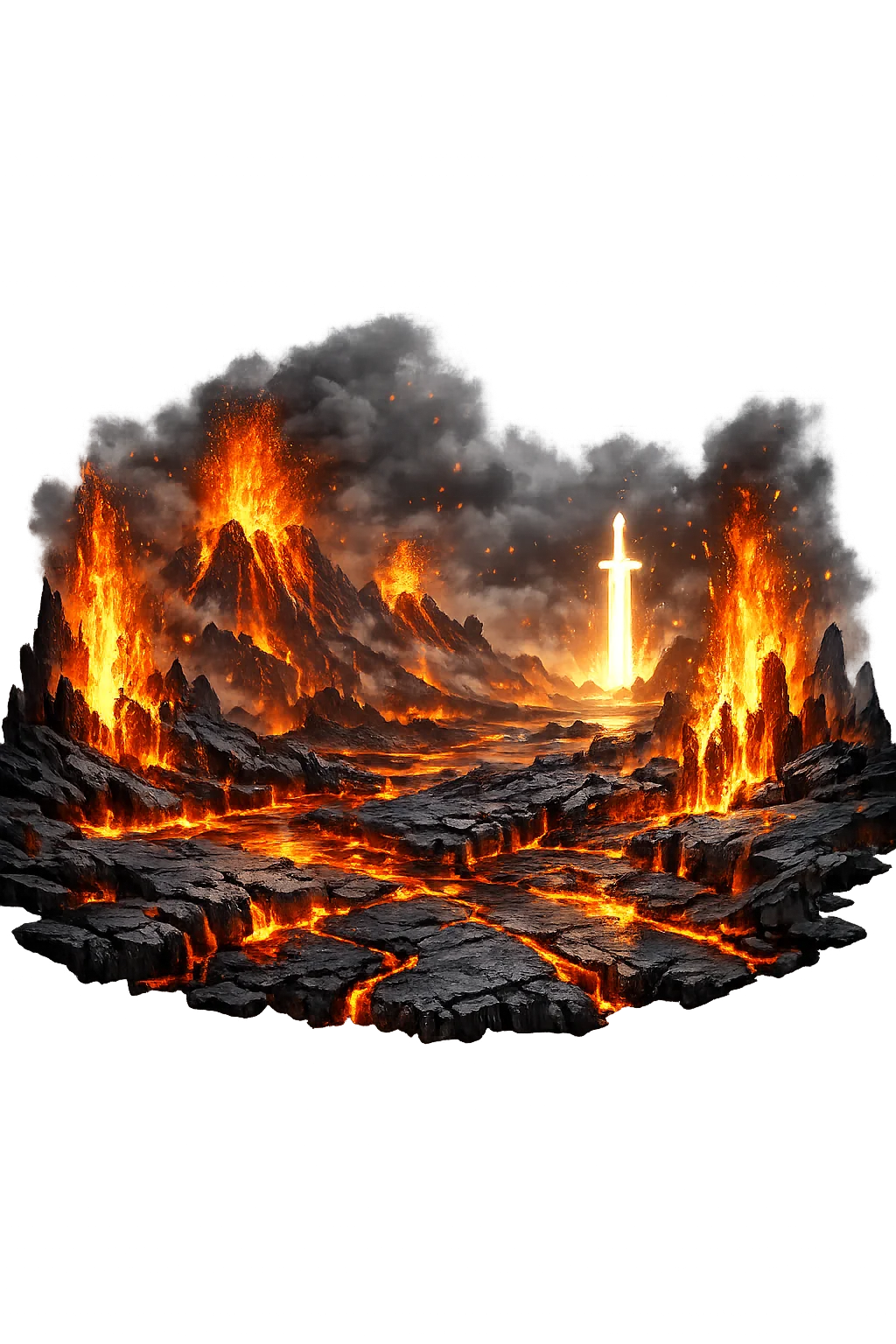
Muspellheimr is the world of fire, the southern realm of flame that existed even before the ordered cosmos was shaped. It is the home of Surtr, the fire giant who will lead its sons across Bifröst at Ragnarǫk, burning the world and slaying Freyr. Unlike Niflheimr's ice, Muspellheimr represents unconstrained destruction and the heat that first melted the primordial rime, allowing Ymir to emerge from Ginnungagap. No gods dwell there permanently; its inhabitants are fire giants and burning beings for whom order itself is fuel. Medieval Icelanders, living in the shadow of Hekla and Eldgjá, knew this fire firsthand; their lava fields gave empirical weight to the idea of a southern world of flame. Its fire is both creative and terminal, the furnace and the final conflagration. Muspell's fire is older than creation and will survive its end. Snorri's account makes it the southern origin of the world-destroying force that surges under Surtr's leadership at Ragnarǫk. The realm thus embodies the apocalyptic insight that the same heat that first quickens life will finally consume the ordered cosmos.
The seeress of Völuspá foretells that Surtr will come from the south with fire, his sword brighter than the sun. The bridge Bifröst breaks beneath the tread of Muspell's sons; the fire giant slays the beautiful god Freyr, who gave away his own sword for love. The flames spread until heaven itself is consumed.
This is Muspellheimr's decisive mythic appearance: not as a realm to be visited but as a force that arrives at the end of time. Its fire does not discriminate; it burns gods, giants, and the world-tree alike, making Muspellheimr the agent of universal dissolution.
Before the worlds were made, the cold rivers of Niflheimr flowed into Ginnungagap and froze into rime, while sparks and molten fragments from Muspellheimr flew into the same void. Where the fire met the ice, the ice began to drip, and from those drops the body of Ymir was formed.
Thus Muspellheimr is not merely the world's destroyer but also one of its two creative poles. Without its heat, the primordial drip would never have quickened into life. The realm holds destruction and genesis in a single burning paradox.
Names are not merely labels; they are compressed worlds. Muspellheimr carries within it a norse understanding of muspel-home (world-ender). Unicode restoration returns that world to readable form.
Enter Extended Lore