
Ancient Domain
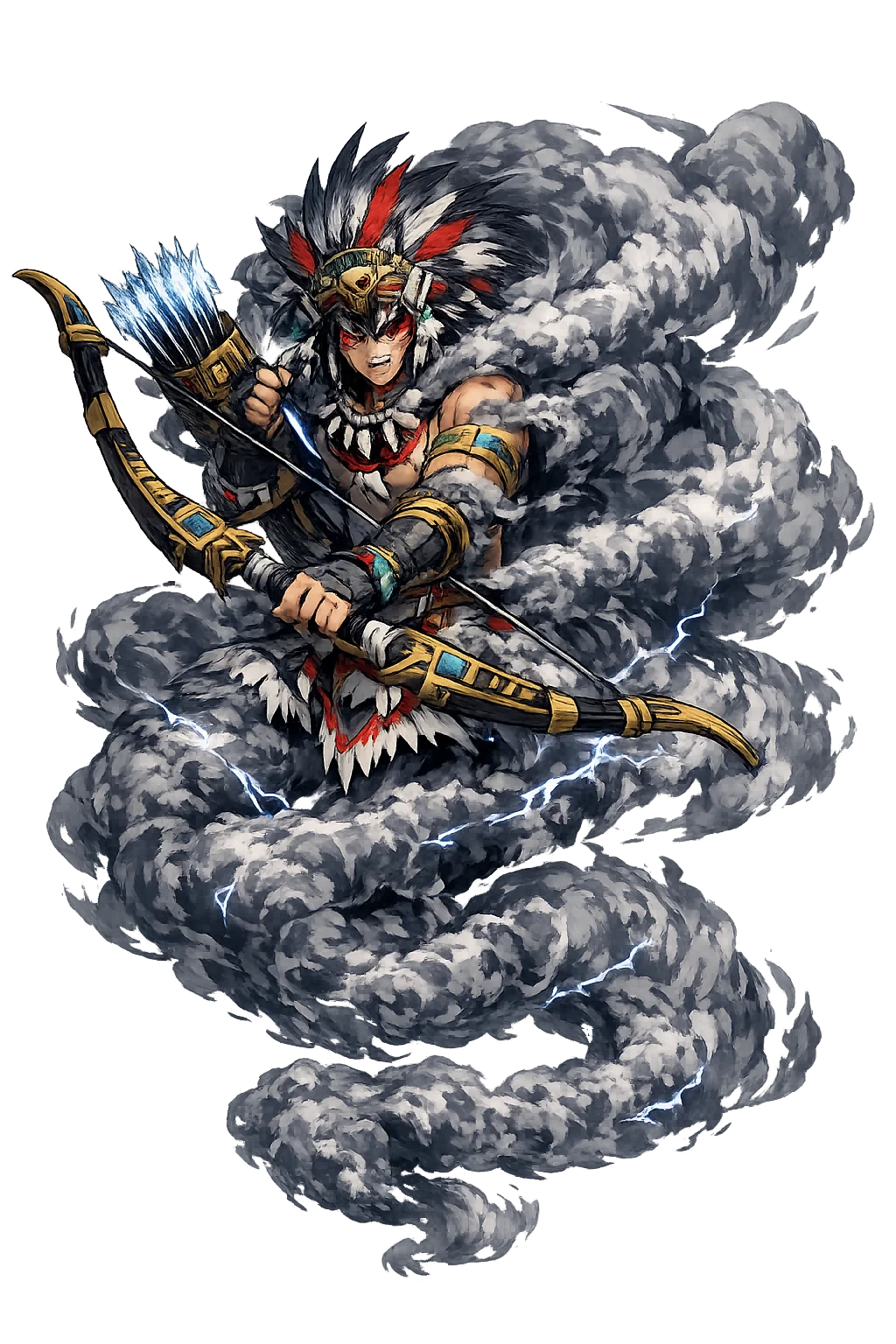
Mixcōātl is the Aztec god of the hunt and the starry road: the cloud-serpent who slides along the Milky Way, patron of the nomadic hunters who became the Aztecs' ancestors — the oldest god of the road that leads to the empire.
Extended Lore
Etymology · Phonology · Orthography · Cultural Legacy · Primary Sources
Essential information about Mixcōātl, Clouds, Hunting, the Milky Way
From original script to Unicode restoration
Mixcōātl is Nahuatl for "cloud serpent" (mixtli + cōātl); the macron on the ō marks the long vowel of the serpent-word, the same one in Quetzalcōātl and Xōlōtl. The restoration keeps it — the serpent is always long. The x of Nahuatl is the sh-sound, not ks: meesh, not mix — the single most misread letter in the language.
Character-by-character philological analysis
| Character | Unicode | Name | Block | Phonetic Role |
|---|---|---|---|---|
| M | U+004D | Latin Capital Letter M | Basic Latin | Same |
| i | U+0069 | Latin Small Letter I | Basic Latin | Same |
| x | U+0078 | Latin Small Letter X | Basic Latin | Same |
| c | U+0063 | Latin Small Letter C | Basic Latin | Same |
| ō | U+014D | Latin Small Letter O with Macron | Latin Extended-A | Long ō of cōātl |
| ā | U+0101 | Latin Small Letter A with Macron | Latin Extended-A | Long ā of cōātl |
| t | U+0074 | Latin Small Letter T | Basic Latin | Same |
| l | U+006C | Latin Small Letter L | Basic Latin | Same |
The Tier 1 classification reflects how much of the original phonology this restoration preserves — stress and vowel length for Greek names, distinctive letters and diacritics for every other tradition.
From ancient cult to modern Unicode
Mixcōātl is the Aztec god of the hunt and the starry road: the cloud-serpent who slides along the Milky Way, patron of the nomadic hunters who became the Aztecs' ancestors — the oldest god of the road that leads to the empire.
The hunt-gods of North America stand in his lineage: the Huichol's Kauyumari (the blue deer-guide) and the Maya hunting-lords share his road-and-prey theology. Colonial chroniclers merged him with Santiago and with Nimrod (the hunter-king of the missionaries' Genesis); the people kept the star-serpent — and hunters in rural Mexico still note the sky's deer-road on the way to the field.
His name survives in the Milky Way's Nahuatl name itself; the Quecholli weapons-festival is documented in the Florentine Codex's fullest ritual detail; and the Chichimec hunting mythology is the standard account of the Aztecs' own self-image: the empire that began as wanderers following a serpent of stars. The Mexican National Museum of Anthropology's Mixcōātl figures — striped, netted, bowed — are his standing portraits.
Restoring Mixcōātl in a domain name is more than orthographic accuracy. It is a statement that the internet should recognize the full range of human writing — not only the ASCII keyboard.
Common questions about Mixcōātl, Clouds, Hunting, the Milky Way, and Unicode restoration
In reconstructed pronunciation, Mixcōātl is /miʃ.ˈkoː.aː.tɬ/ — approximately meesh-KOH-ahtl — long o, lateral finish..
Mixcōātl means "Cloud Serpent" — god of the hunt, of clouds, and of the starry road in the nahuatl tradition.
Mixcōātl is associated with The bow and arrows (The hunt — his gift to the wandering tribes), The star-serpent (The Milky Way as a living road), The white stripes (His hunting-paint, cloud on dark sky).
Plain ASCII mixcoatl strips the stress, length, and script that make the name specific. Unicode restoration returns the name to its original written dignity.
The Chichimec tribes who became the Aztec nobility followed his road: the Milky Way, which the Nahuatl called Mixcōātl, the Cloud Serpent, slithering nightly across the sky. The migrating peoples read their path in his body — the desert crossed by the serpent's light — and when they founded Tenochtitlan, they enthroned the wilderness-guide among the city's great gods, the god of where they had come from.
The philological foundations of this restoration
Every claim on this page is grounded in established scholarship. The orthographic restorations follow disciplinary convention. The etymological chain follows the best available reference works. This is not invention — it is resurrection through scholarship.
You have traced the name from its earliest attestation to its Unicode restoration. Now return to the myth. The story is where the name lives.
Back to Lore