PuniCodex

Extended Lore

媽祖 Māzǔ

Etymology · Phonology · Orthography · Cultural Legacy · Primary Sources

Tier 1 Māzǔ.com
Māzǔ — Sea, Protection, Seafaring
01

Quick Facts

Essential information about Māzǔ, Sea, Protection, Seafaring

Original Script媽祖
Unicode RestorationMāzǔ
Reconstructed Pronunciation/má.tsù/
PantheonChinese
DomainSea, Protection, Seafaring
MeaningMother ancestor
ClassificationTier 1
Primary DomainMāzǔ.com
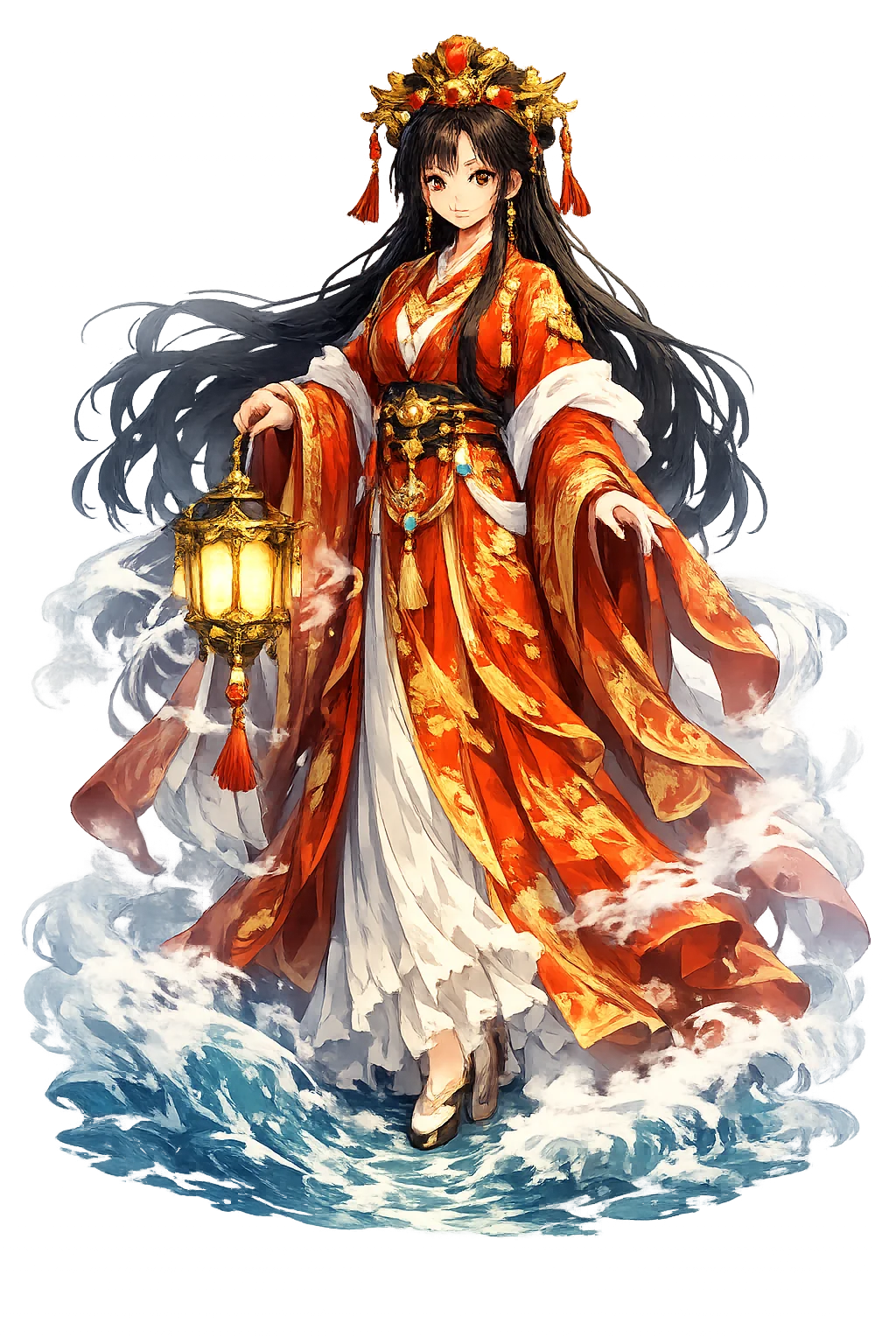
Sacred SymbolsThe red robe, The lantern, The two generals
02

Etymology & Word Family

From original script to Unicode restoration

Original Script 媽祖 Māzǔ — "Mother ancestor"
Unicode Restoration Māzǔ Restored stress, length, and script
Modern ASCII mazu Plain-ASCII fallback

Māzǔ 媽祖 — "Maternal Ancestor" — carries the first tone on mā and the dipping third tone on zǔ; the restoration keeps both tone marks. Her personal name was Lín Mòniáng ("Silent Maiden"), but the world prays to the title: Grandmother of the sea. The third tone on zǔ dips and rises — the small valley in the name that Mandarin speakers sing without noticing.

03

Unicode Character Breakdown

Character-by-character philological analysis

CharacterUnicodeNameBlockPhonetic Role
MU+004DLatin Capital Letter MBasic LatinSame, capitalized
āU+0101Latin Small Letter A with MacronLatin Extended-ALong vowel
zU+007ALatin Small Letter ZBasic LatinSame
ǔU+01D4Latin Small Letter U with CaronLatin Extended-BSpecial character

The Tier 1 classification reflects which ancient features stress, length, or script are preserved in this restoration.

04

Cultural Significance

From ancient cult to modern Unicode

Ancient Domain

Māzǔ is the most-worshipped sea goddess on earth: the fisherman's daughter who became the guardian of everyone who works the water, whose temples line every coast of the Chinese world, and whose red lanterns guide sailors home through a thousand years of storms.

Māzǔ in Later Traditions

She absorbs the coast's other sea-powers: associated with Guānyīn (who is sometimes her patron in the legends), honored in Daoist and Buddhist temples alike, and worshipped as Tin Hau in Hong Kong and A-Ma in Macau — whose very name, some say, comes from her ("A-Ma-Gau," Bay of A-Ma). The diaspora carried her to every Chinese port from San Francisco to Sydney: wherever junks and container ships anchor, her shrine overlooks the harbor.

Modern Legacy

Her temples number in the thousands — over 1,500 in Taiwan alone; her birthday (23rd of the 3rd lunar month) shuts down the island's coasts; her Dajia procession is a national institution watched by millions more online. Fishermen, sailors, the navy, and migrants all claim her: the goddess who was once a girl watching the sea is now the sea's own government, elected annually by the crowds who walk behind her statue.

Unicode Restoration as Cultural Act

Restoring Māzǔ in a domain name is more than orthographic accuracy. It is a statement that the internet should recognize the full range of human writing — not only the ASCII keyboard.

05

Frequently Asked Questions

Common questions about Māzǔ, Sea, Protection, Seafaring, and Unicode restoration

01How do you pronounce Māzǔ?

In reconstructed pronunciation, Māzǔ is /má.tsù/ — approximately MAH-tsoo — level tone, then a dip-and-rise..

02What does Māzǔ mean?

Māzǔ means Mother ancestor in the chinese tradition.

03What are the symbols of Māzǔ?

Māzǔ is associated with The red robe (Her temple color — protection worn bright against the grey sea), The lantern (The guide-light of the storm-tossed), The two generals (Sight and hearing deified — vigilance in both directions).

04Why restore Māzǔ in Unicode?

Plain ASCII mazu strips the stress, length, and script that make the name specific. Unicode restoration returns the name to its original written dignity.

05What is the most important myth about Māzǔ?

Lín Mòniáng was born on Meizhou island in 960 CE, and tradition says she did not cry at birth — hence "Silent Maiden." She learned to read the weather on her father's fishing boat, stood on the shore watching for lost sails, and was seen in dreams guiding drowning sailors home. Dead by twenty-eight, she rose, the fishermen said, straight to the sky on a cloud of incense — and the sea was never without her again.

06

Scholarly Sources

The philological foundations of this restoration

Every claim on this page is grounded in established scholarship. The orthographic restorations follow disciplinary convention. The etymological chain follows the best available reference works. This is not invention — it is resurrection through scholarship.

Lexicography & Philology

  • Chinese folklore
  • Daoist Canon

Primary Texts

  • Primary sources in the chinese tradition for Māzǔ.

Archaeology & Art History

  • Material evidence — iconography, inscriptions, and temple archaeology — for Māzǔ and related cults.
  • The Meizhou Ancestral Temple on her home island — rebuilt repeatedly from the Song original, crowded with imperial plaques — is her Nazareth; the Dajia Jenn Lann Temple and Taipei's grand Tianhou temples are her living capitals. Macau's A-Ma Temple (15th c., older than the Portuguese) marks her oldest colonial-era shore, and the Mazu statues of the Taiwan Strait's temples document eight centuries of her iconography.

Religious Studies

  • Chinese folk religion
  • Chinese folklore
  • Birrell
  • Chinese Buddhist texts
  • Cambridge
  • Oxford
Return

The Surface Awaits

You have traced the name from its earliest attestation to its Unicode restoration. Now return to the myth. The story is where the name lives.

Back to Lore
Māzǔ mascot