PuniCodex

Extended Lore

Huitzilopōchtli

Etymology · Phonology · Orthography · Cultural Legacy · Primary Sources

Tier 2 Huitzilopōchtli.com
Huitzilopōchtli — Sun, War, Hummingbird
01

Quick Facts

Essential information about Huitzilopōchtli, Sun, War, Hummingbird

Scholarly TransliterationHuitzilopōchtli
Unicode RestorationHuitzilopōchtli
Reconstructed Pronunciation/wi.t͡si.loˈpoːt͡ʃ.tɬi/
PantheonNahuatl
DomainSun, War, Hummingbird
MeaningLeft-handed hummingbird
ClassificationTier 2
Primary DomainHuitzilopōchtli.com
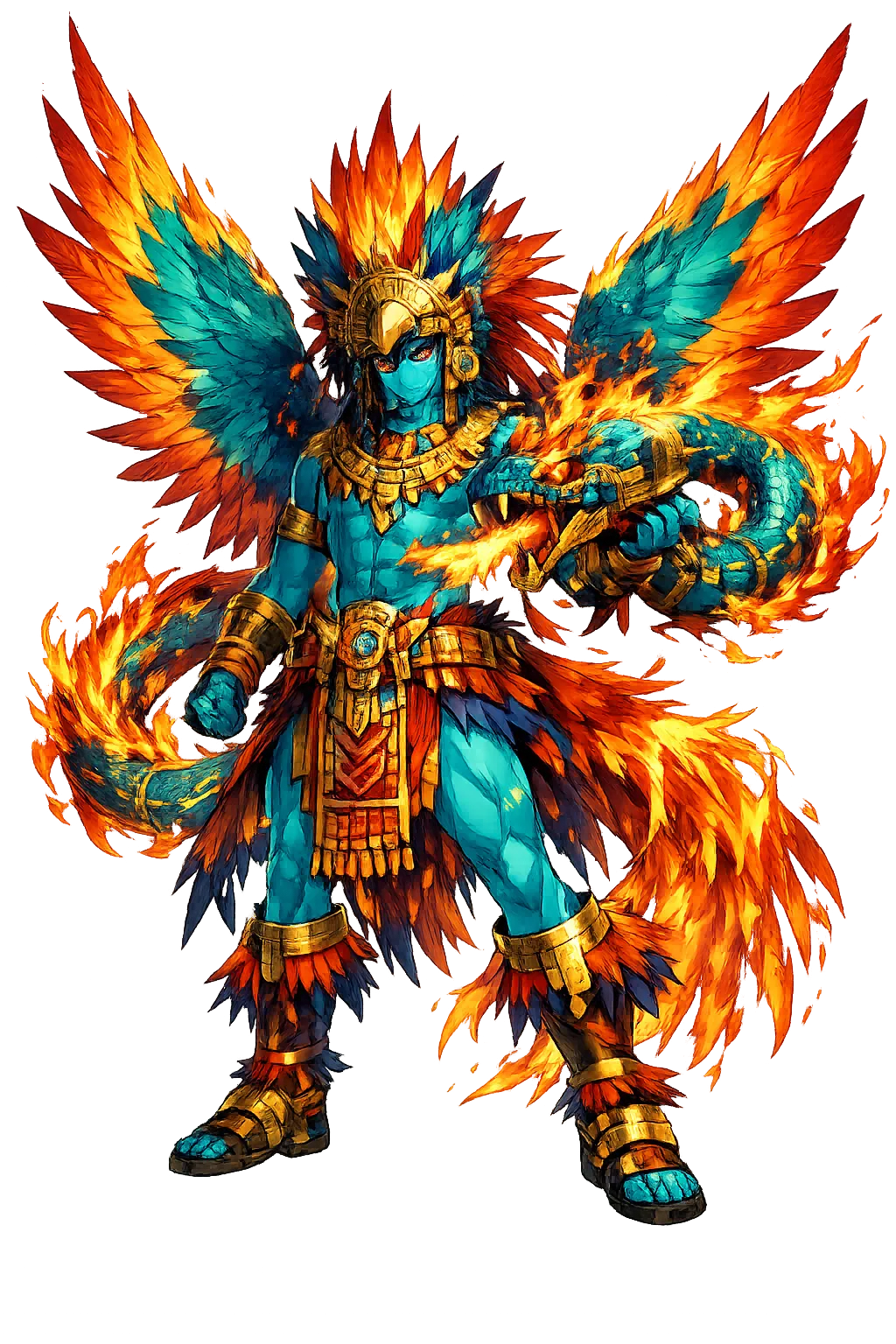
Sacred SymbolsHummingbird, Xiuhcoatl fire-serpent, Blue hummingbird helmet, Templo Mayor
02

Etymology & Word Family

From original script to Unicode restoration

Scholarly Transliteration Huitzilopōchtli Huitzilopōchtli — "Left-handed hummingbird"
Unicode Restoration Huitzilopōchtli Restored stress, length, and script
Modern ASCII huitzilopochtli Plain-ASCII fallback

The etymology is debated. The most widely accepted analysis takes huitzilin 'hummingbird' + pōchtli 'left/south,' with a possible interpretation of the hummingbird as the soul of the warrior returning from death. The macron on ō is the only vowel-length mark in the standard form, though the first i is sometimes reconstructed as short. Tier 2: the single macron preserves length in pōchtli.

03

Unicode Character Breakdown

Character-by-character philological analysis

CharacterUnicodeNameBlockPhonetic Role
HU+0048Latin Capital Letter HBasic LatinSame
uU+0075Latin Small Letter UBasic LatinSame
iU+0069Latin Small Letter IBasic LatinSame
tU+0074Latin Small Letter TBasic LatinSame
zU+007ALatin Small Letter ZBasic LatinSame
iU+0069Latin Small Letter IBasic LatinSame
lU+006CLatin Small Letter LBasic LatinSame
oU+006FLatin Small Letter OBasic LatinSame
pU+0070Latin Small Letter PBasic LatinSame
ōU+014DLatin Small Letter O with MacronLatin Extended-AMacron on o
cU+0063Latin Small Letter CBasic LatinSame
hU+0068Latin Small Letter HBasic LatinSame
tU+0074Latin Small Letter TBasic LatinSame
lU+006CLatin Small Letter LBasic LatinSame
iU+0069Latin Small Letter IBasic LatinSame

The Tier 2 classification reflects which ancient features stress, length, or script are preserved in this restoration.

04

Cultural Significance

From ancient cult to modern Unicode

Ancient Domain

Huitzilopōchtli is the southern sun in his hummingbird form, the god who led the Mexica out of Aztlān and guided them to the island where Tenochtitlan would rise. He is the warrior's reward and the warrior's demand: the fallen soldier becomes a hummingbird in his paradise, but the sun itself requires human hearts to rise again. In him, tribal patronage, solar theology, and imperial militarism became inseparable.

Huitzilopōchtli in Later Traditions

Huitzilopōchtli has no close non-Nahua equivalent; he is a specifically Mexica tribal god elevated to solar supremacy. Within Mesoamerica he shares solar-warrior traits with the Maya sun god K'inich Ajaw and with Mixtec and Zapotec martial deities. After the conquest, Spanish writers sometimes identified him with Hercules or with the Christian devil, a comparison shaped more by revulsion at human sacrifice than by theological correspondence. Modern nationalist movements have sometimes celebrated Huitzilopōchtli as a symbol of indigenous resistance, while other interpreters emphasize the imperial violence carried out in his name.

Modern Legacy

Huitzilopōchtli remains one of the most recognizable figures of Aztec religion, embodied in the Templo Mayor and the Calendar Stone's central solar imagery. In Mexico today he appears in murals, coins, museum branding, and nationalist iconography, often as a symbol of Mexica identity and pre-Columbian grandeur. Critics and Indigenous scholars caution against romanticizing the militarized theology associated with his cult, even as archaeologists continue to reveal the sophistication of the ritual city built in his honor.

Unicode Restoration as Cultural Act

Restoring Huitzilopōchtli in a domain name is more than orthographic accuracy. It is a statement that the internet should recognize the full range of human writing — not only the ASCII keyboard.

05

Frequently Asked Questions

Common questions about Huitzilopōchtli, Sun, War, Hummingbird, and Unicode restoration

01How do you pronounce Huitzilopōchtli?

In reconstructed pronunciation, Huitzilopōchtli is /wi.t͡si.loˈpoːt͡ʃ.tɬi/ — approximately 'weet-see-loh-POCH-tlee' — the 'tz' is 'ts,' the 'ch' is as in 'church,' and the final -tli is one released sound..

02What does Huitzilopōchtli mean?

Huitzilopōchtli means Left-handed hummingbird in the nahuatl tradition.

03What are the symbols of Huitzilopōchtli?

Huitzilopōchtli is associated with Hummingbird (The soul of the dead warrior and the swift, iridescent solar radiance of the god), Xiuhcoatl fire-serpent (The flaming weapon Huitzilopōchtli wields against his sister Coyolxāuhqui), Blue hummingbird helmet (The warrior regalia identifying the god in Mexica sculpture and pictorial manuscripts), Templo Mayor (His shrine at the summit of the Great Temple, paired with Tlāloc's, marked the center of the Mexica cosmos).

04Why restore Huitzilopōchtli in Unicode?

Plain ASCII huitzilopochtli strips the stress, length, and script that make the name specific. Unicode restoration returns the name to its original written dignity.

05What is the most important myth about Huitzilopōchtli?

Cōātlīcue conceived Huitzilopōchtli when a ball of feathers fell into her lap while she swept on Coatepec, 'Serpent Mountain.' Her daughter Coyolxāuhqui and the four hundred Centzōn Huītznāhua attacked their mother in rage. Huitzilopōchtli sprang from her womb fully armed, wielding the xiuhcoatl fire-serpent. He struck off Coyolxāuhqui's head and limbs and hurled her body down the mountain; the four hundred brothers he scattered into the sky as stars. The scene was reenacted in the Templo Mayor's ritual architecture. (Florentine Codex III.)

06

Scholarly Sources

The philological foundations of this restoration

Every claim on this page is grounded in established scholarship. The orthographic restorations follow disciplinary convention. The etymological chain follows the best available reference works. This is not invention — it is resurrection through scholarship.

Lexicography & Philology

  • Karttunen

Primary Texts

  • The Florentine Codex (Sahagún); the Anales de Cuauhtitlan; colonial Nahuatl testimonies and pictorial manuscripts.

Archaeology & Art History

  • Matos Moctezuma, The Great Temple of the Aztecs
  • Huitzilopōchtli's principal shrine was the southern half of the Templo Mayor in Tenochtitlan, excavated extensively from 1978 onward. The Coyolxāuhqui stone disk at the base of the temple stairway depicts his defeated sister and dramatizes the Coatepec myth. The Calendar Stone (Piedra del Sol), although not exclusively solar, is popularly associated with Huitzilopōchtli's sun cult. Pictorial manuscripts such as the Codex Borbonicus, Codex Telleriano-Remensis, and Codex Azcatitlan preserve his migration myths and calendar festivals.

Religious Studies

  • Sahagún, Florentine Codex
  • Anales de Cuauhtitlan
  • Alvarado Tezozómoc, Crónica Mexicayotl
  • Durán, Book of the Gods and Rites
  • Karttunen, An Analytical Dictionary of Nahuatl
  • Nicholson, 'Religion in Pre-Hispanic Central Mexico'
  • Carrasco, City of Sacrifice
Return

The Surface Awaits

You have traced the name from its earliest attestation to its Unicode restoration. Now return to the myth. The story is where the name lives.

Back to Lore
Huitzilopōchtli mascot