Unicode restoration and ASCII comparison
𓎛𓂓𓏛
The name in its original Egyptian form. Ḥkꜣ (𓎛𓂓𓏛) is attested in the source tradition — “Magic, first work”. Its Egyptological ain and alef letters and emphatic consonants carry the full phonetic and orthographic weight of the source tradition.
heka
Reduced to plain heka, the name loses everything that made it specific: Egyptological ain and alef letters and emphatic consonants. What remains is an ASCII string that machines can parse but that no longer speaks with its original voice.
Ḥkꜣ
The Unicode restoration recovers what ASCII flattened. Ḥkꜣ restores Egyptological ain and alef letters and emphatic consonants, returning the name to its original written dignity. The domain encodes to Punycode, but the browser displays the truth.
Ḥkꜣ.com → xn--k-xnm1886d.com
The non-ASCII characters in Ḥkꜣ are encoded while the ASCII remains visible. To the DNS, it is Punycode. To humanity, it is Ḥkꜣ.
How Ḥkꜣ travels from ancient script to the modern URL
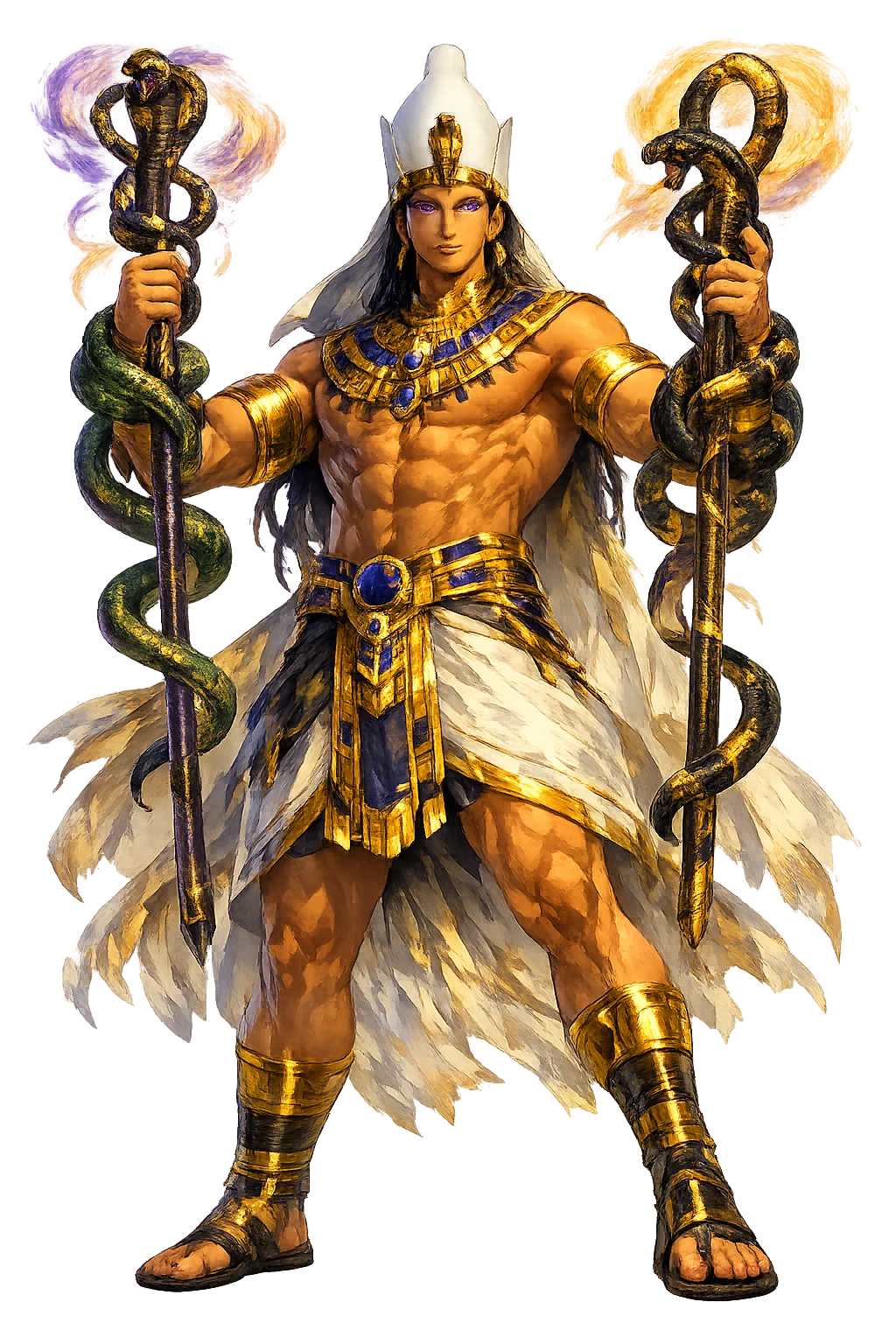
Egyptian Ḥkꜣ “magic"; the personification of magic and creative speech, “the first work".
Magic, Medicine
The Unicode restoration Ḥkꜣ uses Egyptological characters registrable in .com; hieroglyphs are outside the .com IDN table.
How Ḥkꜣ was spoken
Magic · Medicine · Efficacious Speech
Ḥkꜣ is not stage magic. It is the power that makes intention effective — the force by which the gods created the world and by which human beings, with the right knowledge, can protect, heal, curse, or transform. Heka is both a god and a faculty, a substance and a technique. In Egyptian thought there is no sharp line between prayer, medicine, and magic: all are ways of aligning human action with the creative power that sustains ma'at.
The primordial energy Atum used to shape Shu and Tefnut and to call the cosmos into being.
Medical papyri prescribe spells alongside herbs; healing is the practical, beneficent face of heka.
Amulets, execration figurines, and tomb inscriptions all depend on heka-words to bind or repel.
As a god, Heka accompanies Re and is invoked by pharaohs and lector-priests as the eldest son of Atum.
Stories of Ḥkꜣ
Heka appears in the oldest strata of Egyptian theology as a force rather than a character. Only gradually is he personified as a god in his own right, the eldest son of the creator, present before duality and therefore before the distinction between possible and actual.
In Coffin Texts Spell 261, Heka declares: 'I am he who came into being as Heka; I am the son of Atum… before the gods came into being, I was.' This is not mere boasting. It places heka prior to divine genealogy: the power to be effective is older than the beings who wield it. Creation, in this view, is an act of heka performed by Atum, Re, and every competent magician after them.
Heka is said to travel in the sun-god's bark, repelling the chaos-serpent Apopis and defending the ordered cosmos. The 'Book of Overthrowing Apopis' records rituals in which wax images of the enemy are bound, burned, and spat upon — acts of state heka performed daily in temples to ensure that the sun rises.
Heka is often grouped with Sia (perception, divine insight) and Hu (authoritative speech). Together they form the mental and verbal equipment of the creator: to know, to command, and to make effective. Where Hu speaks the word and Sia grasps its meaning, Heka is the bridge between intention and result — the moment a wish becomes real.
We moderns tend to separate magic from medicine, prayer from spell, psychology from ritual. The Egyptians did not. For them, heka was the continuous field in which all these activities took place — the power to make something happen because it was named, imagined, and performed with right knowledge. A prescription without a spoken formula was incomplete; a curse without medical knowledge was rare. Efficacy was holistic.
Enter Extended Lore