PuniCodex

Extended Lore

觀音 Guānyīn

Etymology · Phonology · Orthography · Cultural Legacy · Primary Sources

Tier 1 Guānyīn.com
Guānyīn — Compassion, Mercy
01

Quick Facts

Essential information about Guānyīn, Compassion, Mercy

Original Script觀音
Unicode RestorationGuānyīn
Reconstructed Pronunciation/kwan˥ ɥin˥/
PantheonChinese
DomainCompassion, Mercy
MeaningPerceiver of sounds
ClassificationTier 1
Primary DomainGuānyīn.com
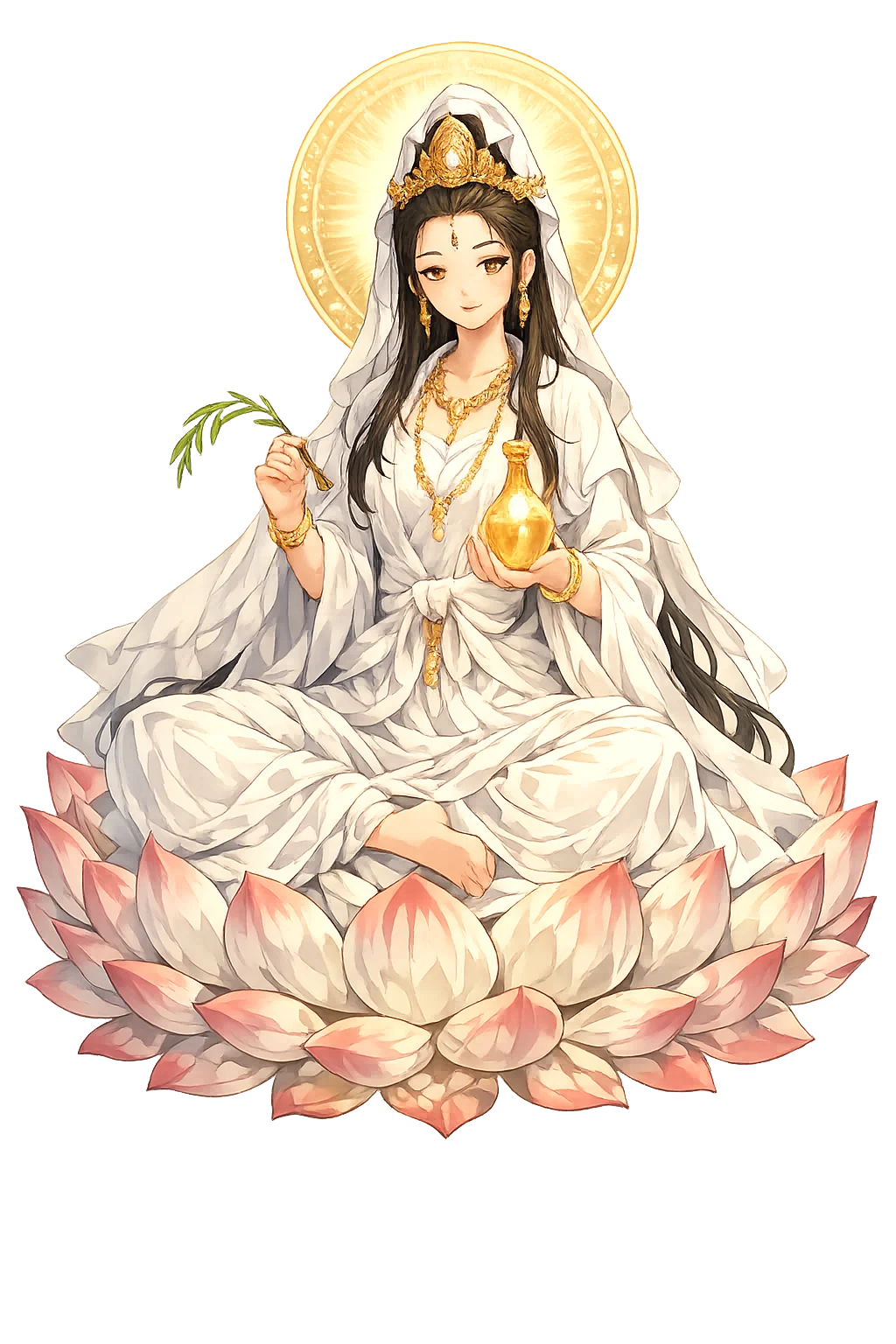
Sacred SymbolsThe willow branch, The pure vase, The child in her arms
02

Etymology & Word Family

From original script to Unicode restoration

Original Script 觀音 Guānyīn — "Perceiver of sounds"
Unicode Restoration Guānyīn Restored stress, length, and script
Modern ASCII guanyin Plain-ASCII fallback

Guānyīn 观音 means "Perceiver of Sounds" — the one who hears the cries of the world, a rendering of Avalokiteśvara's name as the Chinese translators analyzed it. The level tone on guān and the falling-level yīn are among the most recognized syllables in East Asian devotion.

03

Unicode Character Breakdown

Character-by-character philological analysis

CharacterUnicodeNameBlockPhonetic Role
GU+0047Latin Capital Letter GBasic LatinSame, capitalized
uU+0075Latin Small Letter UBasic LatinSame
āU+0101Latin Small Letter A with MacronLatin Extended-ALong vowel
nU+006ELatin Small Letter NBasic LatinSame
yU+0079Latin Small Letter YBasic LatinSame
īU+012BLatin Small Letter I with MacronLatin Extended-ALong vowel
nU+006ELatin Small Letter NBasic LatinSame

The Tier 1 classification reflects which ancient features stress, length, or script are preserved in this restoration.

04

Cultural Significance

From ancient cult to modern Unicode

Ancient Domain

Guānyīn is the most beloved figure of East Asian Buddhism: the bodhisattva who vows to hear every cry of suffering in the world and answer it. Born in India as the male Avalokiteśvara, she became, in China, a mother — and compassion itself found its lasting face.

Guānyīn in Later Traditions

She is the great syncretist of East Asia: in Tibet she is Chenrezig, patron of the land, incarnate in the Dalai Lamas; in Japan Kannon, with temples from Asakusa to Kiyomizu; in Vietnam Quan Âm. Chinese folk religion fused her with the Queen of Heaven and associated her with Mazu the sea-goddess; Daoism canonized her as Cihang Zhenren; and she entered the Journey to the West as the pilgrimage's divine patron, who recruits the pilgrims and rescues them whenever heaven's bureaucracy fails.

Modern Legacy

Her name is spoken daily by more people than perhaps any other divine name on earth: nāmó Guānshìyīn Púsà is East Asia's universal cry in fear and gratitude. Putuoshan draws millions of pilgrims yearly; her statues — from the Suma temple Kannon to the hundred-metre Guānyīn of the South Sea of Sanya — rank among the largest on earth. Vegetarian mercy, lifesaving charities, and countless hospitals across the Chinese world bear her vow.

Unicode Restoration as Cultural Act

Restoring Guānyīn in a domain name is more than orthographic accuracy. It is a statement that the internet should recognize the full range of human writing — not only the ASCII keyboard.

05

Frequently Asked Questions

Common questions about Guānyīn, Compassion, Mercy, and Unicode restoration

01How do you pronounce Guānyīn?

In reconstructed pronunciation, Guānyīn is /kwan˥ ɥin˥/ — approximately gwahn-yin, high level tone on both syllables..

02What does Guānyīn mean?

Guānyīn means Perceiver of sounds in the chinese tradition.

03What are the symbols of Guānyīn?

Guānyīn is associated with The willow branch (Gentleness that bends and does not break — sprinkled with the dew of mercy), The pure vase (The nectar of compassion, poured without end), The child in her arms (The Songzi Guānyīn — giver of children, mother of the vow).

04Why restore Guānyīn in Unicode?

Plain ASCII guanyin strips the stress, length, and script that make the name specific. Unicode restoration returns the name to its original written dignity.

05What is the most important myth about Guānyīn?

Chapter 25 of the Lotus Sūtra — circulated independently as the Guānyīn Sūtra — makes the vow explicit: if beings in danger from fire, flood, demons, or the executioner's blade call on the name of Guānshìyīn, the bodhisattva will at once perceive the sound and deliver them. It is the most recited chapter in East Asian Buddhism: compassion as a cosmic emergency line.

06

Scholarly Sources

The philological foundations of this restoration

Every claim on this page is grounded in established scholarship. The orthographic restorations follow disciplinary convention. The etymological chain follows the best available reference works. This is not invention — it is resurrection through scholarship.

Lexicography & Philology

  • Lotus Sutra
  • Chinese Buddhist texts

Primary Texts

  • Primary sources in the chinese tradition for Guānyīn.

Archaeology & Art History

  • Material evidence — iconography, inscriptions, and temple archaeology — for Guānyīn and related cults.
  • Putuoshan's three great monasteries (Puji, Fayu, Huiji) preserve her island cult from its 10th-century founding, when a Japanese monk's Kannon image refused to sail on and stayed. Dunhuang's Mogao caves hold her earliest Chinese icons — the guide-of-souls Guānyīn leading the dead, the thousand-armed forms of the Tang. The Northern Song colossal bronze thousand-armed Kannon cast in Japan and the Song-dynasty polychrome "Water-Moon Guānyīn" figures — of which the Nelson-Atkins example is the most celebrated — mark her iconography's golden age.

Religious Studies

  • Lotus Sutra
  • Chinese Buddhist canon
  • Chinese Buddhist texts
  • Birrell
  • Chinese folklore
  • Buddhist texts
Return

The Surface Awaits

You have traced the name from its earliest attestation to its Unicode restoration. Now return to the myth. The story is where the name lives.

Back to Lore
Guānyīn mascot