PuniCodex

Extended Lore

Diāna

Etymology · Phonology · Orthography · Cultural Legacy · Primary Sources

Tier 1 Diāna.com
Diāna — Moon, Hunt, Wilderness
01

Quick Facts

Essential information about Diāna, Moon, Hunt, Wilderness

Scholarly TransliterationDiāna
Unicode RestorationDiāna
Reconstructed Pronunciation/diˈaː.na/
PantheonRoman
DomainMoon, Hunt, Wilderness
Meaning'The bright one, goddess' (from the root *dyēu-, to shine)
ClassificationTier 1
Primary DomainDiāna.com
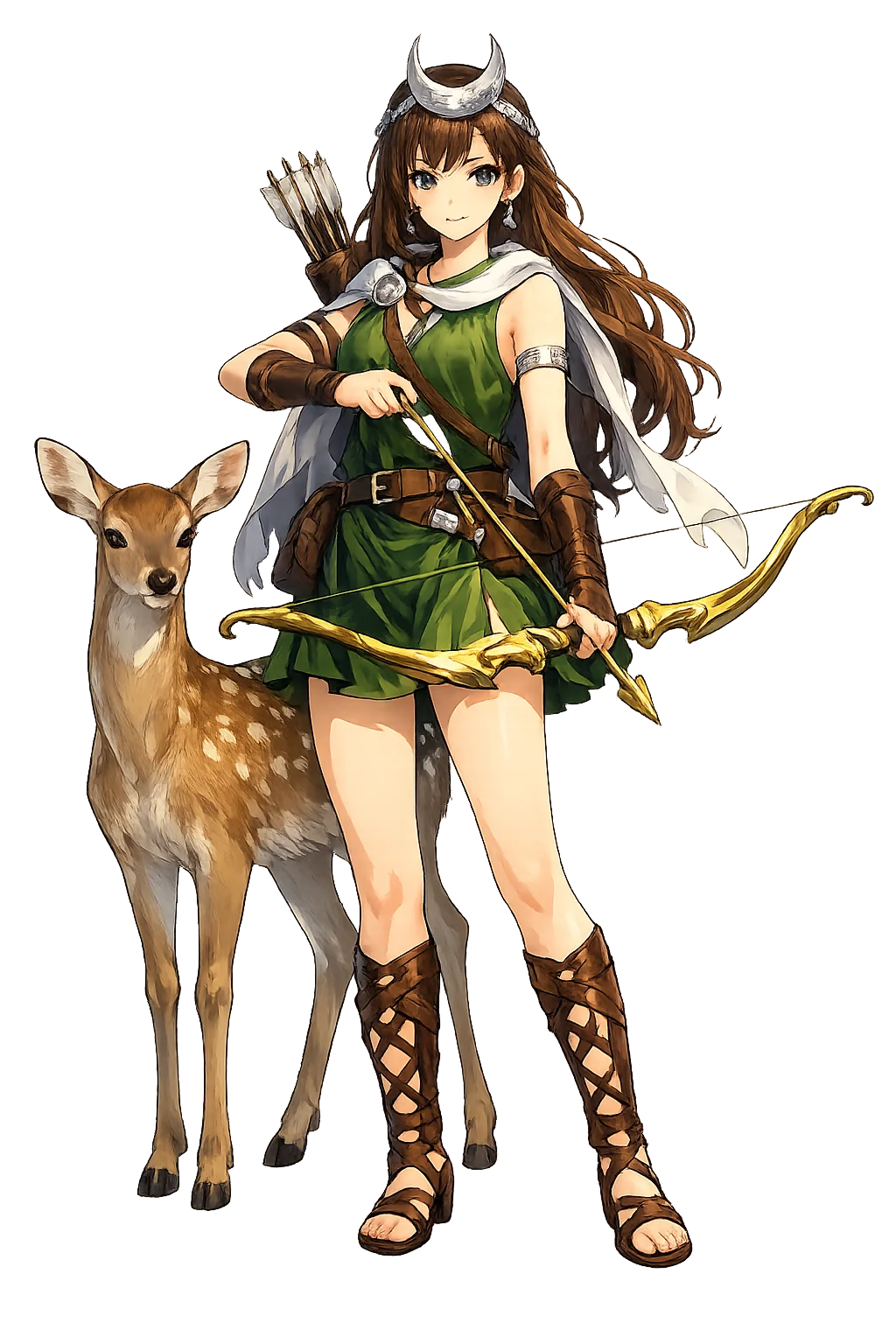
Sacred SymbolsThe bow, The crescent, The deer, The oak of Nemi
02

Etymology & Word Family

From original script to Unicode restoration

Scholarly Transliteration Diāna Diāna — "'The bright one, goddess' (from the root *dyēu-, to shine)"
Unicode Restoration Diāna Restored stress, length, and script
Modern ASCII diana Plain-ASCII fallback

Latin Diāna scans with a long i and long final ā; the owned restoration Diāna follows the classical spelling exactly. Roman grammarians connected the name to the shining of the moon (from the same root as Iūpiter's Dyēus, "the bright sky"), making her the feminine face of celestial light.

03

Unicode Character Breakdown

Character-by-character philological analysis

CharacterUnicodeNameBlockPhonetic Role
DU+0044Latin Capital Letter DBasic LatinSame letter
iU+0069Latin Small Letter IBasic LatinSame letter
āU+0101Latin Small Letter A with MacronLatin Extended-AMacron marks the long vowel
nU+006ELatin Small Letter NBasic LatinSame letter
aU+0061Latin Small Letter ABasic LatinSame letter

The Tier 1 classification reflects which ancient features stress, length, or script are preserved in this restoration.

04

Cultural Significance

From ancient cult to modern Unicode

Ancient Domain

Diāna is Rome's own goddess before she is Artemis imported: mistress of the wildwood, the moon, and women in labour, whose strangest institution — the priest-king of Nemi who wins his office by murder — haunted anthropology for a century.

Diāna in Later Traditions

Her fusion with Artemis was total and early, but Diāna kept Italian features Artemis never had: the slave-priest of Nemi, the Aventine's federal politics, and her patronage of the plebeians (her temple was a traditional asylum). In the Middle Ages she became the witch-goddess: canon law condemned women who claimed to ride at night "with Diana," and Charles Leland's Aradia (1899) rebuilt her as the messiah of witchcraft — the root of modern Wicca's Diana.

Modern Legacy

She lends her name to the moon in a hundred poems and to Diana's Mirror at Nemi, where Caligula's pleasure barges — raised in 1929–32, burned in 1944 — gave underwater archaeology its founding drama. Frazer's Golden Bough, the book that created comparative religion as a public genre, begins and ends in her grove. The goddess of the wild remains the emblem of every conservation that is also a hunt.

Unicode Restoration as Cultural Act

Restoring Diāna in a domain name is more than orthographic accuracy. It is a statement that the internet should recognize the full range of human writing — not only the ASCII keyboard.

05

Frequently Asked Questions

Common questions about Diāna, Moon, Hunt, Wilderness, and Unicode restoration

01How do you pronounce Diāna?

In reconstructed pronunciation, Diāna is /diˈaː.na/ — approximately dee-AH-nah, with the long ā on the stressed second syllable..

02What does Diāna mean?

Diāna means 'The bright one, goddess' (from the root *dyēu-, to shine) in the roman tradition.

03What are the symbols of Diāna?

Diāna is associated with The bow (The hunt and the sudden death of women — her arrows strike gently), The crescent (The waxing moon she steers as Luna), The deer (Her sacred animal; the wild that cannot be owned), The oak of Nemi (The grove whose bough — the Golden Bough — only a runaway slave might break).

04Why restore Diāna in Unicode?

Plain ASCII diana strips the stress, length, and script that make the name specific. Unicode restoration returns the name to its original written dignity.

05What is the most important myth about Diāna?

Ovid tells it as a warning about seeing: the hunter Actaeon, wandering at noon, stumbles on Diāna bathing in a hidden valley. She splashes him with water — "now you may tell that you saw me, if you can" — and he becomes a stag, torn apart by his own hounds who know only the shape of prey, not the voice of their master.

06

Scholarly Sources

The philological foundations of this restoration

Every claim on this page is grounded in established scholarship. The orthographic restorations follow disciplinary convention. The etymological chain follows the best available reference works. This is not invention — it is resurrection through scholarship.

Lexicography & Philology

  • Lewis & Short
  • Varro
  • Horace

Primary Texts

  • Ovid
  • Cicero

Archaeology & Art History

  • Material evidence — iconography, inscriptions, and temple archaeology — for Diāna and related cults.
  • The sanctuary at Nemi — Diana Nemorensis — preserves its theatre, temple platforms, and the famous votive anatomicals (terracotta wombs and limbs) of her healing cult; the lake itself, a volcanic crater, justified "speculum Dianae." On the Aventine, the federal temple's foundations underlie the modern street. The Nemi ships' remains — bronze heads of wolves and lions, the "Nemi wheels," and lead water pipes stamped CAESARIS — are divided between the Museo delle Navi Romane (partially reconstructed after the fire) and Berlin.

Religious Studies

  • Lewis & Short
  • Varro
  • Horace
  • Cambridge
Return

The Surface Awaits

You have traced the name from its earliest attestation to its Unicode restoration. Now return to the myth. The story is where the name lives.

Back to Lore
Diāna mascot