PuniCodex

Extended Lore

𐤃𐤂𐤍 Dāgan

Etymology · Phonology · Orthography · Cultural Legacy · Primary Sources

Tier 1 Dāgan.com
Dāgan — Grain, Fertility
01

Quick Facts

Essential information about Dāgan, Grain, Fertility

Original Script𐤃𐤂𐤍
Unicode RestorationDāgan
Reconstructed Pronunciation/daːˈɡaːn/
PantheonPhoenician
DomainGrain, Fertility
MeaningGrain
ClassificationTier 1
Primary DomainDāgan.com
Sacred SymbolsSheaf of wheat or barley, Plowed field, Storehouse or granary, Bull or ram
02

Etymology & Word Family

From original script to Unicode restoration

Original Script 𐤃𐤂𐤍 Dāgan — "Grain"
Unicode Restoration Dāgan Restored stress, length, and script
Modern ASCII dagan Plain-ASCII fallback

Dāgan is a Tier-1 restoration because the long vowel ā is preserved. The name is common Semitic but its precise etymology is uncertain; it has been connected with 'grain' (Hebrew dāgān) and with 'fish' (Hebrew dāḡ), though the former is more widely accepted for the Northwest Semitic grain god.

03

Unicode Character Breakdown

Character-by-character philological analysis

CharacterUnicodeNameBlockPhonetic Role
DU+0044Latin Capital Letter DBasic LatinSame, capitalized
āU+0101Latin Small Letter A with MacronLatin Extended-ALong vowel
gU+0067Latin Small Letter GBasic LatinSame
aU+0061Latin Small Letter ABasic LatinSame
nU+006ELatin Small Letter NBasic LatinSame

The Tier 1 classification reflects which ancient features stress, length, or script are preserved in this restoration.

04

Cultural Significance

From ancient cult to modern Unicode

Ancient Domain

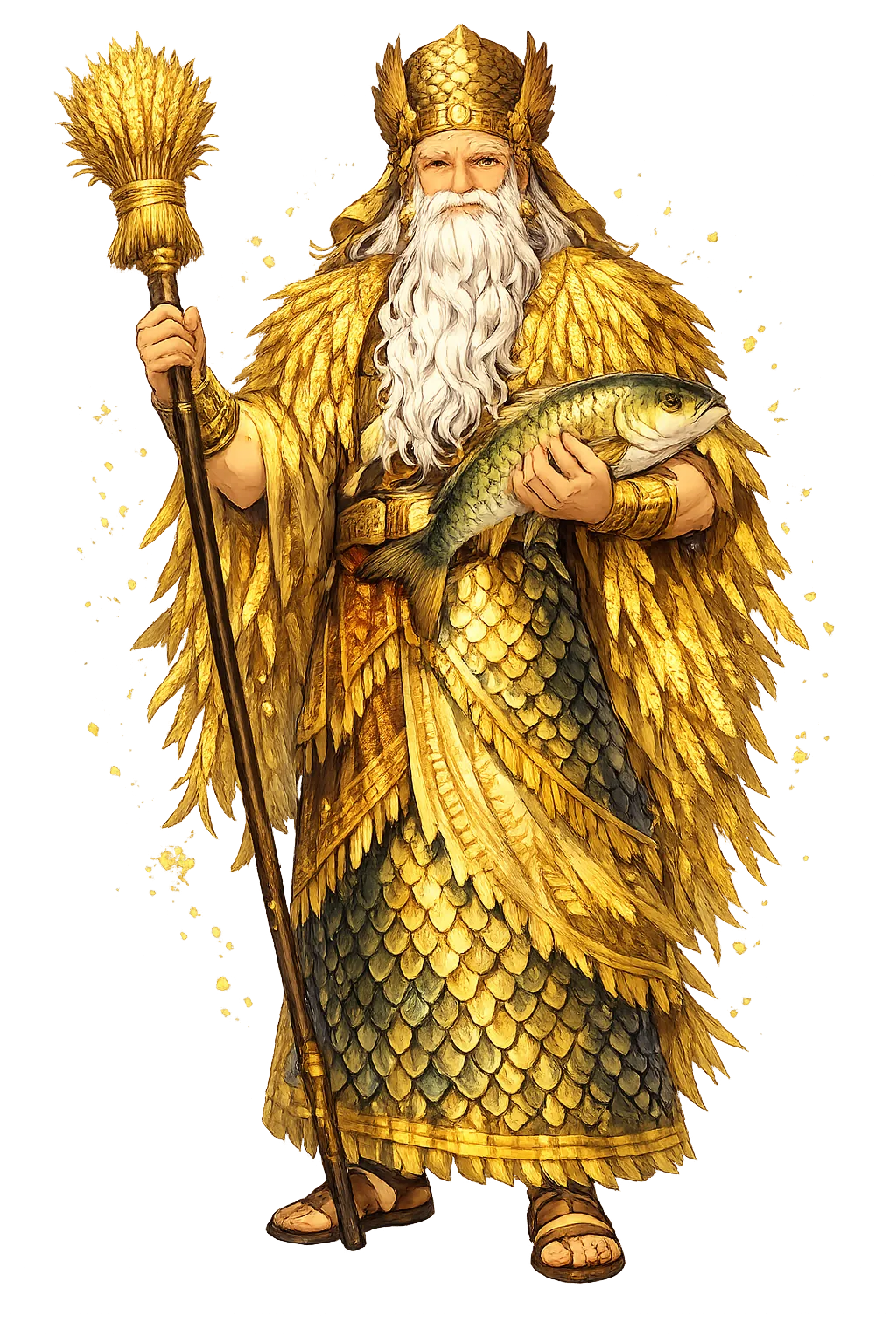
Dāgan is the grain god of the ancient Levant, the divine power who fills the storehouses and makes the fields fertile. In Ugaritic myth he is the father of Baal and the patron of the agricultural cycle; in Philistine religion he is the national god whose temple Samson pulls down. His domain is not the storm on the mountain but the quiet miracle by which seed becomes bread.

Dāgan in Later Traditions

Dāgan's cult spread from Mesopotamia to the Levantine coast and was adopted by the Philistines after their settlement in Canaan. His name may underlie the Hebrew word for grain, dāgān, though some ancient interpreters connected him with fish (dāḡ), producing the tradition that Dagon was half-man, half-fish. This fish-god image became popular in medieval and early modern art but is not supported by the older Northwest Semitic evidence. In Ugarit, Dāgan was the father of Baal, linking agricultural and storm fertility in a single divine family.

Modern Legacy

Dāgan survives in the Bible as the Philistine god toppled by Samson, and his name echoes in the Hebrew word for grain. In modern fantasy and role-playing games, 'Dagon' often appears as a tentacled or fish-like sea monster, a distortion of the ancient grain god produced by medieval iconographic confusion. For scholars of religion, Dāgan is a key example of how an agricultural deity could become a national patron and a symbol of ethnic identity.

Unicode Restoration as Cultural Act

Restoring Dāgan in a domain name is more than orthographic accuracy. It is a statement that the internet should recognize the full range of human writing — not only the ASCII keyboard.

05

Frequently Asked Questions

Common questions about Dāgan, Grain, Fertility, and Unicode restoration

01How do you pronounce Dāgan?

In reconstructed pronunciation, Dāgan is /daːˈɡaːn/ — approximately DAH-ghan — both the first 'a' is long like 'father,' and the second 'a' is short; stress falls on the long first syllable..

02What does Dāgan mean?

Dāgan means Grain in the phoenician tradition.

03What are the symbols of Dāgan?

Dāgan is associated with Sheaf of wheat or barley (The grain that is Dāgan's gift and the basis of Levantine agriculture), Plowed field (The cultivated land made fertile by his blessing), Storehouse or granary (The surplus that allows cities, armies, and temples to endure), Bull or ram (A symbol of agricultural potency and royal sacrifice).

04Why restore Dāgan in Unicode?

Plain ASCII dagan strips the stress, length, and script that make the name specific. Unicode restoration returns the name to its original written dignity.

05What is the most important myth about Dāgan?

Ugaritic ritual texts record sacrifices and offerings to Dāgan, especially at the time of planting and harvest. In KTU 1.12 and related texts, Baal is called 'son of Dāgan,' and the grain god's favor is sought for the fertility of the land. Dāgan does not ride the clouds; he sits in his temple and receives the first fruits of the field.

06

Scholarly Sources

The philological foundations of this restoration

Every claim on this page is grounded in established scholarship. The orthographic restorations follow disciplinary convention. The etymological chain follows the best available reference works. This is not invention — it is resurrection through scholarship.

Lexicography & Philology

  • Ugaritic texts
  • CIS

Primary Texts

  • KTU 1.12 and Ugaritic ritual texts (offerings to Dāgan)
  • Hebrew Bible, Judges 16:23–30 (Samson and the temple of Dagon)

Archaeology & Art History

  • CIS (Corpus Inscriptionum Semiticarum)
  • A major temple to Dāgan has been identified at Ugarit, and references to his cult appear throughout the Ugaritic tablets. The Mari archives from the Euphrates valley record royal offerings and divine messages involving Dāgan. In the Levant, Philistine sites such as Tel Miqne (Ekron) and Gaza preserve material culture associated with his cult, though the biblical story of Samson's destruction of Dagon's temple cannot be verified archaeologically. The later 'fish-god' Dagon is a medieval iconographic development without ancient Near Eastern support.

Religious Studies

  • Mari archives (Akkadian references to Dāgan)
  • Coogan, Stories from Ancient Canaan
  • Smith, God in Translation: Deities in Cross-Cultural Discourse in the Biblical World
  • Schwemer, Die Wettergottgestalten Mesopotamiens und Nordsyriens im Zeitalter der Keilschriftkulturen
  • Roberts, The Earliest Semitic Pantheon
Return

The Surface Awaits

You have traced the name from its earliest attestation to its Unicode restoration. Now return to the myth. The story is where the name lives.

Back to Lore
Dāgan mascot