
Ancient Domain
Atlantís is the legendary island civilization described by Plato, a powerful naval empire that angered the gods and sank beneath the waves in a single day and night. It is the archetype of the golden age destroyed by its own ambition.
Extended Lore
Etymology · Phonology · Orthography · Cultural Legacy · Primary Sources
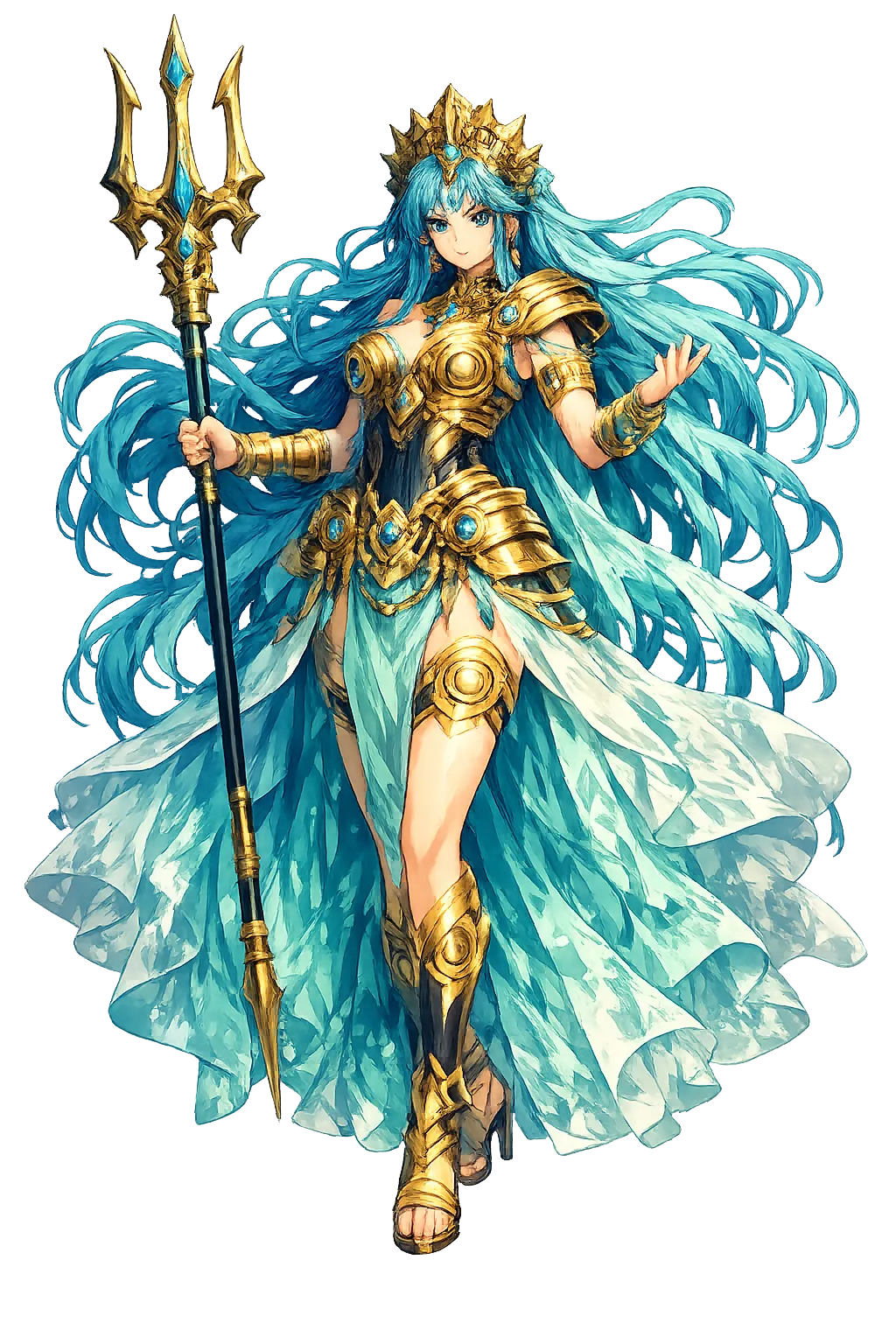
Essential information about Atlantís, Lost Island, Legendary Realm, Sea
From original script to Unicode restoration
Atlantís is Tier 2 because the Greek Ἀτλαντίς preserves the circumflex stress on the final syllable but has no long vowel in the standard domain restoration. The name is a patronymic adjective, 'of Atlas,' turned into a place name.
Character-by-character philological analysis
| Character | Unicode | Name | Block | Phonetic Role |
|---|---|---|---|---|
| A | U+0041 | Latin Capital Letter A | Basic Latin | Same, capitalized |
| t | U+0074 | Latin Small Letter T | Basic Latin | Same |
| l | U+006C | Latin Small Letter L | Basic Latin | Same |
| a | U+0061 | Latin Small Letter A | Basic Latin | Same |
| n | U+006E | Latin Small Letter N | Basic Latin | Same |
| t | U+0074 | Latin Small Letter T | Basic Latin | Same |
| í | U+00ED | Latin Small Letter I with Acute | Latin-1 Supplement | Acute on iota |
| s | U+0073 | Latin Small Letter S | Basic Latin | Same |
The Tier 2 classification reflects which ancient features stress, length, or script are preserved in this restoration.
From ancient cult to modern Unicode
Atlantís is the legendary island civilization described by Plato, a powerful naval empire that angered the gods and sank beneath the waves in a single day and night. It is the archetype of the golden age destroyed by its own ambition.
Plato's Atlantis may draw on memories of the Minoan eruption on Thera, the Bronze Age collapse, or Egyptian traditions of the distant west. It has been identified with Tartessos, Santorini, Malta, and countless other places. In Renaissance and modern times it became a blank screen for utopian, occult, and pseudo-historical speculation. The name 'Atlantic Ocean' comes from the same Atlas root.
Atlantis is the most influential fictional civilization in Western history. It appears in novels, films, comics, and New Age belief as a symbol of lost wisdom, advanced technology, and catastrophic hubris. The story warns every empire: greatness does not exempt a civilization from destruction. It also fuels endless real-world searches, proving that a well-told lie can outlive many truths.
Restoring Atlantís in a domain name is more than orthographic accuracy. It is a statement that the internet should recognize the full range of human writing — not only the ASCII keyboard.
Common questions about Atlantís, Lost Island, Legendary Realm, Sea, and Unicode restoration
In reconstructed pronunciation, Atlantís is /at.lan.tís/ — approximately 'at-lahn-TEES' — the final syllable carries the circumflex, marking both stress and length..
Atlantís means Daughter of Atlas; the legendary lost island civilization in the greek-location tradition.
Atlantís is associated with Concentric rings of land and water (The engineered geography of the Atlantean capital), Poseidon's trident (The island's divine patron and the instrument of its destruction), Orichalcum (The legendary precious metal of Atlantis, more valuable than gold), Sinking temple (The image of a civilization's architecture overwhelmed by the sea).
Plain ASCII atlantis strips the stress, length, and script that make the name specific. Unicode restoration returns the name to its original written dignity.
Solon visits Egypt and hears from a priest that Athens once defeated a great Atlantic power nine thousand years earlier. The Greeks have forgotten because catastrophes repeatedly destroy their records, while Egypt's memory is preserved by the Nile's stability.
The philological foundations of this restoration
Every claim on this page is grounded in established scholarship. The orthographic restorations follow disciplinary convention. The etymological chain follows the best available reference works. This is not invention — it is resurrection through scholarship.
You have traced the name from its earliest attestation to its Unicode restoration. Now return to the myth. The story is where the name lives.
Back to Lore