The Authentic Orthography
Truth, Righteousness, Cosmic Order · Truth, righteousness, and the cosmic order. The central ethical and metaphysical principle of Zoroastrianism.
Unicode restoration and ASCII comparison
𐬀𐬴𐬀
The name in its original Zoroastrian form. Aša (𐬀𐬴𐬀) is attested in the source tradition — “Truth, righteousness, and the cosmic order. The central ethical and metaphysical principle of Zoroastrianism.”. Its original diacritics and script distinctions carry the full phonetic and orthographic weight of the source tradition.
asa
Reduced to plain asa, the name loses everything that made it specific: original diacritics and script distinctions. What remains is an ASCII string that machines can parse but that no longer speaks with its original voice.
Aša
The Unicode restoration recovers what ASCII flattened. Aša restores original diacritics and script distinctions, returning the name to its original written dignity. The domain encodes to Punycode, but the browser displays the truth.
Aša.com → xn--aa-lta.com
The non-ASCII characters in Aša are encoded while the ASCII remains visible. To the DNS, it is Punycode. To humanity, it is Aša.
How Aša travels from ancient script to the modern URL
Avestan aša; from the Old Iranian root *ṛta- “truth, order"; the central Zoroastrian principle of cosmic and ritual righteousness.
Truth, Righteousness, Cosmic Order
The Unicode restoration Aša uses registrable Latin diacritics; the Avestan script form is not registrable in .com.
How Aša was spoken
Cosmic Order, Righteousness, and Sacred Fire
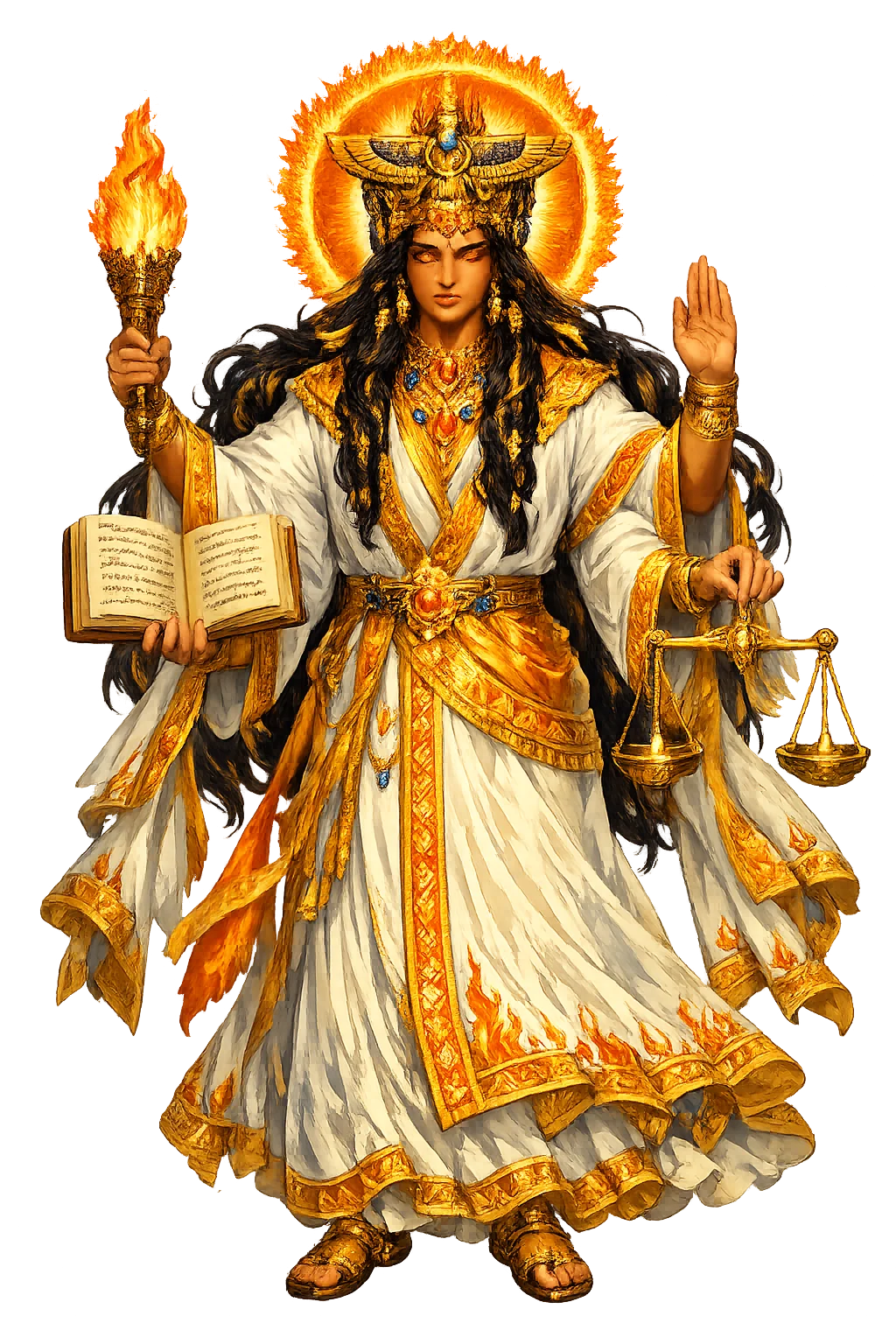
Aša is not merely a moral idea; it is the architecture of reality. In Zoroastrian thought, Aša is the truth that makes the sun rise, the seasons turn, the crops grow, and the oath bind. It is the order that Ahura Mazda set against the lie (druj), and it is the fire that burns away falsehood. To live in Aša is to think good thoughts, speak good words, and do good deeds — the threefold path that keeps the world from sliding back into chaos.
Aša Vahishta is identified with fire itself — the visible presence of truth, the agent that purifies and illuminates.
The fixed pattern of sun, moon, stars, and seasons — the regularity that makes life predictable and civilization possible.
Good thoughts, good words, good deeds: the practical ethic by which mortals participate in Aša.
Aša underlies covenant, contract, and justice; the breaker of an oath is an ally of Druj, the Lie.
Stories of Aša
Aša is not a hero with a single epic; it is a cosmic principle dramatized across the whole Zoroastrian canon. The Gāthās of Zarathustra ask which power is greatest, and Aša is named among the first creations of Ahura Mazda. The Aməša Spənta Aša Vahišta — "Best Truth" — stands opposite the forces of Druj. Every moral choice, every liturgy, and every eschatological hope is a chapter in the myth of Aša.
In Yasna 28–34, Zarathustra asks Ahura Mazda which of the divine powers is best to invoke. Aša is among the first named. "What shall I ask?" the prophet sings; the answer is Aša — the truth that aligns thought, word, and deed with the creator. This is not a narrative myth but a metaphysical one: the cosmos itself depends on the victory of truth over the lie.
Ahura Mazda created six Immortal Holy Ones, the Aməša Spənta, each paired with a created thing. Aša Vahišta, "Best Truth," is paired with fire. Fire is thus not mere chemistry but the bodily presence of truth in the world: it burns away impurity, it gives light in darkness, and it cannot be polluted without consequence. The Yasna liturgy feeds Aša with prayer, butter, and sandalwood.
After death, the soul comes to the Činwad Bridge. For the righteous, the bridge grows wide as a beam and a beautiful maiden — the soul's own good deeds — leads it across to paradise. For the wicked, the bridge narrows to a knife-edge and a hideous hag hurls it into hell. The width of the bridge is the soul's store of Aša: truth made substance, weight measured against lies.
At the end of time, the prophet Saōšyant will raise the dead, melt the metals of the mountains, and purify the earth in a flood of molten glory. Druj will be destroyed forever, and Aša will reign without opposition. This is frašō.kərəti, the making wonderful — not an annihilation but a healing of the world, because truth finally has no enemy left.
Aša is the truth that does not depend on being believed. Fire burns whether you acknowledge it or not; the seasons turn whether you honor them or not. The power of Aša is that it is not a private opinion but a public order. To speak falsely, to break an oath, to act with cruelty, is not merely to sin against another person; it is to damage the fabric that holds weather, harvest, law, and love together.
Enter Extended Lore