PuniCodex

Extended Lore

Ἄργος Árgos

Etymology · Phonology · Orthography · Cultural Legacy · Primary Sources

Tier 2 Árgos.com
Árgos — Vigilance, Hera's Watcher
01

Quick Facts

Essential information about Árgos, Vigilance, Hera's Watcher

Original ScriptἌργος
Unicode RestorationÁrgos
Reconstructed Pronunciation/ár.gos/
PantheonGreek
DomainVigilance, Hera's Watcher
MeaningShining, swift
ClassificationTier 2
Primary DomainÁrgos.com
Sacred SymbolsThe hundred eyes, The peacock, The white cow, The herdsman's staff, The curved sword
02

Etymology & Word Family

From original script to Unicode restoration

Original Script Ἄργος Árgos — "Shining, swift"
Unicode Restoration Árgos Restored stress, length, and script
Modern ASCII argos Plain-ASCII fallback

Árgos is Tier 2 because the Greek Ἄργος carries only the acute stress; both vowels are short, so a single feature separates the restoration from ASCII. The name belongs to the giant Argos Panoptes, Hera's watcher — not to the city of the Argolid, though the two share the shining root.

03

Unicode Character Breakdown

Character-by-character philological analysis

CharacterUnicodeNameBlockPhonetic Role
ÁU+00C1Latin Capital Letter A with AcuteLatin-1 SupplementAcute on a
rU+0072Latin Small Letter RBasic Latinr same
gU+0067Latin Small Letter GBasic Lating same
oU+006FLatin Small Letter OBasic Latino same
sU+0073Latin Small Letter SBasic Latins same

The Tier 2 classification reflects how much of the original phonology this restoration preserves — stress and vowel length for Greek names, distinctive letters and diacritics for every other tradition.

04

Cultural Significance

From ancient cult to modern Unicode

Ancient Domain

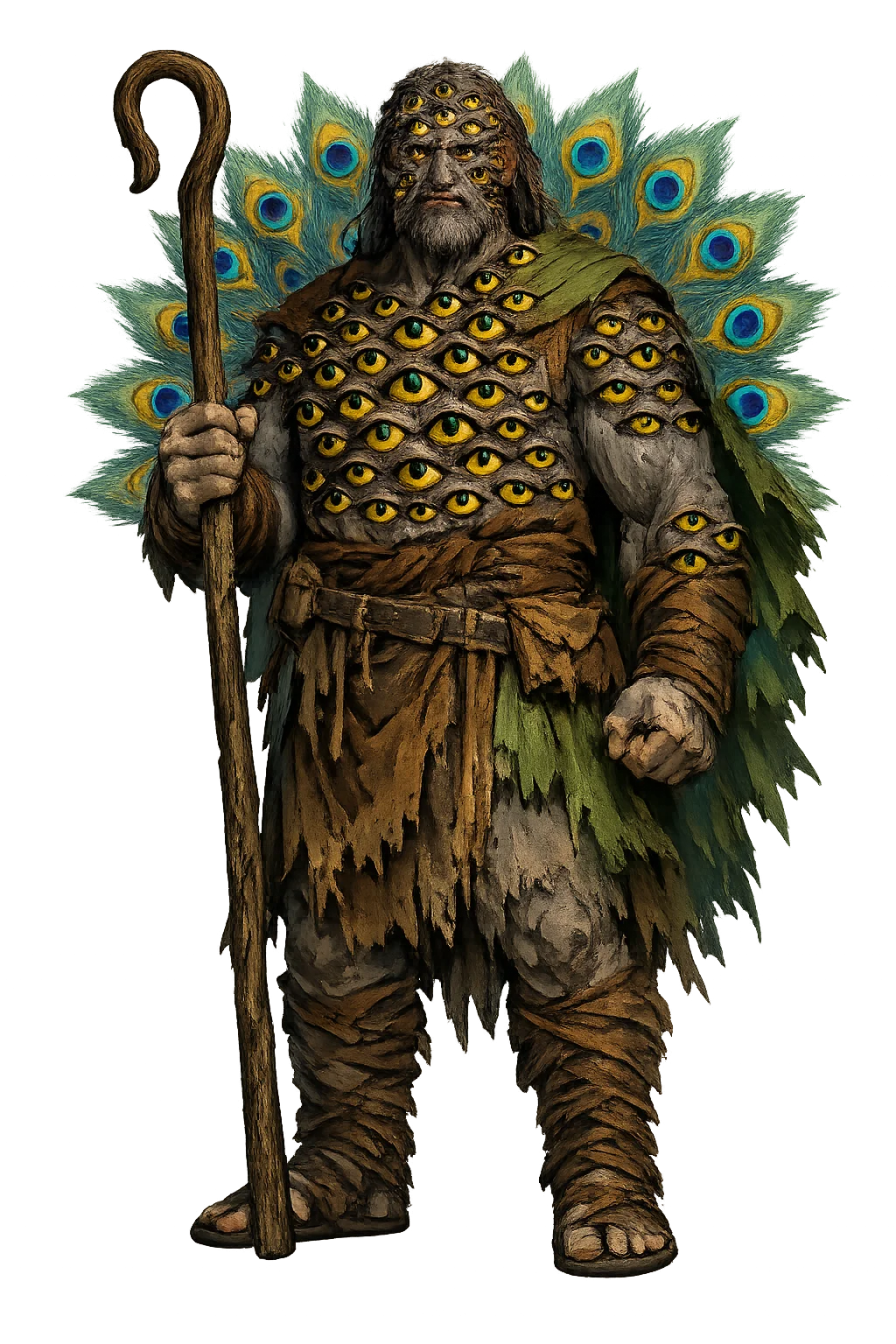
Árgos Panoptes is the perfect sentinel of Greek myth: a giant whose body was set with eyes that slept only in relays, so that some were always open. Hera chose him to guard the cow that had been Io. He is the myth's meditation on watchfulness — its power, its cost, and its strange afterlife in feathers.

Árgos in Later Traditions

Árgos never became a god and was never identified with foreign deities; his afterlife is in the natural world and in language. Rome kept him as Argus — Ovid's account in the Metamorphoses is the fullest surviving version — and made the transfer of his eyes the aition, the explanatory myth, of the peacock's plumage. Later readers saw in his hundred eyes the starry sky itself, set as heaven's watchman over the world. His name also lives disguised in Hermês's oldest epithet: Argeiphontēs appears already in the Iliad, proof that the story of the slain watcher was archaic before Homer sang.

Modern Legacy

English keeps him in the phrase 'argus-eyed', watchful beyond fatigue. Newspapers across the English-speaking world took the name The Argus — the all-seeing press — and naturalists gave it to the argus pheasant, whose feathers are spotted with eyes in exact obedience to the myth. Every camera grid and sensor network re-enacts him: Árgos is the mythic ancestor of all surveillance, and his fate is its parable. The watcher who saw everything was undone by music and a story — the oldest recorded defeat of total vigilance by art.

Unicode Restoration as Cultural Act

Restoring Árgos in a domain name is more than orthographic accuracy. It is a statement that the internet should recognize the full range of human writing — not only the ASCII keyboard.

05

Frequently Asked Questions

Common questions about Árgos, Vigilance, Hera's Watcher, and Unicode restoration

01How do you pronounce Árgos?

In reconstructed pronunciation, Árgos is /ár.gos/ — approximately 'AR-goss' — two short syllables, stress forward, like a light snapping on..

02What does Árgos mean?

Árgos means Shining, swift in the greek tradition.

03What are the symbols of Árgos?

Árgos is associated with The hundred eyes (Vigilance that never wholly sleeps), The peacock (Hera's bird; the eyes on its tail are his memorial), The white cow (Io transformed, the charge he was set to guard), The herdsman's staff (His gear as a common cowherd on the roads of the Argolid), The curved sword (The harpē of Hermês, by which the watcher was finally put to sleep).

04Why restore Árgos in Unicode?

Plain ASCII argos strips the stress, length, and script that make the name specific. Unicode restoration returns the name to its original written dignity.

05What is the most important myth about Árgos?

Zeús loved Io, daughter of the river-god Inachos, and to hide her from Hera — so the common telling runs — she was changed into a white cow. Hera was not deceived. She asked for the cow as a gift, and set over it Árgos Panoptes, the all-seeing giant, who tethered his prisoner to an olive tree in the grove of Mycenae and watched her without rest.

06

Scholarly Sources

The philological foundations of this restoration

Every claim on this page is grounded in established scholarship. The orthographic restorations follow disciplinary convention. The etymological chain follows the best available reference works. This is not invention — it is resurrection through scholarship.

Lexicography & Philology

  • Apollodorus
  • Ovid

Primary Texts

  • Apollodorus
  • Ovid
  • Aeschylus
  • Homer

Archaeology & Art History

  • Material evidence — iconography, inscriptions, and temple archaeology — for Árgos and related cults.
  • Árgos Panoptes had no cult and no temple; the Greeks themselves knew him as a figure of the primeval Argolid, and his material presence is pictorial. Attic and South Italian vases of the fifth and fourth centuries BCE show him exactly as the poets describe — a herdsman whose body is seeded with eyes, standing guard over the cow Io, or falling beneath Hermês's sword. His landscape survives: the Heraion of Argos, the great sanctuary of his mistress, and the olive grove of Mycenae where the sources place his watch. The myth's honesty is part of its interest — the all-seeing watcher left nothing behind but pictures of his own watching.

Religious Studies

  • Comparative studies of greek religion and the place of Árgos within it.
Return

The Surface Awaits

You have traced the name from its earliest attestation to its Unicode restoration. Now return to the myth. The story is where the name lives.

Back to Lore
Árgos mascot