The Authentic Orthography
Phonological Reconstruction, Fresh Water, Abyss · Reconstruction node for the Mesopotamian abyss Apsu (Sumerian Abzu): the circumflex marks a discussable vowel length, not a canonical spelling claim.
Unicode restoration and ASCII comparison
𒀊𒍪
The name in its original Mesopotamian form. Apsû (𒀊𒍪) is attested in the source tradition — “Reconstruction node for the Mesopotamian abyss Apsu (Sumerian Abzu): the circumflex marks a discussable vowel length, not a canonical spelling claim.”. Its original diacritics and script distinctions carry the full phonetic and orthographic weight of the source tradition.
apsu
Reduced to plain apsu, the name loses everything that made it specific: original diacritics and script distinctions. What remains is an ASCII string that machines can parse but that no longer speaks with its original voice.
Apsû
The Unicode restoration recovers what ASCII flattened. Apsû restores original diacritics and script distinctions, returning the name to its original written dignity. The domain encodes to Punycode, but the browser displays the truth.
Apsû.com → xn--aps-foa.com
The non-ASCII characters in Apsû are encoded while the ASCII remains visible. To the DNS, it is Punycode. To humanity, it is Apsû.
How Apsû travels from ancient script to the modern URL
Sumerian abzu “fresh-water abyss, deep ocean"; Apsû is the primordial sweet-water ocean and dwelling of Enki/Ēa.
Fresh Water, Abyss
The Unicode restoration Apsû preserves vowel length; the cuneiform form is not registrable in .com.
How Apsû was spoken
Primordial Water · Divine Dwelling · Source of Wisdom
The name is written 𒀊𒍪. Standard Assyriology transliterates it as Apsu (Akkadian) or Abzu (Sumerian). But the length of the final vowel in Akkadian Apsû remains an open question — and it is here, in the space between the written sign and the spoken sound, that this temple operates. This node of PuniCodex is dedicated to the phonological reconstruction and didactic grammar of the ancient Near East. We mark vowel length not because it is certain, but because it is discussable. The circumflex is a question mark made visible.
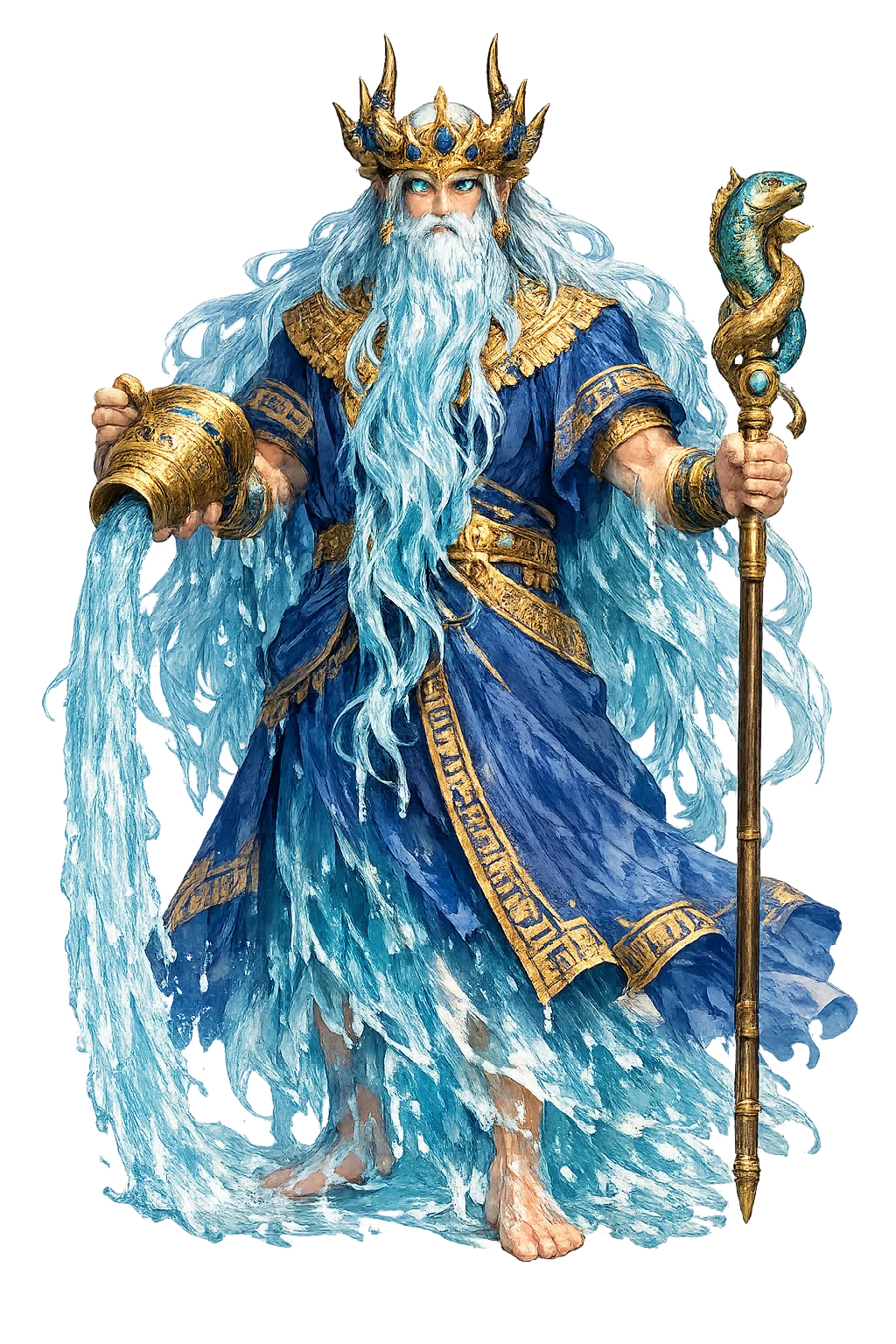
Apsû is nevertheless the sweet-water ocean that lies beneath the world — the cosmic freshwater reservoir from which springs, rivers, and wells draw their life. In Mesopotamian cosmogony, Apsû is both a place and a primordial power, the male depths that mingle with Tiamat's salt sea to beget the gods.
The subterranean source of all sweet water, the matrix of civilization in Mesopotamia.
After Apsû's defeat, Ea built his splendid abode upon the slain abyss.
Marduk was born in the abzu, the house built on Apsû's transformed body.
Temples and cities were literally and symbolically anchored to the abzu below.
Stories of Apsû
Apsu is the Mesopotamian primordial freshwater abyss — the sweet water that lies beneath the earth and mingles with Tiamat, the salt sea, to bring forth the first generations of gods. In the Enuma Elish, Apsu is not a god of personality but a cosmic place that becomes, through violence and architecture, the foundation of divine kingship.
Before sky was separated from earth, there was only Apsu, the fresh water, and Tiamat, the salt water. Their waters mingled and produced the oldest gods: Lahmu and Lahamu, then Anshar and Kishar, then Anu, and finally Ea, the wisest. Apsu is thus the original reservoir — not merely a sea but the possibility of form, the liquid matrix from which order emerges.
The younger gods disturbed Apsu with their noise and commotion. Apsu, wishing to sleep, resolved to destroy them, but Tiamat refused. Ea learned of the plot, cast a spell on Apsu, and slew him. From Apsu's body Ea built his splendid abode, and there, with his consort Damkina, he begot Marduk, the storm-god who would later defeat Tiamat and create the world from her corpse.
Ea does not simply kill Apsu; he appropriates him. The abyss becomes Ea's house, the source of his wisdom and the place from which he dispenses me, the divine decrees. In Mesopotamian cult, the abzu remains the underground water that feeds wells, rivers, and marshes — the invisible freshwater that makes civilization possible. To possess Apsu is to possess the hidden knowledge beneath the world.
The god Marduk is born in the abzu, the house built upon Apsu's slain body. His birth there binds him to both wisdom and violence: he is the child of Ea's cunning and Apsu's primordial depth. When Tiamat raises an army of monsters, Marduk emerges from the abzu to confront her, armed with winds, floods, and the authority of the deep. Apsu, killed at the beginning, thus fathers the god who orders the cosmos.
The lore you have read is the surface — the living myth. Beneath it lies the scholarship: etymology, reconstructed pronunciation, Unicode character breakdown, and the cultural legacy of Apsû.
Enter Extended Lore