The Authentic Orthography
Gem, Concept, Invincibility · Unbreakable; the adamant; the hardest substance; origin of "diamond"
Unicode restoration and ASCII comparison
ἀδάμας
The name in its original Greek form. Adámas (ἀδάμας) is attested in the source tradition — “Unbreakable; the adamant; the hardest substance; origin of "diamond"”. Its acute accents carry the full phonetic and orthographic weight of the source tradition.
adamas
Reduced to plain adamas, the name loses everything that made it specific: acute accents. What remains is an ASCII string that machines can parse but that no longer speaks with its original voice.
Adámas
The Unicode restoration recovers what ASCII flattened. Adámas restores acute accents, returning the name to its original written dignity. The domain encodes to Punycode, but the browser displays the truth.
Adámas.com → xn--admas-yqa.com
The non-ASCII characters in Adámas are encoded while the ASCII remains visible. To the DNS, it is Punycode. To humanity, it is Adámas.
How Adámas is preserved in writing
A bespoke provenance study for Adámas is being prepared by the PUNICODEX scholarly team.
Contribute scholarly provenance →How Adámas was spoken
Invincible Substance, Obdurate Will, Philosophical Symbol
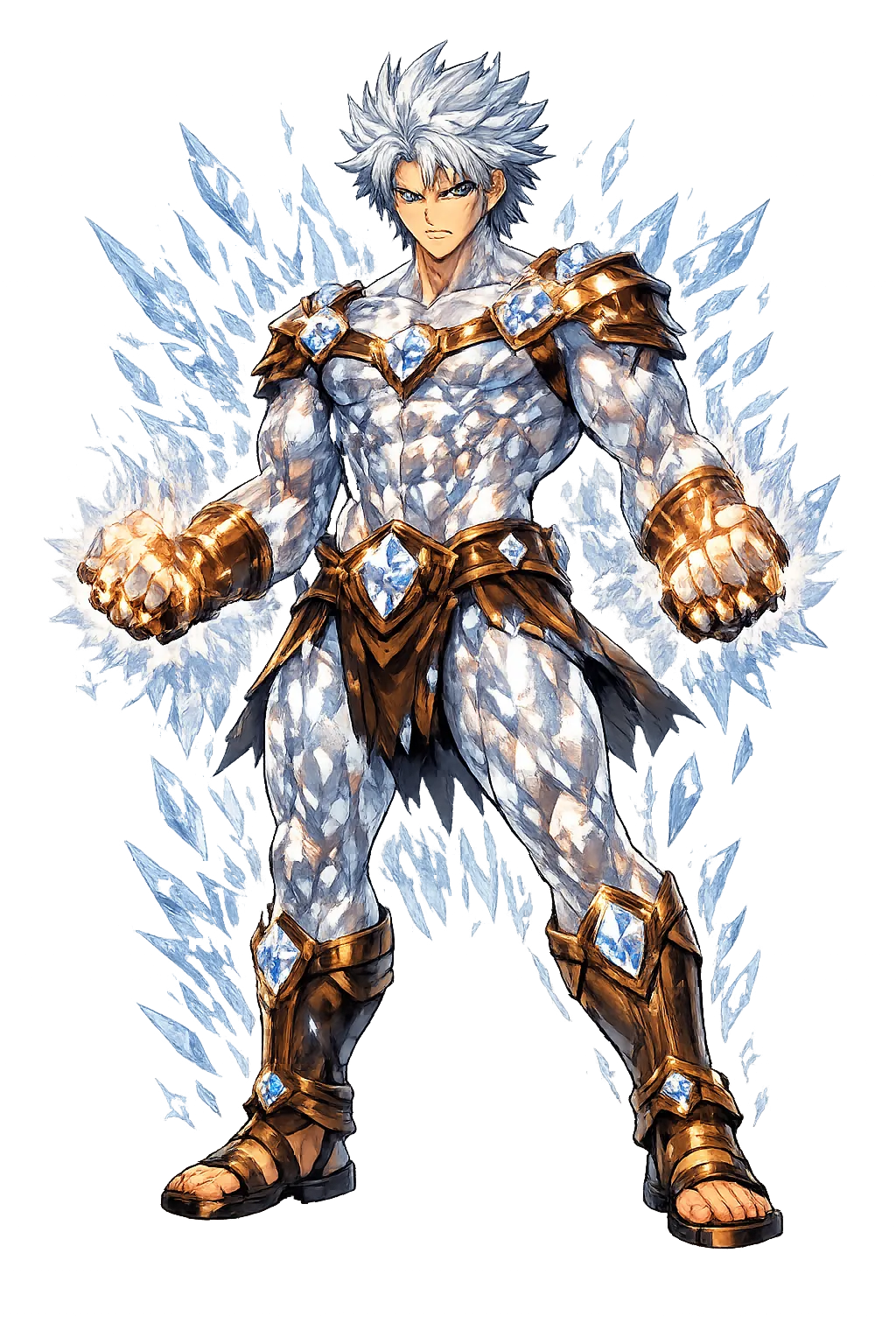
Adámas is the Greek word for the hardest, most untamable substance — the adamant. In Homer it is the metal of chains that bind even gods; in later philosophy it becomes a metaphor for an unyielding soul. The word carries no cult of its own, yet it cuts across Greek literature as the image of absolute resistance.
The hardest material known to Greek poets; used for chains, weapons, and the unbreakable core of things.
In Homer and tragedy, adamantine fetters hold Prometheus, Ares, and other immortals fast.
Philosophers from Plato to the Stoics use adámas as an image of an unconquerable mind.
The medieval and modern word 'diamond' descends from this Greek root, preserving its brilliance and hardness.
Stories of Adámas
Adámas appears in Greek myth not as a character but as a substance that binds, wounds, or armors the gods themselves. Its very hardness creates drama: what can hold an immortal must be stronger than the divine.
Hesiod (Theogony 161) says Gaia gave Kronos an adamantine sickle (ἅρπην ἀδάμαντος) with which to wound his father Ouranos. The tool is decisive: only a substance harder than sky can wound the sky. The blood that falls from the cut begets the Erinyes, the Giants, and the Meliai nymphs.
In Aeschylus's Prometheus Bound, Hephaistos forges adamantine bonds to pin Prometheus to the Caucasus. The blacksmith laments that his own art must be turned against a kindred god; the chains symbolize the cruelty of Zeus's new order and the unyielding price of foresight.
Homer uses ἀδάμας and its compounds to describe obdurate things: the threshold of Hades, the will of a hero, the unbreakable nature of divine resolve. The word's poetic force lies in its superlative hardness — nothing yields, nothing forgives.
Adámas teaches that resistance has its own beauty. The adamant does not bend; it holds. In a world that often confuses flexibility with virtue, the concept reminds us that some things must not yield: integrity, memory, the truth. Yet adámas is also a warning. Chains of adamant bind Prometheus not because the Titan is wrong, but because power can harden against justice. The same substance that protects can imprison.
Enter Extended Lore